Artist / Band
Northern Vultures
Biography
Northern Vultures were a Montréal punk band whose English-language songs combined hardcore urgency, British punk aggression, speed-metal energy and an outspoken social conscience. Emerging around 1985 during the final, rapidly changing phase of the earlier group Unruled, they carried forward a Montréal punk lineage that reached back through Unruled to the formative work of S.C.U.M. Northern Vultures became a distinctive presence in the city’s underground during the late 1980s and early 1990s.
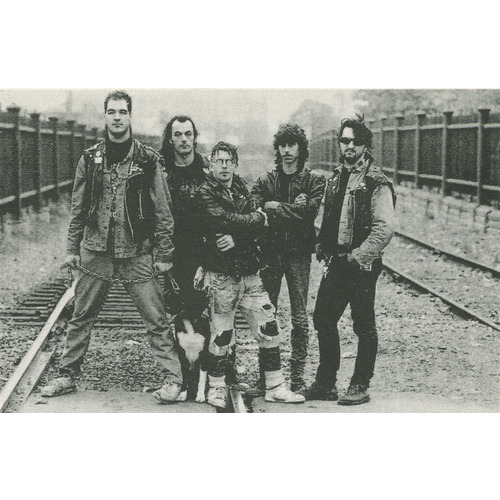
The band developed through several early personnel changes before establishing its principal recording lineup: Sylvain ‘Beans’ Binette on vocals, Mario ‘Fritz Dilligaf’ Éthier on guitar and vocals, Big Eric on bass and vocals, and Kelly Backs on drums. A guitarist identified simply as Mike later joined the group, expanding the lineup heard on its 1991 album.
The group’s roots belonged to a longer Montréal punk continuum. Michel ‘Wax’ Cyr had participated in an early version of S.C.U.M. before co-founding Unruled, whose unstable final period provided the immediate background from which Northern Vultures emerged. Cyr was not a member of Northern Vultures’ principal recording lineup, but the connection remained audible: the band later recorded his composition ‘On the Front’ for Tabarnak Hardcore.
Although Northern Vultures were frequently classified as hardcore, the members resisted being confined to a single style. In a December 1988 interview, they described themselves as a punk-rock group influenced by the intensity of GBH and Discharge, but increasingly drawn toward greater speed and the weight of metal. They also characterized themselves as a party band with a political conscience—serious and confrontational in their lyrics, but equally capable of turning a performance into a chaotic communal celebration.
Most of the members were francophone, but the group wrote and performed primarily in English. They considered English better suited to the bluntness, anger and physical impact of their material. Their name reflected both geography and social identity: ‘Northern’ referred to Canada, while ‘Vultures’ represented people surviving on what society discarded.
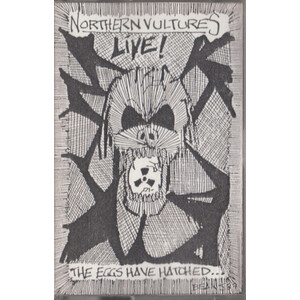
Northern Vultures’ earliest known release was the independently circulated 1987 cassette The Eggs Have Hatched—Live, also listed as The Eggs Have Hatched (In My Basement). Recorded before the band entered a professional studio, the tape travelled beyond Montréal through the international cassette-trading and fanzine network that connected punk communities before the widespread use of the internet.
By 1988, Northern Vultures were established in Montréal venues including Les Foufounes Électriques and the Black Lite. Their members spoke openly about the difficulties facing local underground bands: relatively few suitable venues, limited support from promoters, low pay and a tendency for touring acts to receive priority over Montréal groups.
A significant early appearance placed Northern Vultures with UK Subs and Broken Bones at the Black Lite on May 7, 1988. The predecessor group Unruled had previously appeared with UK Subs, and Northern Vultures later shared another bill with the British band under their new identity.
The Black Lite was an important meeting point for Montréal punk, hardcore and metal, presenting local acts alongside international groups such as Agnostic Front, Crumbsuckers, Nausea and Verbal Assault.
Northern Vultures represented a succeeding generation of Montréal punk activity. S.C.U.M. and Unruled had developed through rehearsal-room parties, Cargo, the Bleury Beach Club and the Spectrum during the early 1980s. Northern Vultures came of age within the later circuit surrounding the Black Lite, Les Foufounes Électriques and the increasingly interconnected punk, hardcore and metal communities of the city.
The band’s first professional studio recording was ‘Rise Up,’ contributed to the 1989 Montréal underground compilation Kitsch ’en Squatt. Northern Vultures financed the session themselves. Built around a direct appeal for collective action, the song became their defining anthem and one of the clearest expressions of the group’s belief that anger had little value unless it produced participation.
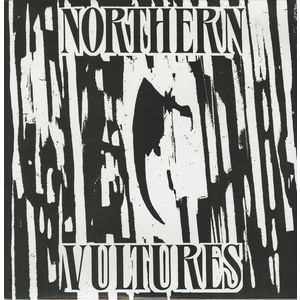
‘Rise Up’ subsequently opened the band’s self-titled four-song 12-inch, released by Distributions Goliath as GOL 1001 in 1989. Most of the record had been recorded at Harmonie Studio in Longueuil in August 1988, while ‘Rise Up’ was completed separately at D.M.S. Studio in Montréal in February 1989. Simon Pressey engineered and mixed the sessions, and Northern Vultures produced the record themselves.
The 12-inch presented the group’s political outlook in concentrated form. ‘Cosmetics “Decuticized”’ attacked animal experimentation and commercial cruelty. ‘The Life & Times of Winston Smith’ drew upon George Orwell’s Nineteen Eighty-Four to confront surveillance, conformity and institutional control, while ‘Liberty Hyenas’ denounced political and corporate power and called for direct resistance.
The accompanying lyric insert demonstrated that Northern Vultures did not understand anarchism as indiscriminate destruction or personal irresponsibility. Their songs repeatedly argued that freedom required participation, mutual respect, social awareness and a willingness to accept responsibility for one’s actions. The band’s political language could be confrontational, but beneath it was a consistent concern with the abuse of power and the failure of individuals to act against injustice.
The group also emphasized that its members did not follow a single imposed political line. Lyrics and decisions were debated internally, and disagreement was accepted as part of the creative process. This helped give the catalogue a wider emotional and thematic range: anti-authoritarian politics stood alongside songs about addiction, neighbourhood neglect, war, religious conditioning, personal alienation and self-destruction.
An important figure within the Northern Vultures community was Michel ‘Gros Michel’ Larouche, a respected member of Montréal’s alternative scene who worked at Les Foufounes Électriques and became closely associated with the band. By 1988, Northern Vultures identified him as their manager, and his extensive connections helped the group navigate the city’s underground music network.
Larouche also participated in La Chorale des Âmes Perdues, the loose collective of friends and musicians that supplied backing vocals on the band’s recordings. His death from cardiac arrest on August 21, 1991, deeply affected the group. Northern Vultures dedicated their next album to him with the words: ‘May he take over Hell.’
During 1989 and 1990, Northern Vultures appeared throughout the active Montréal–Québec punk circuit. Documented engagements included performances at Les Foufounes Électriques, the Jailhouse Rock Café and Québec City’s Centre des loisirs St-Sacrement, where they appeared with Dead Brain Cells and Red Kidney Beans in July 1989. They also participated in large multi-band events with Ripcordz, Hazy Azure, Huge Groove Experience, Bunchofuckingoofs and many other groups active within the regional underground.
The band’s connection with Montréal’s metal community extended beyond shared concert bills. In January 1990, Mario Éthier joined Dead Brain Cells on its second American tour as a driver, travelling from Montréal to California and through Arizona, Texas, Florida and New York. The journey placed him directly within the touring network connecting Montréal punk, hardcore and thrash metal.
Northern Vultures also reached a broader Québec audience through MusiquePlus, which broadcast an interview with Big Eric and showed the group’s video for ‘Rise Up.’ This exposure demonstrated how far the band had progressed from basement recordings and cassette circulation into professional studios, independent national distribution and televised alternative-music programming.
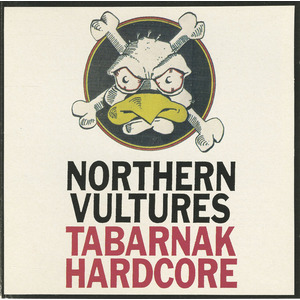
Their most substantial release, Tabarnak Hardcore, appeared through Fringe Product in 1991. Issued on CD and cassette, the eleven-song album combined studio recordings with live material while preserving the group’s raw, confrontational character.
The studio portion was engineered by Steve Kravac at Kraksounds Studios in Montréal and mixed by Kravac and Simon Pressey at Le Studio in Morin Heights. The live recordings were captured on DAT at Le Spectrum in Montréal, with the completed album mastered at Kraksounds. Northern Vultures again handled the production themselves.
The album introduced Mike on guitar alongside Beans, Kelly, Big Eric and Fritz. Michel Larouche was also named with the members in the booklet, reflecting his honorary place within the Northern Vultures family rather than a conventional instrumental role. Beans created the artwork, extending his contribution from vocals and lyrics into the group’s visual identity.
The studio material included ‘Clean Up Verdun,’ ‘On the Front,’ ‘Trying to Live,’ ‘White Lies,’ ‘Realize’ and ‘National Security.’ These songs drew directly from the band’s surroundings and political concerns.
‘Clean Up Verdun’ addressed toxic waste, deteriorating housing and government neglect in the Montréal district. ‘On the Front,’ written by former S.C.U.M. musician and Unruled co-founder Michel ‘Wax’ Cyr, provided a direct compositional link with the generation of Montréal punk bands that preceded Northern Vultures. The song challenged the glorification of soldiers sent to die in the service of national interests.
‘Trying to Live’ examined addiction and self-destruction, while ‘White Lies’ attacked the social, religious and governmental conditioning imposed from childhood onward.
‘Realize’ offered the clearest statement of Northern Vultures’ political philosophy. The song rejected anarchism as an excuse for antisocial or irresponsible behaviour and instead defined freedom through maturity, mutual respect and social conscience. ‘National Security’ confronted war, propaganda and the language governments use to disguise civilian deaths.
The live section included ‘Dog That Sleeps,’ ‘TBK,’ another performance of ‘Rise Up,’ a live version of ‘White Lies’ and a cover of Creedence Clearwater Revival’s ‘Bad Moon Rising.’
The album also documented the communal character of Montréal’s punk scene. La Chorale des Âmes Perdues brought together friends and fellow musicians for backing vocals on ‘Trying to Live’ and ‘Realize.’ Participants included Mimi, Chris, Le Gros Michel, Mireille St-Amour, Rodney Ramrod Jones, Dominique Prout, France Bat, Bruno ‘p’tit con’ Humbert, Éric Héroux, Mario Éthier and Sylvain Binette.
Rather than presenting Northern Vultures as an isolated band, the booklet placed them within an extended community of musicians, visual artists, activists, venue workers, promoters and supporters. Its lengthy acknowledgements read as a map of the Montréal underground at the beginning of the 1990s.
Northern Vultures have variously been described as hardcore, anarcho-punk, Oi!-influenced punk and crossover. Their own description remains the most useful: punk rock shaped by GBH and Discharge but intensified by speed, metal and the humour and aggression of Montréal’s underground. Their sound was forceful without being stylistically rigid, and their mixture of political seriousness, irreverence and deliberately unpolished presentation separated them from both orthodox hardcore and conventional thrash metal.
The band’s later chronology was complicated by changing personnel. The principal recording lineup began to fragment after Tabarnak Hardcore, but performances continued under the Northern Vultures name. Concert evidence documents appearances at Les Foufounes Électriques in December 1993 and on a March 1994 bill with Armed and Hammered, Overbass and Roswell. The group’s active history therefore extended from approximately 1985 through 1994.
Northern Vultures also appeared on later Canadian compilations. ‘Dead Easy’ was included on Raw Energy Records’ 1993 collection Dead on the Road: Songs Without Keyboards, while ‘Clean Up Verdun’ appeared on Fringe Product’s A Touch of Fringe the same year.
After Northern Vultures, Mario ‘Fritz Dilligaf’ Éthier joined Bathroom Orkestraw, which subsequently adopted the name Vagabonds. He appeared on the group’s 1993 cassette From Autumn to Fall and continued within a band that toured Québec and Ontario and shared stages with the Misfits, Marky Ramone, Peter and the Test Tube Babies, Stiff Little Fingers, GrimSkunk and Ripcordz.
Beans and Big Eric later continued together in Bronson, a heavier Montréal group active during the mid-to-late 1990s. Beans also remained active as a visual artist through Binette Illustration, continuing the graphic work already evident on Northern Vultures’ record sleeves, lyric inserts and promotional material. He remained closely connected to the community surrounding Les Foufounes Électriques, where he had worked during the club’s earlier years.
Sylvain ‘Beans’ Binette died in Montréal on June 1, 2021, at the age of sixty, following cancer. Friends remembered him as a gifted singer and illustrator, a beloved figure within the Foufounes Électriques community and a devoted father. His death brought renewed recognition to the warmth and creativity behind the confrontational public voice heard on Northern Vultures’ recordings.
Northern Vultures occupied the middle position in an important Montréal punk lineage. S.C.U.M. and Unruled helped establish the city’s early hardcore vocabulary and do-it-yourself infrastructure; Northern Vultures inherited that foundation and carried it into the Black Lite and Foufounes era, where punk increasingly intersected with speed metal, crossover and Montréal’s wider alternative community.
-Robert Williston
Tracks
15 tracks
-
Rise Up
-
Cosmetics Decuticized
-
The Life & Times of Winston Smith
-
Liberty Hyenas
Tabarnak Hardcore (1991)
Showing 10 of 11 tracks
-
Clean Up Verdun
-
On the Front
-
Trying to Live
-
White Lies
-
Realize
-
National Security
-
Dog That Sleeps
-
Tbk
-
Rise Up
-
Live White Lies
Discography
Featured Titles
Albums
Compilation Tracks

Gallery
Images
14 images
View All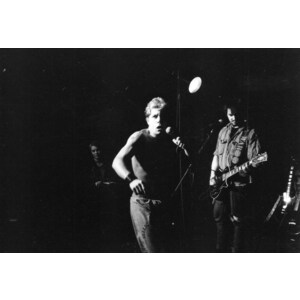
Northern Vultures. PHOTO: Chris Saletes
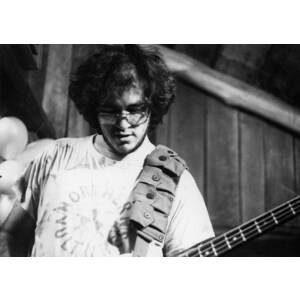
Northern Vultures. January 1989 at the Amherst Tavern, Montreal. PHOTO: Twilight
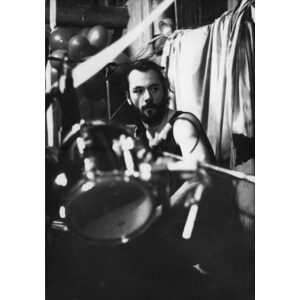
Northern Vultures. January 1989 at the Amherst Tavern, Montreal. PHOTO: Twilight
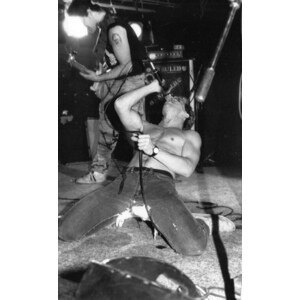
Northern Vultures. May 1988. Montreal. PHOTO: Kenneth Bobkowicz
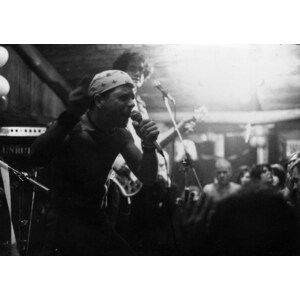
Northern Vultures. January 1989 at the Amherst Tavern, Montreal. PHOTO: Twilight
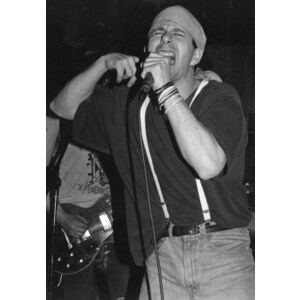
Northern Vultures. May 1989. PHOTO: Shawn Scallen
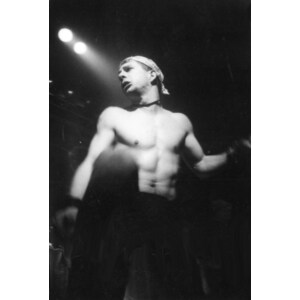
Northern Vultures. May 1989. PHOTO: Steve Doucet
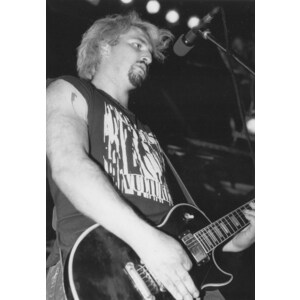
Northern Vultures, July 1989. PHOTO: Sonja Chichak
Media
Videos
1 video