Artist / Band
Phollop Willing P.A. (Phil Walling)
Biography
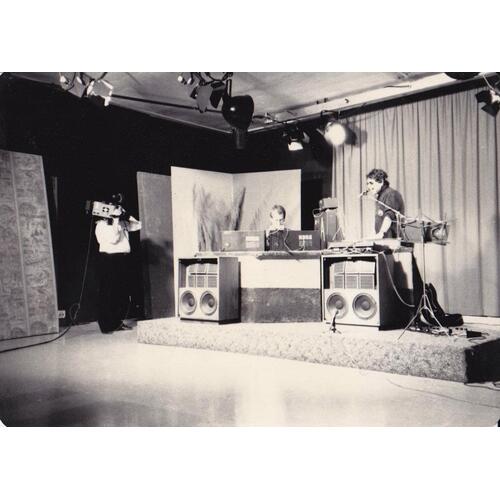
Phollop Willing P.A. is the primary recording identity of Halifax-based experimental and electronic musician Phil Walling, whose work spans more than four decades and bridges early analog tape experimentation, punk-era electronic disruption, live performance, radio documentation, and long-form digital self-archiving.
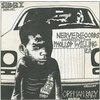
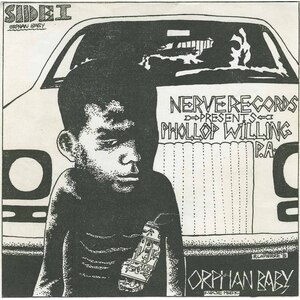
Walling’s recorded output first surfaced publicly with the 1981 7-inch single ‘Orphan Baby’ b/w ‘Sea Cruise Blues’, released on Nerve Records (SR 66). Recorded at Acolyte Studios in Halifax and at Modesty Cove Alternative, the single paired fractured song structures, primitive synthesizers, tape manipulation, and deliberately abrasive vocals. At the time, the record divided opinion locally, but it later gained cult status as an early Canadian example of what has since been described as cyber-punk electronica, and today ranks among the most sought-after independent Canadian singles of the period.
Walling’s musical activity pre-dated and extended far beyond that release. He studied experimental electronic music at Dalhousie University, where he worked extensively with reel-to-reel tape machines, analog synthesizers, multitrack recording systems, and later computer-based tools. Contemporary program notes and press material describe his interest in sound not only as music, but as something with potential applications in psychology and medicine. Much of his work was created solo, often as evolving sketches rather than fixed compositions, and recorded across multiple formats as technology changed.
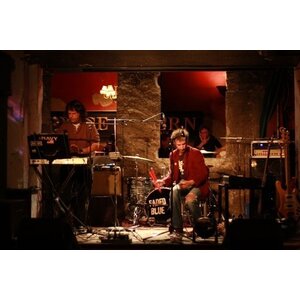
Throughout the late 1970s and 1980s, Walling was an active presence in Halifax’s experimental performance and alternative arts scene, appearing in electronic music concerts, gallery settings, improvised performances, and non-traditional venues. Listings and reviews document performances alongside figures such as David Barteaux, Wendy Geller, Lewis Humphreys, Steven Slater, and others working at the margins of rock, classical, and academic music. He was also closely connected to CKDU radio, where he recorded interviews and performances, including conversations with major countercultural and literary figures during the mid-1980s.
Beyond his own recordings, Walling played an important role as a documenter and organizer. He became a central figure in the Halifax Experimental Music Festival, contributing as a performer, recording engineer, interviewer, and archivist. His work preserving live performances and broadcasts captured material that would otherwise have been lost, reinforcing his position not just as a musician, but as a chronicler of Halifax’s experimental underground.
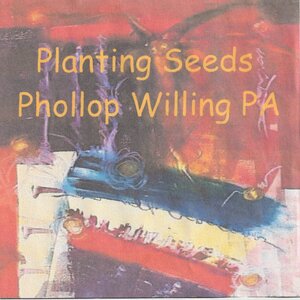
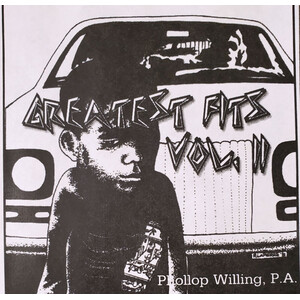
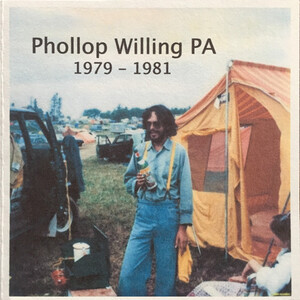
Beginning in the late 1990s and continuing into the 2000s, Walling undertook a process of curating and releasing material from his personal archive. Releases such as ‘1979–1981’ and ‘Greatest Fits, Volume II’ compile recordings spanning decades, while ‘Plantin’ Seeds’ (issued in 2007 but drawing on recordings made between 1985 and 2001) reflects his ongoing interest in revisiting and contextualizing earlier work. These releases function less as conventional albums than as selective archival overviews, documenting a body of work originally scattered across tapes, demos, live recordings, and broadcasts.
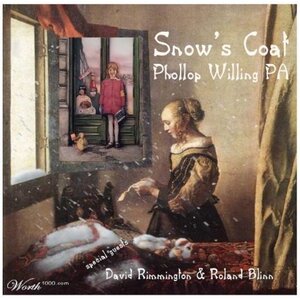
In the digital era, Walling continued this archival approach through a series of long-span online collections, grouping recordings by theme, period, or method rather than by traditional release cycles. These include collections such as ‘Master of the Universe City (1985–1995)’, ‘ElectronicUs’ (mastered on MiniDisc), ‘ElectronicUs Live @ the Khyber, October 29, 2000’, ‘Plantin’ Seeds (1985–2001)’, ‘Doggie Soup Kitchen (2008–2012)’, ‘Snow’s Coat (2000–2012)’, ‘A Collection of Covers (1980–2012)’, ‘I Kross Time (2010–2022)’, ‘Kevin D. Xmas Tape ’81’, and later experiments such as ‘Tunes and Songs Made with ORBA 2’. Together, these collections demonstrate a continuous recording practice extending from the late 1970s into the 2020s, adapting to new technologies while maintaining a consistent experimental ethos.
Taken as a whole, Phil Walling’s work as Phollop Willing P.A. represents a sustained, independent approach to electronic and experimental music in Canada — one rooted in early analog practice, shaped by Halifax’s alternative infrastructure, and carried forward through decades of self-documentation and digital archiving. His recordings, performances, interviews, and preservation efforts form a connective thread between academic experimentation, punk-era disruption, and contemporary DIY electronic practice within the Canadian underground.
-Robert Williston
Tracks
48 tracks
1979 - 1981 (1981)
2 tracks
-
Blues For Nicole (Cover/PA)
-
Mothers Lament (Brecht/Pottie)
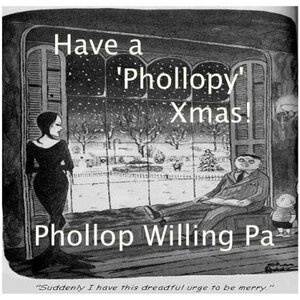
Have a 'Phollopy' Xmas! (1981)
2 tracks
-
Three Wise Men
-
Worship Xmas (Baby Come Home)
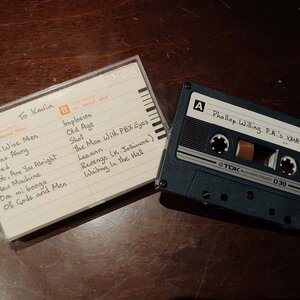
Kevin D. Xmas Tape '81 (1981)
Showing 10 of 12 tracks
-
Three Wise Men
-
Sphinx Ahoy w/ Rick Sheppard
-
Fired !
-
Bob, Are You Alright ?
-
New Machine
-
Om mi Booga
-
Of Gods and Men
-
Old Age
-
Shot
-
The Man With PBX Eyes
-
Orphan Baby
-
Sea Cruise Blues
Plantin' Seeds (2007)
Showing 10 of 13 tracks
-
Puff
-
I Really Wish
-
Blood Brother
-
Sailors and Lesbians
-
Goat Soap-the Bible Says
-
Battlezone
-
Will You Complain ?
-
Downchild w/Andrew Gillis
-
Bottom Feeders w/ Sean LaPointe
-
Choking Me w/ Burnt Black samples
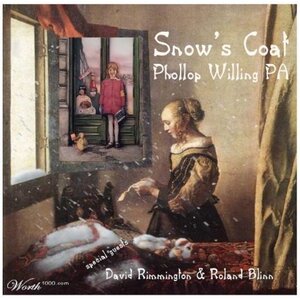
Snow's Coat (2000 -2012) (2012)
Showing 10 of 17 tracks
-
Snow's Coat (empty) w/ David Rimmington
-
Age of Paranoia (inst)
-
A Clerk
-
To Me, Grey.. w/ David Rimmington
-
Midas w/ David Rimmington & Jay White
-
Silence Is...
-
Worship Xmas (Baby Come Home)
-
The Knuckler w/ Roland Blinn
-
Last Exit (for Carlo Spinazzola)
-
Heavy Mental Depression w/ David Rimmington
Discography
Featured Titles
Albums
Singles
Gallery
Images
29 images
View All
Phollop Willing P.A. (6)
Phollop Willing P.A. (5)
Phollop Willing P.A. (8)
Phollop Willing P.A. (9)
Phollop Willing P.A. (10)
Phollop Willing P.A. (11)
Phollop Willing P.A. (12)
Phollop Willing P.A. (13)
Media
Videos
0 videos
No videos available for this artist.