Artist / Band
Shadracks
Biography
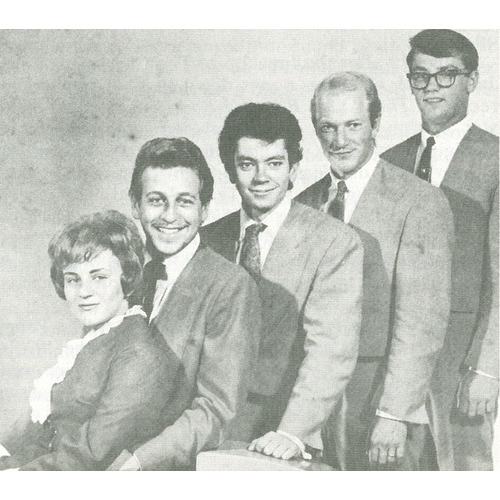
The Shadracks emerged in the early 1960s from Kelowna, British Columbia, at a time when the Okanagan Valley and the wider Interior were developing one of Western Canada’s most active teen-band circuits. Dance halls, community clubs, Regatta shows, and high-school sock hops supported a surprisingly dense network of groups—Kelowna acts like the Nocturnals, Pharaohs, Shades, Continentals, and Cavaliers; Kamloops bands such as the Henchmen, Coachmen, and Esquires; Penticton and Vernon outfits including the Syllables, Drifters, and Rebels; and Kootenay groups like the Epics and Regents who regularly crossed into Okanagan territory. The Shadracks were part of this ecosystem, absorbing the Beat Boom influence then sweeping across the Pacific Northwest and Britain and developing a bright, tight, harmony-driven sound that made them one of Kelowna’s most visible rock and roll groups.
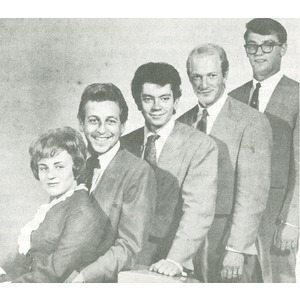
Their best-known lineup featured Rick Mussalem on vocals, Craig McCaw and Clive Spiller on guitars, Bob Verge and Glenn Chidlow on bass, and Claudette Scriatnik on drums. Scriatnik’s presence drew immediate comparisons to England’s Honeycombs, whose female drummer Anne “Honey” Lantree had become a brief pop-culture sensation. The Shadracks appeared frequently at Kelowna dances and Regatta events, often sharing stages or alternating weekends with visiting groups from Vancouver and Washington State—a flow of musicians and repertoire that helped shape the sound of interior British Columbia bands during these years.
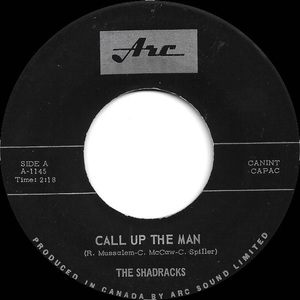
In 1965 the group recorded their only single, ‘Call Up The Man’ backed with ‘Midnight Blues’, for Arc Records. Period sources note that both sides were strong: the A-side was an original composition, while the flip was a Charlie Rich standard reworked into an arrangement distinctly different from the original. The session took place at Robin Spurgin’s old Vancouver Sound studio, located behind Kelly Deyong’s, where Spurgin employed the inventive recording techniques that made many early Vancouver discs so distinctive. According to McCaw, one echo was created with a length of garden hose fitted with a small speaker at one end and a microphone at the other; another used an empty garage behind the studio with a loudspeaker in one corner and a microphone across the room. Afternoon sessions introduced a further, unintended element: children on their way home from school would hear the music echoing out of the garage and throw rocks at the door, adding what McCaw described as “an interesting percussive effect.”
‘Call Up The Man’ became a local top-ten hit, boosted by airplay on CFUN in Vancouver. The Shadracks benefited from a timely connection—McCaw had attended high school in Kelowna with John Tanner, who by the mid-1960s was a CFUN disc jockey helping highlight emerging British Columbia talent. Tanner’s support came during a period when Vancouver radio carried enormous influence in teen culture. Disc jockeys such as Fred Latremouille were fixtures at school events, record hops, and personal appearances, and their playlists shaped not only listener taste but also which regional bands could break beyond their home towns.
The Shadracks remained active in Kelowna until 1966, part of the first wave of Okanagan groups to make a commercial recording and reach major-market radio. After the band dissolved, McCaw moved through Vancouver and later San Francisco, experiences that informed his later work with the Poppy Family and his career in multimedia and soundtrack composition. The Shadracks’ lone 45 preserves an early moment in interior British Columbia’s rock history, capturing both the resourcefulness of its recording culture and the lively network of bands that connected the Okanagan to the broader west-coast scene.
-Robert Williston
Musicians
Rick Mussalem: vocals
Craig McCaw: guitar
Clive Spiller: guitar
Bob Verge: bass
Glenn Chidlow: bass
Claudette Scriatnik: drums
Songwriting
‘Call Up The Man’ written by Clive Spiller, Craig McCaw, Rick Mussalem
Discography
Featured Titles
Singles
Compilation Tracks

Gallery
Images
1 image
Shadracks
Media
Videos
0 videos
No videos available for this artist.