Thiffault, Oscar
Websites:
No
Origin:
Montréal → Saint-Étienne-des-Grès, Québec, 🇨🇦
Biography:
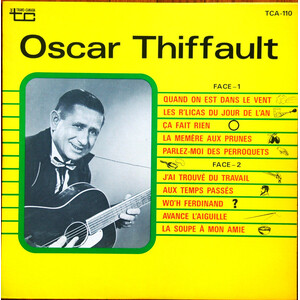
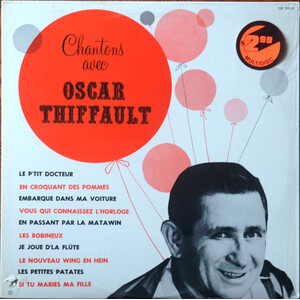
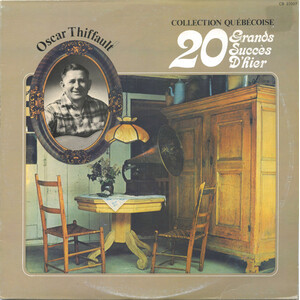
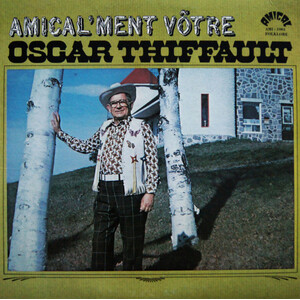
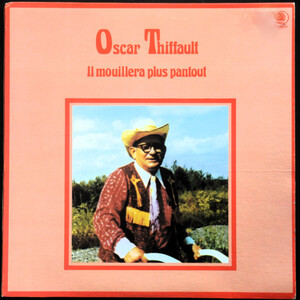
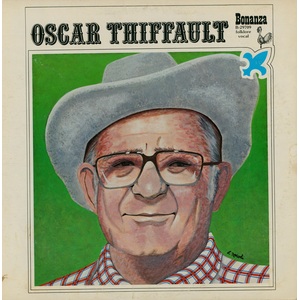
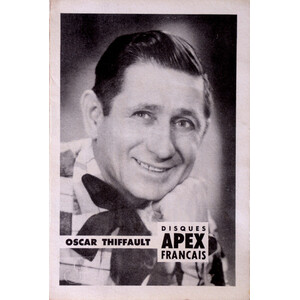
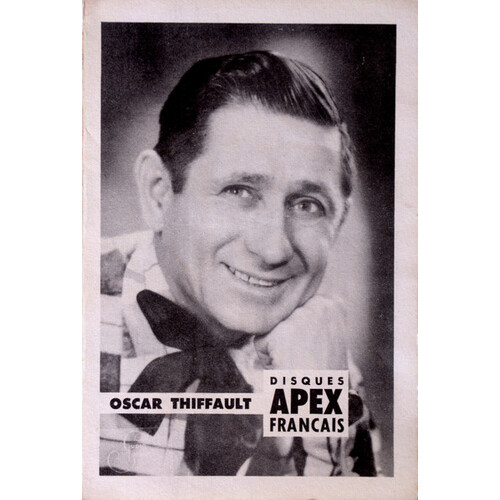
Oscar Thiffault (April 6, 1912 – February 6, 1998) was one of Québec’s most distinctive and beloved folk storytellers—a singer-songwriter who transformed jobsite humour, regional characters, and everyday experience into songs that felt as old as the melodies they rode on. Born in Montréal and later based for most of his life in Saint-Étienne-des-Grès, Thiffault emerged from the working world of construction sites, logging camps, and hydroelectric projects, absorbing oral tradition firsthand and reshaping it with a sharp comic eye and an unmistakably Québécois voice.
Thiffault’s songwriting method was rooted in tradition but anything but static. Drawing on well-known folk airs, he wrote entirely new lyrics—often bawdy, satirical, or pointedly contemporary—creating songs that felt instantly familiar while speaking directly to modern life. This approach placed him squarely in the lineage of Québec’s chansonniers populaires, yet his sensibility remained firmly grounded in the culture of labour rather than the café or conservatory. His songs were built to be sung aloud, shared, and remembered.
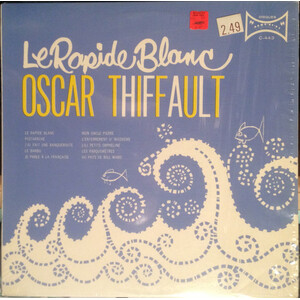
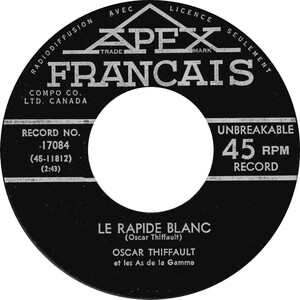
His breakthrough came in 1954 with “Le Rapide-Blanc,” a song he had originally written in 1935 while working on the Rapide-Blanc hydroelectric project. Set to a country-inflected adaptation of the traditional song “Le moine tremblant et la dame,” the recording became a sensation, establishing Thiffault as a major popular figure and securing the song’s place as one of the most enduring pieces of Québec’s recorded folk canon. Its success opened the door to a prolific recording career that resonated widely with working-class audiences across the province.
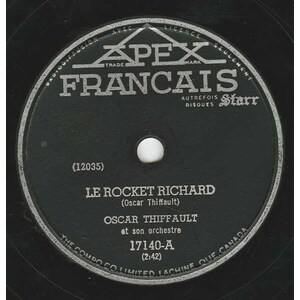
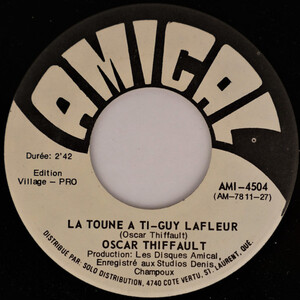
Throughout the 1950s and 1960s, Thiffault continued to write and record songs that blended folklore with contemporary reference points. He became especially well known for compositions honouring local and national sports heroes, including Maurice “Le Rocket” Richard and Guy Lafleur, treating them not as distant celebrities but as shared cultural touchstones. Elsewhere, his lyrics took aim at the changing rhythms of daily life, folding in modern inventions, news events, and social habits with a wit that never lost its populist edge.
Commercially, Thiffault was a phenomenon. He is widely cited as the first Québec artist to sell over 100,000 albums, with total career sales reaching into the millions—an extraordinary achievement for a performer rooted in folk tradition. Yet despite his popularity, his persona remained resolutely unpolished: a working man singing working people’s stories, unfiltered and unapologetically local.
In the late 1980s, renewed interest in his legacy culminated in a documentary portrait by filmmaker Serge Giguère, produced through Les Productions du Rapide-Blanc, which captured Thiffault as both cultural conduit and singular character. In 1988, he was honoured with the Grand Prix de l’Académie du country, recognizing his foundational role in shaping Québec’s country-folk tradition.
Oscar Thiffault passed away in Trois-Rivières in 1998 at the age of 85. His songs—rooted in tradition yet alive with lived experience—remain a vital part of Québec’s musical memory, standing as proof that folklore is not something preserved behind glass, but something rebuilt daily by the people who live it.
-Robert Williston