Artist / Band
Unruled
Biography
Unruled were an early Montréal hardcore punk band whose music joined the raw attack of British groups such as Discharge and GBH with the speed, political urgency and volatile atmosphere of the city’s developing underground scene. Formed in 1982, they became part of Montréal’s first wave of hardcore, appearing with major international bands, releasing a fiercely independent three-song EP in 1984 and returning more than two decades later to complete the full-length album they had been unable to make during their original period.
The group began when high-school friends Michel ‘Mike’ ‘Wax’ Cyr, formerly of S.C.U.M., and Patrice ‘Pat God’ Gaudette decided to form a band. Cyr took guitar and Gaudette played bass. The name Unruled, which Gaudette had already been considering, captured the anti-authoritarian identity they intended to develop.
They recruited Cory Lowe, already involved in Montréal’s punk community as a club DJ, as vocalist. The first drummer was Jean Ruthemann, whom the others remembered as coming from a disco background before being converted into a punk musician. This early lineup began rehearsing and writing its own material at a time when Montréal hardcore remained a small, highly interconnected community.
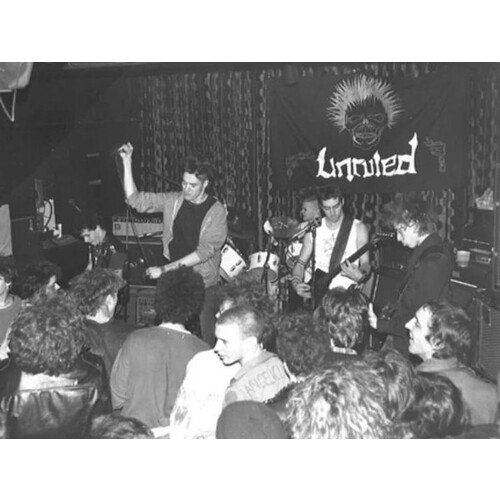
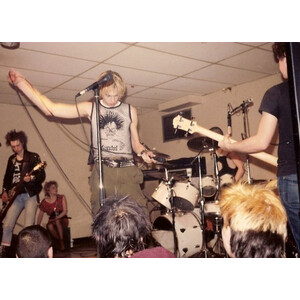
Unruled played its first party performance in November 1982 in the basement of a former convenience store. The dusty, rat-infested room was far removed from a conventional concert venue. Their second performance took place in an equally unlikely location—a suburban church basement—where approximately 175 people gathered. Both events became confrontational, with altercations breaking out around Lowe, establishing the instability and physical intensity that would follow the band throughout its early career.
A promoter who attended the church-basement performance invited Unruled to open at the Spectrum for Dead Kennedys and D.O.A. The resulting June 1983 engagement gave the young group its first major exposure in central Montréal. One month later, they returned to the Spectrum on a bill with Charged GBH, MDC and S.C.U.M.
Ruthemann left during 1983 because of musical differences and personal tensions within the group. His replacement was Louis Lévesque, a highly accomplished young drummer whose earlier musical interests included progressive rock. According to the band’s later account, Lévesque moved from playing Genesis material to hardcore within approximately a week. His precision and speed considerably strengthened Unruled’s sound.
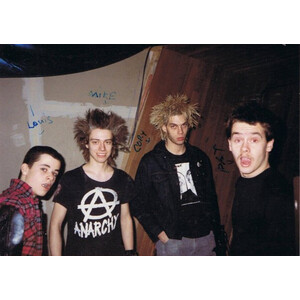
The Cory Lowe–Michel Cyr–Patrice Gaudette–Louis Lévesque lineup became the group heard on its original record. Lowe supplied the hoarse, forceful vocals; Cyr played guitar; Gaudette played bass; and Lévesque drove the songs with fast, unusually disciplined drumming.
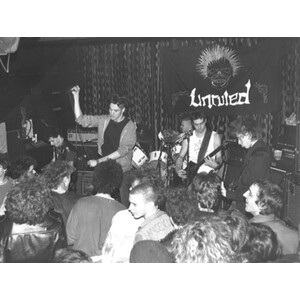
Unruled rehearsed and performed regularly at the Bleury Beach Club, commonly known as the BBC. Located in an old building on De Bleury Street, the BBC functioned as a rehearsal space, punk house, informal venue and gathering place for Montréal’s emerging hardcore community. Unruled belonged to a network that included Genetic Control, No Policy, Fair Warning and other formative local groups, while visiting bands were frequently housed, entertained or introduced to the Montréal scene there.
In November 1983, Unruled appeared with Discharge, one of the bands that had most directly shaped its music. When the British group had to leave before midnight because of expiring travel documents, Unruled unexpectedly finished the evening as the headlining act. The musicians later remembered it as one of their strongest performances of the 1980s.
By this point, the group believed it was ready to record an album. Studio costs proved prohibitive, however, and the proposed seven-song LP was reduced to a seven-inch release. Seven tracks were recorded, but only three were selected for the finished record.
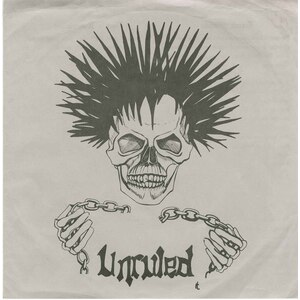
The sessions took place at Studio Utopic, located at 3210 Rachel Street East in Montréal. The recording was produced by Simon and Unruled, with artwork by Michel Cyr. Issued independently as UNR-000 in 1984, the record was officially self-titled but became commonly known as the Time Is Running Out EP.
Its three songs were ‘Time Is Running Out,’ ‘Forced Mistake’ and ‘Lost Cause.’
The EP distilled Unruled’s early identity into fewer than eight minutes. ‘Time Is Running Out’ imagined ordinary Canadians trapped between the United States and the Soviet Union as the threat of nuclear war intensified. ‘Forced Mistake’ rejected military recruitment and the glorification of soldiers sacrificed in the service of government interests. ‘Lost Cause’ expressed the frustration of political resistance conducted against propaganda, institutional power and public indifference.
The band’s sound was unmistakably shaped by the British punk explosion of the early 1980s, but it was not simply an imitation. The songs combined rasping vocals and Discharge-like momentum with recognizably melodic guitar movement. Contemporary and later reviewers heard elements of early Discharge and GBH, while noting a more melodic character than that of many subsequent bands working in a similar style.
The original EP became an important document of early Montréal hardcore. It appeared while local musicians were still creating the venues, networks and independent production methods that would sustain the city’s punk scene. Its plain white labels, self-financed presentation and locally produced lyric insert reflected the do-it-yourself conditions under which the record was created.
Internal conflict soon destabilized the recording lineup. Following a March 1984 performance in an old church basement near Les Foufounes Électriques, a violent confrontation developed between Cory Lowe and Louis Lévesque. Lowe threw a beer bottle that struck Lévesque, who required stitches. Lévesque immediately left Unruled and joined Genetic Control, where his combination of progressive-rock technique and hardcore speed became an important part of that group’s sound.
Cyr and Gaudette subsequently separated from Lowe as the vocalist’s musical direction moved further from their own. A brief transitional period followed before Cyr and Gaudette assembled a third principal version of Unruled near the end of 1984.
That configuration featured Philippe Lajoie on vocals, Michel ‘Wax’ Cyr on guitar, Stéphane Vital-Blais on second guitar, Patrice Gaudette on bass and Louis Bélanger on drums. The lineup continued performing during 1985, but further disagreements eventually resulted in Lajoie’s dismissal and the departures of Gaudette and Vital-Blais.
Cyr briefly continued using the Unruled name with hired musicians. Surviving concert evidence indicates that the band remained active beyond the original EP lineup, including later appearances with groups such as Corrosion of Conformity, D.R.I. and UK Subs. Unruled therefore ended gradually through changing personnel rather than at one precise moment, finally becoming inactive during 1986.
The former members remained connected to Montréal’s punk and metal communities. Lévesque continued with Genetic Control, while Lowe briefly rehearsed with the developing Dead Brain Cells before that group settled upon another lineup. Cyr and Gaudette also remained involved with musicians and friends from the scene that had produced Unruled.
The original EP continued to circulate among collectors, tape traders and later generations of punk musicians. Its scarcity, direct political language and early embrace of the Discharge and GBH sound gave it a growing underground reputation. Retrospective assessments have placed Unruled among Canada’s earliest UK82- and D-beat-influenced groups, although the band’s melodic guitar passages and specifically Montréal background gave its music a character distinct from its British models.
The story resumed on December 31, 2008. Cyr invited Gaudette to perform Unruled songs at a New Year’s Eve concert with vocalist Chany Pilote and drummer Sam Verville of Inepsy. The temporary group appeared under the name Un-Inepsy-Ruled.
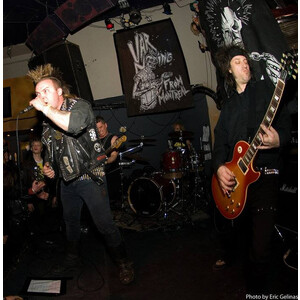
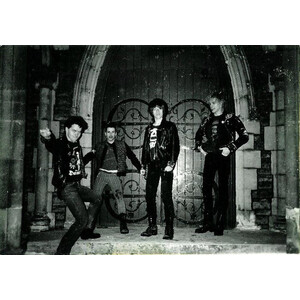
The audience response encouraged the musicians to continue. In January 2009, Unruled was formally reactivated with Chany Pilote on vocals, Michel ‘Wax’ Cyr on guitar, Patrice ‘Pat God’ Gaudette on bass and Sam Verville on drums. The new lineup joined two founding members with musicians from a younger generation of Montréal crust and hardcore punk.
During the summer of 2009, Unruled also staged a reunion of the lineup heard on the 1984 EP: Cory Lowe, Michel Cyr, Patrice Gaudette and Louis Lévesque. The appearance brought together the four musicians responsible for the band’s best-known early recording approximately twenty-five years after its release.
The Cyr–Gaudette–Pilote–Verville lineup then entered the studio with engineer Kevin Frenette, who recorded, mixed and mastered a full-length album. Gaudette and Cyr produced the project with Schizophrenic Records, while Pilote created the artwork and Darrin Cosgrove handled the design.
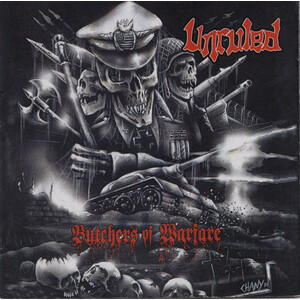
Released on CD and vinyl in 2010, Butchers of Warfare finally gave Unruled the full-length album it had been unable to afford during the early 1980s. Its new material retained the band’s anti-war and anti-authoritarian outlook while placing it within a heavier contemporary attack incorporating hardcore, thrash, crust and metallic punk.
The album included ‘Butchers of Warfare,’ ‘Clear the Pigs Out,’ ‘Government Games,’ ‘Heroin,’ ‘Hypocriticals,’ ‘Iraq Attack,’ ‘For Our Rights,’ ‘Riot Squad,’ ‘Screams of Fear’ and the self-referential ‘Unruled.’ It also presented new recordings of ‘Forced Mistake,’ ‘Lost Cause’ and ‘Time Is Running Out.’
The CD added the three original 1984 EP recordings as archival bonus tracks, allowing listeners to hear the band’s two principal eras together. The vinyl edition contained the thirteen modern recordings and was pressed in an edition of 900 black copies and 100 red-and-white splatter ‘die-hard’ copies, the latter accompanied by a back patch, sticker, button and large booklet with a silkscreened cover.
The album was more than a nostalgic reunion document. Its performances preserved Unruled’s confrontational energy while adding a heavier rock-and-metal drive. The presence of Pilote and Verville connected the group’s early Montréal hardcore roots with the crust-punk culture that had developed in the city during the intervening decades.
The original EP was subsequently reissued, further restoring material that had long remained difficult to obtain. Together, the reissues and Butchers of Warfare introduced Unruled to listeners who had known the group only through collector accounts, copied tapes or scattered references in histories of Canadian punk.
Unruled occupied an important place in the formation of Montréal hardcore. They emerged before the scene possessed stable venues, established labels or dependable touring infrastructure. Their history unfolded through convenience-store and church basements, the Spectrum and the Bleury Beach Club—places where bands, promoters and audiences were constructing their own culture in real time.
Their original catalogue was extremely small, but its importance exceeded its size. The 1984 EP captured an early Canadian response to Discharge, GBH and the politically charged British punk of the period, while addressing nuclear war, militarism, propaganda and political power from a specifically Canadian perspective.
The reunion completed a story left unfinished in the 1980s. What began as an unaffordable seven-song album project finally became a full-length record twenty-six years later. Butchers of Warfare did not merely recreate the sound of the original EP; it connected Unruled’s founding generation with the heavier Montréal punk culture that had developed in its wake.
-Robert Williston
Discography
Featured Titles
Albums
Singles
Gallery
Images
6 images
UNRULED 006
UNRULED 004
UNRULED 003
UNRULED 002
UNRULED 001
Unruled
Media
Videos
0 videos
No videos available for this artist.