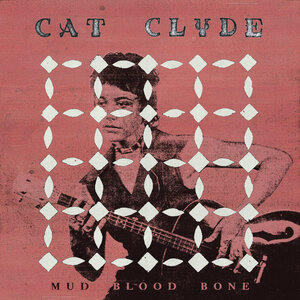
Cat Clyde
Websites:
https://catclydemusic.com/, https://www.facebook.com/catclyde/
Origin:
Perth County → London, Ontario, 🇨🇦
Biography:
Cat Clyde is a Canadian singer-songwriter whose work bridges old-world blues, country soul, folk balladry, and modern roots music with uncommon ease. Emerging from rural southwestern Ontario in the mid-2010s, she quickly distinguished herself as one of the strongest young voices in Canadian roots music: a performer with a dusky, elastic vocal style, a deep feel for pre-rock idioms, and a songwriting voice that steadily evolved from vintage-informed atmosphere into something more searching, personal, and self-defined. Across a run of increasingly confident releases—Ivory Castanets (2017), Hunters Trance (2019), Good Bones (2020), the collaborative Blue Blue Blue (2021, with Jeremie Albino), Down Rounder (2023), and Mud Blood Bone (2026)—Clyde has built a catalogue that sounds steeped in tradition without ever becoming trapped by it.
Born and raised in Ontario, Clyde spent her formative years moving around the province before her family eventually settled in Perth County, near Stratford, when she was around ten years old. That rural upbringing became foundational to both her imagination and her later writing. In interviews she has repeatedly described long stretches of time spent outdoors—walking the woods, absorbing the pace of country life, and forming a lasting bond with the natural world that would later become central to her lyrical worldview. She taught herself guitar at fourteen, after earlier exposure to piano as a child, and developed quickly enough that she was soon teaching at her parents’ music shop. By high school she was already playing in a band, and after graduation she studied music business/production while busking and sharpening the live, intuitive style that would become part of her identity. Her earliest inspirations were not contemporary pop artists but older, heavier spirits: Lead Belly in particular made a major impact when she discovered his music as a teenager, while the emotional force of artists like Patsy Cline, Karen Dalton, Bobbie Gentry, Etta James, and other roots-era vocalists helped shape both her phrasing and her sense of musical atmosphere.
Clyde’s earliest widely circulated recordings appeared before her formal debut album, but it was Ivory Castanets, released in 2017, that properly introduced her as a national artist. Recorded in an informal basement setting and developed in an organic, low-pressure environment, the album captured the loose-limbed quality of her early sound: smoky vocals, blues and folk foundations, touches of swing and saloon-era mood, and a deliberate refusal to modernize away the rough edges. The album established her as a new voice in Canadian roots circles and yielded early signature songs such as “Mama Said,” which later became one of her most recognized tracks and helped broaden her audience considerably. Critics and interviewers at the time often emphasized the “old soul” quality of her singing, but even in this first phase there was already more going on than retro styling: Clyde’s performances carried a sense of emotional directness and restraint that made her feel less like a revivalist than a young songwriter using older languages because they still felt alive.
Her second album, Hunters Trance, arrived in 2019 and deepened that reputation. By then, Clyde was no longer simply being introduced as a bluesy newcomer from Stratford; she was beginning to be recognized as a singular stylist whose records could move fluidly between gritty, riff-driven material and more intimate, reflective songs without losing cohesion. Reviewers noted the wider dynamic range of the album, contrasting tougher, more urgent performances with slower country-inflected meditations. Hunters Trance also marked a clearer maturation in her writing, with the emotional and tonal contrasts of the record suggesting an artist who was becoming less interested in mood for its own sake and more invested in shaping songs as personal statements. By this point she had already begun touring widely in Canada, the United States, and Europe, building a reputation as a compelling live act whose vocal power often surprised first-time listeners.
In 2020, rather than rushing directly into a conventional follow-up, Clyde released Good Bones, an acoustic reimagining of material from her first two albums. Stripped of some of the atmospheric dressing, these performances highlighted the core strengths beneath the arrangements: song structure, melodic instinct, and a voice capable of carrying a track with minimal support. The record served both as a reset and a statement of confidence. It also underscored the fact that her catalogue was not dependent on production flourishes or retro aesthetics; the songs held up in a bare setting. Released in the first year of the pandemic, Good Bones also fit the moment—intimate, direct, and reflective—while reinforcing Clyde’s growing stature as a songwriter rather than merely a stylist.
A notable side path came in 2021 with Blue Blue Blue, a collaborative album with fellow Canadian roots artist Jeremie Albino. The pairing made intuitive sense: both artists drew from older vernacular traditions without sounding museum-bound, and the album’s mix of originals and traditional/heritage-minded material allowed them to lean into the chemistry of shared influences. On Bandcamp, Clyde framed the collaboration as the meeting of two musicians with a hunger for the same kind of musical nourishment, and the record was widely heard as a relaxed but deeply felt exchange between kindred spirits. It also demonstrated Clyde’s comfort as an interpreter and duet partner, broadening the picture of her beyond the solitary singer-songwriter frame.
The real artistic pivot in her catalogue came with Down Rounder in 2023, her third solo full-length and, in many ways, the record where her modern identity snapped into focus. Work on the album began in 2020 in a Quebec cabin where Clyde planned to self-produce alongside her partner Strummer Jasson. Those sessions were derailed when a serious mould problem forced the abandonment of the home-studio plan—an upheaval she later described as emotionally difficult after months of momentum. Rather than scrap the material, she regrouped and brought the songs to acclaimed producer Tony Berg. The collaboration became a crucial turning point. Berg and Clyde revisited the material in detail, stripping songs back, rebuilding them, and pushing deeper into arrangement, performance, and songwriting choices. When a narrow opening appeared, the album was recorded at Sound City in Los Angeles in just six days with Berg’s handpicked musicians, a process Clyde described as surprisingly intuitive and creatively affirming after earlier struggles with collaboration. She wanted the record to feel live and moment-based, and that immediacy became one of its defining strengths.
Down Rounder broadened Clyde’s sonic world without abandoning her roots. The record remained grounded in country, blues, and folk, but its emotional center shifted toward questions of place, spiritual alignment, overstimulation, personal purpose, and the human relationship to the natural environment. Songs like “Mystic Light” and “I Feel It” revealed a writer reaching for existential language without sacrificing plainspoken clarity, while “Papa Took My Totems” signaled a willingness to engage more explicitly with colonial violence, environmental desecration, and the destruction of what she considered sacred. Clyde herself described the album as grounded in nature and intended to feel raw, rough, and simple in the way of seasonal beauty or a setting sun. It was also, significantly, the first period in which she began speaking more publicly about deeper dimensions of identity, spirituality, and ancestry that would become more central in the work that followed.
By 2025 and into 2026, those threads became more visible. Interviews and artist profiles around the release of new material identified Clyde as Métis, and she began discussing that identity in more direct terms, including the complexity of feeling distanced from aspects of her own heritage and the process of reconnecting through friendship, spirituality, and relationship to land. That exploration fed directly into the writing of her fourth full-length, Mud Blood Bone, released March 13, 2026. Her first album for Concord Records, Mud Blood Bone was produced by Drew Vandenberg and marked another significant transition—less a break from the past than a sharper integration of the many strands she had been carrying all along. Press materials described it as a meeting point between rockabilly grit, country heart, folk-rock vulnerability, and contemporary indie tension; recent interviews added another ingredient Clyde herself was eager to foreground: punk energy, not as a strict genre move but as a spiritual force in the music.
Released just yesterday, Mud Blood Bone is her fourth solo LP and perhaps her most self-aware statement to date. The album contains eleven songs on Bandcamp, including “Where Is My Love,” “Man’s World,” “Wild One,” “Dark Back,” “Hold My Hand,” “I Am Now,” “My Love,” “Wanna Ride,” “Night Eyes,” “Press Down,” and “Another Time.” Early coverage emphasizes its broader emotional and thematic scope: searching for love without surrendering autonomy, confronting overstimulation and vulnerability, questioning gendered power structures, and reckoning with identity in both personal and ancestral terms. One recent review notes that the album explicitly touches on Clyde’s questioning of her Métis identity while framing the record as a search—for love, belonging, and self-possession after the end of a significant cycle. Another interview highlights how Clyde sees genre fluidity as natural to her creative process, with country roots remaining central even as jazz, blues, and punk energies move freely through the songs. A co-write with Courtney Marie Andrews and contributions involving Boy Golden have also been noted in the current press around the record.
What makes Cat Clyde especially significant within the current Canadian landscape is that her evolution has been unusually coherent. Many artists begin with a strongly branded retro sound and spend years trying to escape it; Clyde instead used old forms as a foundation, then gradually widened the aperture until the music could contain everything she needed—blues grit, country tenderness, spiritual unease, punk impatience, folk introspection, and a growing relationship to land and lineage. Her records still carry the tactile pull of older music, but they no longer depend on nostalgia. They sound lived in rather than reenacted.
-Robert Williston