Artist / Band
Shitbats
Biography
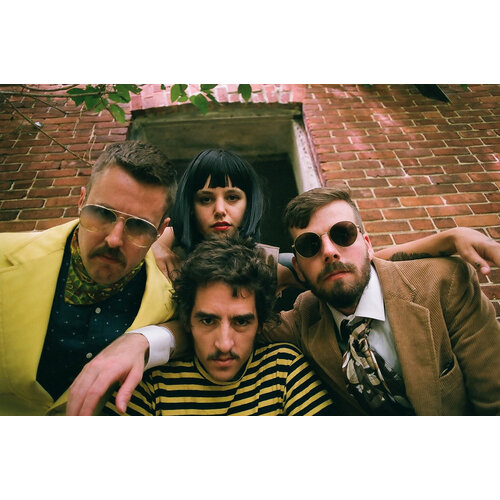
Shitbats were an Ontario punk band whose brief but memorable recorded output revealed a rougher, louder, and more feral side of singer Cat Clyde than listeners of her solo work might initially expect. Built around Clyde on vocals with Dan Serre on guitar, Mitch Decaire on bass, and Strummer Jasson on drums, the group fused garage punk, surf-punk, and scuzzy rock ’n’ roll into a sound that was deliberately unpolished, fast-moving, and instinct-driven. Their songs were compact, wiry, and full of attitude—music that seemed to thrive on immediacy rather than refinement, with the kind of loose-limbed energy that suggested the best takes were often the ones closest to falling apart. Though their discography remains small, Shitbats occupy an intriguing place in the story of contemporary Ontario independent music, not least because they exposed a side of Cat Clyde’s artistic personality that would only become more widely understood years later.
Public information on the band’s earliest years is limited, but available sources suggest that Shitbats were active by the mid-2010s. Later coverage of their debut album described them as a side project that had been together since at least 2014, while Cat Clyde has explained in interview that she joined the band during her college years through friends in her music program. That timing places the group squarely in the same formative period during which she was still developing her solo identity, busking, studying music business, and absorbing a wide range of influences. In that sense, Shitbats were not a novelty detour from a more serious solo career, but part of the same creative ecosystem that shaped her as a working musician. It was also through the band that she met Strummer Jasson, who would become both an important collaborator and a central figure in her later life and work.
The band’s geographic origin is slightly inconsistent in the public record. Their Bandcamp page identifies them with Hamilton, Ontario, while at least one press source from the period describes them as coming from London, Ontario. What is clear is that they emerged from southwestern Ontario’s broader independent scene, and their sound fits that context well: raw, irreverent, and unconcerned with polish. If Cat Clyde’s solo work drew from the deep traditions of blues, folk, and country, Shitbats pushed in the opposite direction—not away from authenticity, but toward a different kind of it. This was music built on abrasion, momentum, and the simple pleasure of a band bashing out a sharp idea before it had time to become too careful.
Shitbats’ aesthetic was as scrappy as their sound. Press surrounding the band leaned gleefully into exaggeration and absurdity, casting them less as a conventional emerging act than as a gang of punk misfits with a taste for chaos and humour. Behind the theatrics, however, the music itself was easy to identify: lean, catchy, and nervy, with clear roots in garage punk, surf-punk, and stripped-down rock ’n’ roll. The guitar attack was twitchy and direct, the rhythm section stayed propulsive and unfussy, and Clyde’s vocal delivery took on a different shape than in her solo work—less smoky and haunted, more bratty, sharp-edged, and immediate. The contrast was striking, but it also made sense. Beneath the older musical forms that informed her solo records, there had always been another instinct at work: a love of rawness, release, and emotional force without ornament. Shitbats simply gave that instinct its own band.
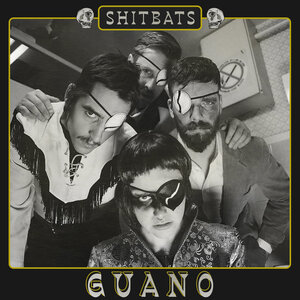
Their debut album, Guano, was released independently on October 16, 2020. Issued on CD and digitally, the eight-song record captured the band’s sensibility with little wasted motion. Tracks such as ‘Fishing in the Waters of Skull Island,’ ‘Reefer Madness,’ ‘Ego Amigo,’ ‘Ad Make Sad,’ ‘Seaweed Sway,’ ‘Succubus,’ ‘Let Me Go,’ and ‘Goodbye Rock Rat’ ran on short-form impact rather than expansion, favouring punch, hooks, and oddball personality over any attempt at polish or grandeur. Bandcamp credits list all songs as written by Shitbats, with lyrics credited to Cat Clyde and Strummer Jasson, underlining the band’s collaborative identity. The album was recorded at SecondPrize Studio by Jasson, mixed by Taylor Carroll, mastered by Robert Nation, with album photo by Drew Snyder and design by Katey Gatta. Even in a project that embraced looseness and irreverence, the creative structure was clear.
Two songs in particular emerged as early calling cards around the album’s release. ‘Let Me Go’ received a video and early attention in advance of the full record, while ‘Ego Amigo’ also surfaced prominently during the rollout. Both tracks distilled the band’s strengths: compact construction, memorable titles, a sly sense of humour, and an approach that treated punk less as a doctrine than as a useful delivery system for tension, sarcasm, and release. Reviews and writeups consistently described the group in terms of surf-punk, garage punk, and primitive rock energy, and that framing holds up. Guano never overstates itself. It is not trying to be a grand statement of scene politics or art-school posture. It simply sounds like four musicians with a shared taste for ragged, catchy noise, recorded with enough clarity to hit and enough looseness to stay dangerous.
In retrospect, the timing of Guano makes it especially revealing. It appeared the same year as Cat Clyde’s acoustic solo album Good Bones, and the contrast between the two records remains one of the most illuminating juxtapositions in her broader catalogue. Good Bones stripped her songwriting down to its barest emotional essentials, presenting her as an intimate, roots-grounded songwriter working with restraint and atmosphere. Guano, by contrast, threw her into a louder, faster, more impulsive setting, foregrounding attack, humour, and abrasion. Far from contradicting one another, the two releases together offer a fuller picture of Clyde’s artistic range. One showed the bones; the other showed the teeth.
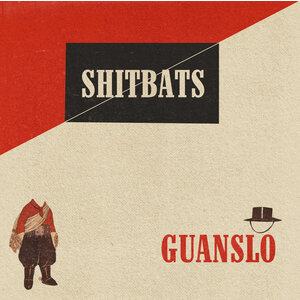
Shitbats did not disappear entirely after Guano. In December 2021, the band returned to the stage for at least one notable Toronto show at Lee’s Palace, sharing a bill with Wine Lips and Sham Family, with promotional posts framing the appearance as a return after a long absence. That performance was followed by the digital release of Guanslo in November 2022, a short companion document that captured live versions of ‘Ad Make Sad,’ ‘Let Me Go,’ and ‘Reefer Madness,’ along with instrumental versions of the same tracks. Like Guano, the release remained close to the band’s DIY center: recorded live at SecondPrize Studio by Jasson, mixed by Drew Snyder, mastered by Rob Nation, and presented with artwork by Jasson. Though modest in scale, Guanslo confirmed that Shitbats were more than a one-off joke or a forgotten side experiment. They were a real band with an internal chemistry strong enough to survive beyond a single album.
There are also hints of additional material beyond the officially documented releases. Early 2022 posts announced ‘Ready for a Reason’ as the first single from an upcoming EP, suggesting the group may have been preparing to expand their catalogue further. The public trail around that project remains thin, and no widely documented full EP release has surfaced in the same way as Guano or Guanslo. Even so, the evidence points to a band that remained intermittently active rather than instantly dissolving after its debut.
What gives Shitbats their lasting interest is not simply that they were a fun Ontario punk band with a taste for absurd titles and scrappy hooks, though they were certainly that. Their significance lies in what they reveal. For Cat Clyde, Shitbats form an important missing chapter: the project that exposed the punk undercurrent in her artistry long before later solo records began making that edge easier to hear. For Strummer Jasson, the band marked the beginning of a creative partnership that would carry into later solo recordings, home studio sessions, and major turning points in Clyde’s career. And for listeners coming to the band on its own terms, Shitbats remain a sharp, funny, unpretentious reminder that some of the best garage-punk records are the ones that know exactly how little they need to do—just hit hard, move fast, and leave a mess behind.
-Robert Williston
Tracks
14 tracks

Guano (2020)
8 tracks
-
Fishing in the Waters of Skull Island
-
Reefer Madness
-
Ego Amigo
-
Ad Make Sad
-
Seaweed Sway
-
Succubus
-
Let Me Go
-
Goodbye Rock Rat

Guanslo (2022)
6 tracks
-
Ad Make Sad (Guanslo)
-
Let Me Go (Guanslo)
-
Reefer Madness (Guanslo)
-
Ad Make Sad (Instrumental)
-
Let Me Go (Instrumental)
-
Reefer Madness (Instrumental)
Discography
Featured Titles
Albums
Gallery
Images
1 image

Shitbats
Media
Videos
0 videos
No videos available for this artist.