Artist / Band
The Phantoms
Biography
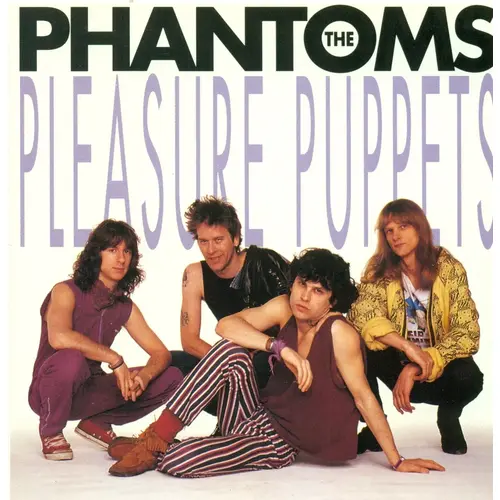
The Phantoms were an Ottawa-formed blues-rock band that became one of Toronto’s most exciting and respected live club acts during the late 1980s and early 1990s. Built around singer and harmonica player Jerome Godboo, guitarist Joe Toole, bassist Big Ben Richardson and drummer Gregory Ray Tunis, the group combined hard-driving blues with rock, soul, funk and reggae influences. Their recorded catalogue was relatively small, but their explosive performances and devoted following gave them a reputation far greater than their three principal releases might suggest.
The musicians came together in Ottawa around 1985–86, reportedly emerging from an earlier group called the Rapid Waters Band. Ottawa’s blues scene had a strong Chicago influence, favouring a faster and more aggressive approach than traditional or polished blues styles. That intensity became an important part of the Phantoms’ sound, particularly in Godboo’s forceful singing and harmonica playing and in the band’s powerful rhythm section.
Soon after forming, the Phantoms relocated to Toronto. The move placed them within one of Canada’s most active club scenes and exposed the group to a wider range of musical influences. In addition to blues and rock, they absorbed elements of reggae from Toronto’s Jamaican community, along with funk, soul and rhythm and blues. Rather than treating these styles as separate genres, the Phantoms brought them together within an energetic, improvisational live show.
Godboo became the group’s focal point onstage. His uninhibited performances, physical stage presence and aggressive harmonica playing made the Phantoms difficult to contain within the conventions of an ordinary blues band. However, the group’s appeal depended equally on the interaction among all four musicians. Toole supplied sharp, economical guitar work; Richardson anchored the music with a heavy, flexible bass style; and Tunis drove the arrangements while also contributing vocals. All four members sang, and much of the original repertoire was credited collectively to the band.
The Phantoms built their following through constant club work rather than immediate commercial exposure. Their concerts were spontaneous and unpredictable, shaped by the chemistry among the musicians and their interaction with the audience. The band became especially associated with Toronto’s Diamond Club, one of the city’s most important rock venues of the period. Contemporary accounts reported that the Phantoms sold out the approximately 1,000-capacity club seven times within a single year.
That relationship was documented on the independently released cassette Alive at the Diamond in 1988. Recorded live with the Comfort Sound Mobile Recording Unit, the album captured the group in its natural environment rather than attempting to recreate its energy in a conventional studio.
The recording included the originals ‘Everything Is Changing’, ‘Blue Funk’, ‘I’m the Man’, ‘I’m So Lucky’, ‘Rise’, ‘Target’, ‘The Skull’ and ‘Rich Sister’, together with Joe Louis Walker’s ‘Fuss and Fight’ and the Motown standard ‘Ain’t Too Proud to Beg’. Most of the original material was jointly credited to Richardson, Tunis, Godboo and Toole, with additional writers including R. Misener and Damian Arokium.
Alive at the Diamond was recorded and mixed by respected Canadian mobile-recording engineer Doug McClement, with Billy Bryans assisting. Gabe Lee edited the recording at Comfort Sound in Toronto. Although independently issued, the cassette demonstrated that the Phantoms already possessed a substantial repertoire and a fully developed musical identity.
Their growing audience eventually led to an agreement with Spy Records, with Canadian distribution through A&M Records. The band was determined to preserve the chemistry that had made its live performances successful and resisted attempts to reshape its sound according to conventional record-company expectations.
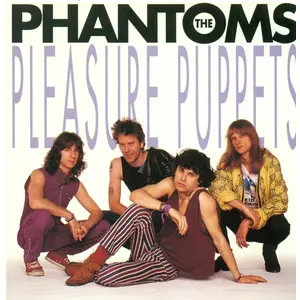
The Phantoms’ first studio album, Pleasure Puppets, was released in 1990. The recording retained the classic lineup of Godboo, Toole, Richardson and Tunis and featured twelve songs drawn largely from the band’s collective writing.
The album opened with ‘Heavenly Girl’ and continued with ‘Tonight I Bleed Again’, ‘Suspicious’, ‘No More B.S. for Me’, ‘I’m the Man’, ‘Life Like a Wheel’, ‘Kill the Devil’, ‘Target’, ‘Little Girl’, ‘Stay’, ‘Home’ and ‘Big Bad World’. Damian Arokium shared the writing credit on ‘Target’, while the remaining songs were credited to the Phantoms.
Production was divided among Billy Bryans, Kevin Doyle and the band itself. Bryans produced ‘Heavenly Girl’, ‘I’m the Man’, ‘Life Like a Wheel’, ‘Target’, ‘Little Girl’ and ‘Stay’. Doyle produced ‘Tonight I Bleed Again’, ‘Suspicious’, ‘No More B.S. for Me’, ‘Kill the Devil’ and ‘Home’, while the Phantoms produced ‘Big Bad World’.
The contrasting production styles suited a group whose music crossed several boundaries. Bryans brought extensive experience with rock, reggae and Caribbean music, while Doyle helped retain the band’s direct rock and blues attack. The resulting album moved easily between hard-edged blues rock, soul, funk and reggae-influenced rhythms without losing the rawness that had defined the Phantoms onstage.
‘Stay’ received Canadian radio exposure, while ‘Home’ became the group’s most enduring recording. The latter was later recognized as one of Toronto’s notable rock songs and helped preserve the reputation of a band often remembered as having deserved greater national and international recognition.
By the time Pleasure Puppets appeared, the Phantoms were touring beyond Toronto. They performed across Canada, including dates in Saskatoon and Vancouver, while maintaining their strong position within the Toronto club circuit. Their reputation earned them a nomination for Best Toronto Club Act at the 1990 Toronto Music Awards.
The Phantoms also became part of the broader Toronto blues and roots-rock community. Godboo, Richardson and Toole appeared in musical circles connected with performers such as Jeff Healey, David Wilcox, Big Sugar and David Gogo. An archival Jeff Healey performance of ‘Back O’ Town Blues’ featured Godboo on harmonica and Richardson on bass, reflecting the close connections among musicians working in Toronto’s clubs at the time.
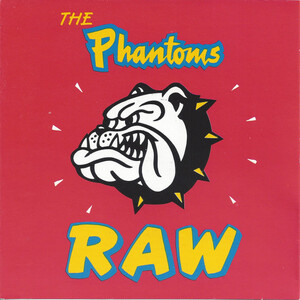
After the Spy Records period, the Phantoms signed with Forte Records & Productions and released their second studio album, Raw, in 1992. The title accurately represented the album’s stripped-down emphasis on blues, ensemble playing and direct performance.
The core credited musicians were Jerome Godboo on lead vocals and harmonica, Joe Toole on guitar, and Big Ben Richardson on bass and vocals. Richardson and Kevin Doyle produced the album, with Doyle also recording and mixing it. Trevor Morris assisted with the sessions.
Additional musicians included Tortoise Blue on Hammond B3 organ, Mean Steve Piano on ‘Sing for My Supper’, and Slavka Korbrin on rhythm guitar for ‘Same Old Story’ and ‘Ego Trip’. The album was recorded principally at Sounds Interchange in Toronto, with the Hammond organ recorded separately at See the Light Studios by Gary Fishman.
Unlike Pleasure Puppets, which concentrated on original songs, Raw combined band compositions with material drawn from blues, soul and roots music. The Phantoms contributed ‘Things I’ve Been’, ‘Mother’ and ‘Sing for My Supper’. The album also included ‘One Way Street’, ‘Koo Koo’, ‘Break It Up’, ‘Same Old Story’, Willie Dixon’s ‘Mellow Down Easy’, Albert Collins’ ‘Ego Trip’, and ‘Boogie Thing (Hypnotizin Boogie)’, associated with David Wilcox and Matt Murphy.
All of the material was arranged by the Phantoms. Rather than presenting the outside compositions as faithful reproductions, the band reshaped them through its own heavy rhythm section, Godboo’s harmonica and Toole’s guitar work. The result brought the group closer to its blues foundations while retaining the intensity of its rock performances.
The original Phantoms ceased regular activity after Raw. Their principal discography therefore consisted of only three releases: the live cassette Alive at the Diamond, the studio album Pleasure Puppets and the later Raw. That limited output does not reflect the band’s importance within the Toronto music community, where its reputation was built primarily through performance.
Jerome Godboo went on to become one of Canada’s best-known blues harmonica players and an active solo performer. His later work retained the spontaneity, physical energy and stylistic openness that had characterized the Phantoms.
Big Ben Richardson continued in Canadian blues and rock, becoming associated with Big Sugar and later Grady. His powerful bass playing remained well suited to the heavier, blues-based music he had developed with the Phantoms.
Joe Toole remained a respected member of Toronto’s music community. He later performed traditional blues with Brokenjoe, including regular appearances at Grossman’s Tavern, and worked at important Toronto venues including Lee’s Palace and the Horseshoe Tavern. Following his death in 2023, tributes emphasized not only his musicianship but also his long-standing presence within the city’s club culture.
Gregory Ray Tunis remained identified with the Phantoms’ classic lineup and with the tightly integrated rhythm section that had powered the group’s rise from Ottawa clubs to sold-out Toronto performances.
The Phantoms were sometimes described simply as a blues-rock band, but that label only partly captures their identity. Their foundation was blues, particularly the forceful Chicago-influenced approach associated with Ottawa, but their music also drew from hard rock, soul, funk, reggae, rhythm and blues and garage rock. The combination was held together by collective playing rather than strict adherence to any one style.
Their story is ultimately that of a live band whose records preserved only part of its impact. The Phantoms developed without extensive major-label support, built a large audience through club performances, sold out one of Toronto’s best-known venues repeatedly and earned recognition as one of the city’s leading live acts.
The group’s lasting reputation rests on the intensity of those performances, the interaction among its four original members and songs such as ‘I’m the Man’, ‘Target’, ‘Stay’ and ‘Home’. Although the Phantoms never achieved the broad commercial breakthrough their following appeared to promise, they remain an important part of the history of Canadian blues rock and of Toronto’s vibrant late-1980s and early-1990s club scene.
-Robert Williston
Tracks
12 tracks
Pleasure Puppets (1990)
Showing 10 of 12 tracks
-
Heavenly Girl
-
Tonight I Bleed Again
-
Suspicious
-
Mo More B.S. For Me
-
I'm the Man
-
Life Like a Wheel
-
Kill the Devil
-
Target
-
Little Girl
-
Stay
Discography
Featured Titles
Albums

Gallery
Images
1 image
The Phantoms
Media
Videos
0 videos
No videos available for this artist.