
Artist / Band
Manitoba Hal (Hal Brolund)

Biography
Manitoba Hal is the performing name of Canadian blues musician, songwriter, ukulele player and instrument builder Hal Brolund, whose recording career began in Winnipeg in the mid-1990s and eventually carried him from the Canadian Prairies to festivals, clubs and ukulele gatherings across Canada and overseas. Although the ukulele became the instrument most closely associated with his work, Brolund began as a guitarist and songwriter, developing his music through open mics, coffeehouses and small-town bar engagements before finding a distinctive place where blues, roots music and the ukulele could meet.
Brolund decided he wanted to play guitar when he was 18, despite having failed high-school band. He spent much of the following decade learning songs, playing covers and taking whatever performing opportunities came his way. By 1995 he was hosting open mics and appearing in Winnipeg coffeehouses, gradually working more of his own material into his sets. That year he made an early six-song cassette, The Whiskey, after a friend offered him inexpensive studio time. His brother paid to have 100 copies duplicated, and at one of Brolund's early shows he sold 13 of them for five dollars each. It was a small beginning, but an important one. Brolund later remembered the experience as the point when he began to think of himself as a recording artist.
Further independent releases followed, including Flatland Cafe in 1997 and When Hal Freezes Over in 1999. At the same time, Brolund was becoming increasingly active on the Western Canadian festival circuit. An appearance at Regina's Mid-Winter Blues Festival in 1998 also gave him the name that would eventually define his career. Performers were introduced according to where they came from, and Brolund was presented as Hal from Manitoba. After years of seeing people struggle with the spelling of his surname, he liked the simplicity of Manitoba Hal and formally adopted the name in 2000.
Brolund was also involved behind the scenes in Manitoba's music community. He worked as Member Services Coordinator for the Manitoba Audio Recording Industry Association, now Manitoba Music, before leaving the position in 2002 to concentrate on performing full time. That year brought the album Kick At The Stones and an appearance at the Winnipeg Folk Festival. This Condition followed in 2003, beginning a long series of independently produced recordings that documented his gradual move from guitar-based roots and blues toward the sound that would become his signature.
The ukulele had been part of Brolund's life long before it became central to his career. His grandfather left him a 1955 Martin ukulele on the condition that he learn to play it, but for many years guitar and slide guitar remained his primary instruments. A turning point came when a festival booker pointed out how many blues guitarists were competing for the same stages and how few performers were approaching the blues seriously on ukulele. Brolund recognized the possibilities. Rather than treating the instrument as a novelty, he began exploring how it could carry the weight, grit and emotional range of blues music. The idea developed into the Ukulele Bluesman, combining slide techniques, resonator instruments, looping, effects and a highly personal approach to both traditional and original material.
In 2005 Brolund became one of the founders of the Ukulele Club of Winnipeg, which began with informal gatherings in people's homes and grew into a much larger community of players. As his own touring expanded, teaching became an increasingly important part of his work. He presented workshops and demonstrated ways of taking the ukulele beyond its familiar role as a light accompaniment instrument. His performance schedule eventually took him throughout Canada and into the United States, Europe, Australia and New Zealand, with appearances at folk, blues and ukulele festivals, clubs and workshops.
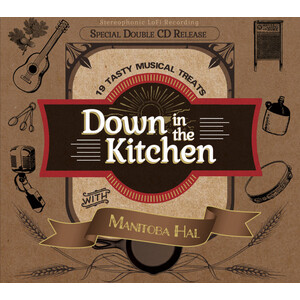
In 2010 Brolund relocated from Winnipeg to Shelburne, Nova Scotia, beginning another important chapter in his career. There he established Hal's Kitchen, which became both his recording space and the name associated with much of his later independent work. Albums including Flirting With Mermaids, Devil On The Wall, Down In The Kitchen, Dancing In The Moonlight and Blues Is In The Water reflected an artist increasingly comfortable moving between acoustic blues, jug-band textures, slide playing, traditional material and original songwriting. Down In The Kitchen, recorded in January 2014, drew upon ukuleles, cigar box guitars and other handmade or unusual stringed instruments, continuing Brolund's interest in expanding the sounds available to him.
His live work was captured particularly well on LIVE in Ghent, recorded at the Missy Sippy Blues & Roots Club in Ghent, Belgium. The album came about unexpectedly. During the European tour, the bridge flew off one of Brolund's ukuleles during a performance in the Netherlands. He borrowed an instrument from someone in the audience and finished the show. Once his own instrument had been repaired, a later performance in Ghent was recorded by the venue's sound engineer. The recording became a double live album and preserved the looping, dynamics and improvisation that had become an important part of Brolund's stage performances.
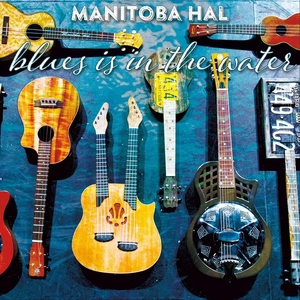
Blues Is In The Water, released in 2018, was nominated for Blues Recording of the Year at the 2019 Music Nova Scotia Awards. The album was built around recurring images of water as home, escape, cleansing, danger, obstacle and redemption. Later recordings continued to move between the directness of live performance and more adventurous studio production. Brolund has generally preferred to learn a piece thoroughly and then capture his voice and principal instrument together, while projects such as Reckless & Wild allowed more room for drum machines, overdubs, distortion, ambience and layered arrangements.
Instrument building eventually became another extension of the same curiosity that had shaped his playing. Along with conventional ukuleles and guitars, Brolund began incorporating cigar box instruments, resonator ukuleles and instruments of his own construction into his recordings. Later releases including Back To The Well, Reckless & Wild and Nice Day For Fishin' show how far his music has travelled from the coffeehouses and open mics of Winnipeg while remaining rooted in blues, songwriting and the simple pleasure of making music. Across three decades of recording and performance, Manitoba Hal has developed a distinctly Canadian body of work in which the ukulele is treated not as a curiosity, but as a serious and expressive blues instrument.
-Robert Williston
Tracks
35 tracks
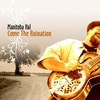
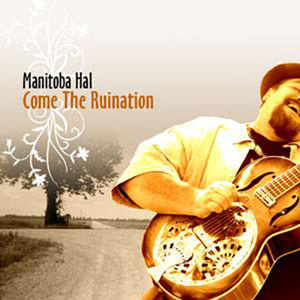
Come the Ruination (2006)
9 tracks
-
Estelle
-
Freight Train
-
Keep On Singing
-
Walls of Jericho
-
Call Me Blue
-
King of the World
-
Whiskey Blues
-
Keep On Singing (Live)
-
Sweet Summer Rain

Blues is in the Water (2018)
10 tracks
-
Alligator
-
My Dyin' Day
-
Papa Gateau (Made of Money)
-
Peel Myself Away
-
Paul Walked On
-
Plenty of Fish
-
Saint Peter
-
Hope of a Brighter Day
-
When Leadbelly Walked the River
-
Blessed by Love
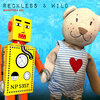
Reckless & Wild (2023)
7 tracks
-
Be Careful What You Ask For
-
Southern Moon
-
Bonnie & Clyde
-
All Around the World
-
Learned Pigs & Fireproof Women
-
Daylight
-
Ten Bucks Too Light

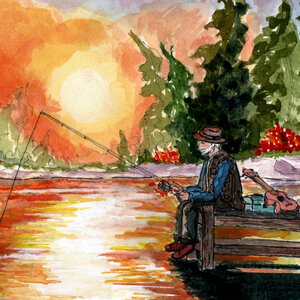
Nice Day for Fishin' (2025)
9 tracks
-
See See Rider
-
Nearly Free
-
I Lobst'r
-
Days That End in Y
-
What Remains is Love
-
Line & Pole
-
Muskoka Moon
-
A Night Like This
-
Please Accept This Letter
Discography
Featured Titles


Albums
Gallery
Images
1 image

Manitoba Hal
Media
Videos
4 videos