Artist / Band
Abraham's Children
Biography
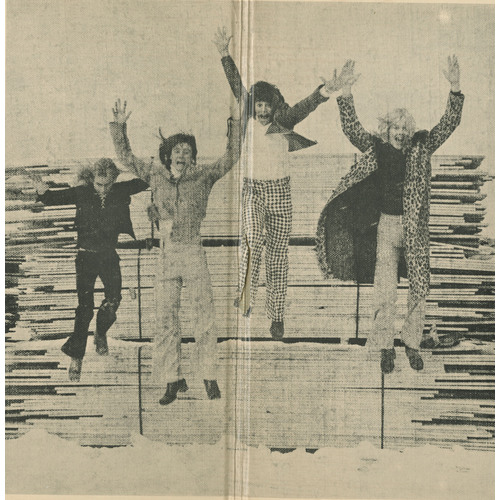
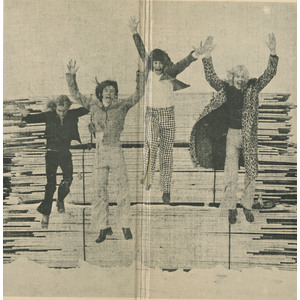
Abraham’s Children grew out of Toronto’s late-sixties band circuit, but their roots go back to high school rehearsals and immigrant living rooms. Bassist and singer Jimi Bertucci, born Vincenzo Donato Bertucci in the Calabrian village of Serra San Bruno, moved to Toronto with his family at age six and grew up in Little Italy, surrounded by relatives and music. As a teenager, a Hofner bass and the shock of seeing the Beatles at Maple Leaf Gardens set his course. With guitarist and vocalist Ron Bartley he formed early bands that eventually stabilized into a quartet with keyboardist Bob McPherson and drummer Brian Cotterill. Under names like Just Us and then Captain Midnite’s Dirty Feet, they became regulars on the Toronto club scene, and by the time they were recording their first album they were already being affectionately referred to as “Abie’s Babies” in liner notes and promotional material.
By the end of the 1960s the band was working constantly, playing everything from community halls to West Indian clubs such as the legendary Club 813, where their tight musicianship and high-energy show drew diverse crowds.
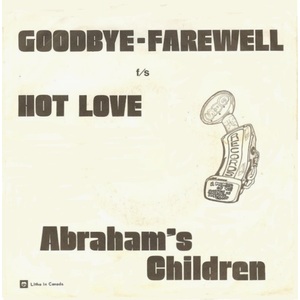
It was during this period that the band caught the attention of Toronto manager Jack Morrow, who would later be associated with acts like Fat Mouth and Teenage Head. Impressed by their energy at Club 813, Morrow introduced them to producer Paul Gross of Phase One Studios, setting the stage for their first serious recording sessions. Within weeks the band was in Toronto’s RCA Studios cutting early demos, including “Hot Love,” which would eventually become the B-side to “Goodbye Farewell.”
Just as things were starting to move, the band ran into a problem: the name Captain Midnite’s Dirty Feet conflicted with the American “Captain Midnight” comic-property, and the threat of legal trouble made it unusable for any serious cross-border push. Rather than risk their future, the group chose a new handle with more weight and wider resonance: Abraham’s Children.
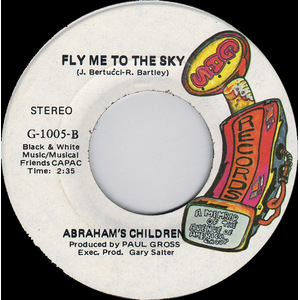
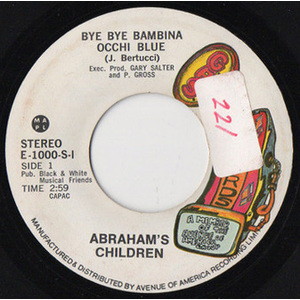
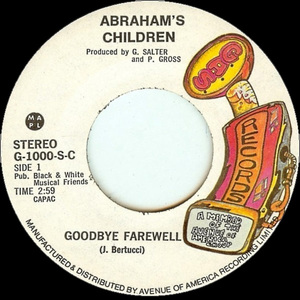
With Morrow in their corner, they signed to the small Toronto label G.A.S. Records and in 1972 released “Goodbye Farewell,” a melodic pop single that quickly climbed Canadian charts. “Hot Love” was recycled as the B-side and, together with “Goodbye Farewell,” helped the band break nationally. The single’s success even led to a rare Italian-language version, “Bye Bye Bambina Occhi Blue,” issued as its own 45 on GAS Records E-1000 in 1972, which received strong airplay on Toronto’s multicultural and ethnic stations. U.S. label Buddah Records soon picked up the original English single for stateside release.
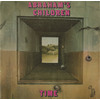
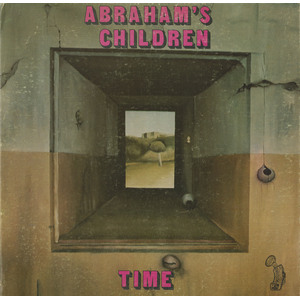
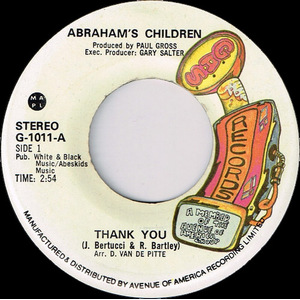
On the back of that success, Abraham’s Children issued more radio-friendly singles, most notably the shimmering “Gypsy” and the upbeat “Thank You,” which further entrenched them as a fixture on Canadian AM radio. At the same time, their live show was growing heavier and more expansive than their singles suggested. That tension between soft-edged pop and harder rock ambitions defined their 1973 album Time, recorded at RCA with Paul Gross producing and engineer George Semkiw at the board.
The album was immediately noted for its unexpected range, incorporating flute, congas, and other non-traditional textures that stood out on a Canadian pop-rock record of the era.
The LP pulled together earlier hits and new material into a portrait of a band tugged in two directions: on one side, polished, hook-filled tunes like “Children’s Song,” “How to Be a Lady,” “Thank You,” and the hit “Gypsy”; on the other, tougher, more exploratory tracks such as “Woman O’ Woman” and the six-minute “Workin’ for the Man,” layered with congas, flute, and extended instrumental passages. With the addition of guitarist Shawn O’Shea, Abraham’s Children carried this sound across the country on extensive tours that confirmed their reputation as a powerful live act.
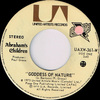
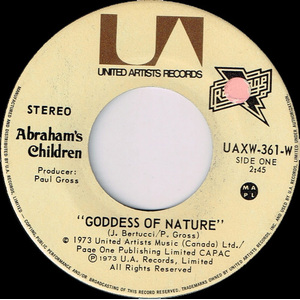
By 1974 the group wanted to lean further into a heavier, more sophisticated direction. To signal the shift, they shortened their name to The Children and issued the single “Goddess of Nature,” a mid-tempo track draped in strings that ended up on K-Tel’s Music Power compilation and kept them on the charts. Behind the scenes, however, disagreements were mounting. Management and label expectations clashed with the band’s desire to move beyond the radio-pop mold that had initially made their name. As they worked on a second album, musical and business tensions widened until Bertucci decided to leave in 1975. He signed with United Artists for a more R&B-oriented project first called Angel and later Space Patrol, while The Children tried to continue with new members, including bassist Rick McDonald and keyboardist Dave Dobko, later replaced by Joey Dinardo.
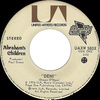
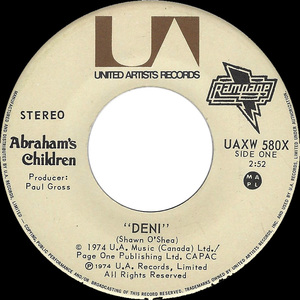
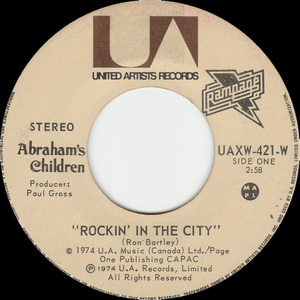
Despite further singles such as “Rockin’ in the City,” “Deni,” “Boogie All Night Long,” and “Christina,” The Children never fully recaptured the spark of the original lineup and folded by the end of 1976. O’Shea, Bartley, and Dinardo went on to form Bang, one of several Ontario circuit bands that kept live rock thriving in the region. Bertucci, meanwhile, carried on with a varied solo career under the Jimi B name, releasing albums that ranged from rock to electronic avant-garde projects like Natopus and collaborating with artists across the spectrum, from BB Gabor to soul and R&B singers linked to Prince’s circle.
Over the years Bertucci also built a strong reputation as a versatile session musician, working with artists including Prince, The Steeles, Alexander O’Neal, and Kitaro.
Over time he became known as a versatile session player capable of dropping into almost any style.
Although their active years were relatively brief, Abraham’s Children never disappeared from Canadian musical memory. “Goodbye Farewell,” “Gypsy,” “Thank You,” and “Goddess of Nature” remained staples on oldies playlists, and their G.A.S. 45s became collectible among fans of early-’70s Toronto pop and rock. In 2000, the original members reunited in Toronto, cutting new sessions at Amber Studios with George Semkiw and revisiting the sound they had crafted decades earlier. A deal with Bullseye Records led to the reissue of Time in 2001, and in 2004 they marked their 30th anniversary with 30, a double CD assembling classic Abraham’s Children tracks, solo Jimi Bertucci cuts, and new material.
Abraham’s Children occupy a distinctive place in Canadian rock history. They were a band that managed national hits, U.S. distribution, and a strong live following, while constantly testing the limits of the pop format they were marketed in. Their story traces a familiar but still compelling arc: immigrant roots, high-school bands, crowded clubs, a breakthrough single, pressure to repeat the formula, internal fractures, and a long afterlife built on songs that refuse to fade. Today, Time stands as a cult favorite and a snapshot of an era when Toronto bands were daring enough to chase AM radio and FM ambition at the same time, and Abraham’s Children remain one of the most memorable voices from that moment.
-Robert Williston
Jim Bertucci: bass, lead vocals
Ron Bartley: lead guitar, acoustic guitar, lead vocals
Bob McPherson: keyboards, backing vocals
Brian Cotterill: percussion, drums, lead vocals
Tracks
12 tracks
-
Goddess of Nature
Time (1973)
8 tracks
-
Gypsy
-
Hot Love
-
Goodbye Farewell
-
How to be a Lady
-
Thank You
-
Woman 'O Woman
-
Childrens Song
-
Workin' for the Man
-
Deni
-
Good-Bye My Friend
-
Rockin' in the City
Discography
Featured Titles
Albums
Singles
Gallery
Images
1 image
Abraham's Children
Media
Videos
0 videos
No videos available for this artist.