Artist / Band
Smiley Bates
Biography
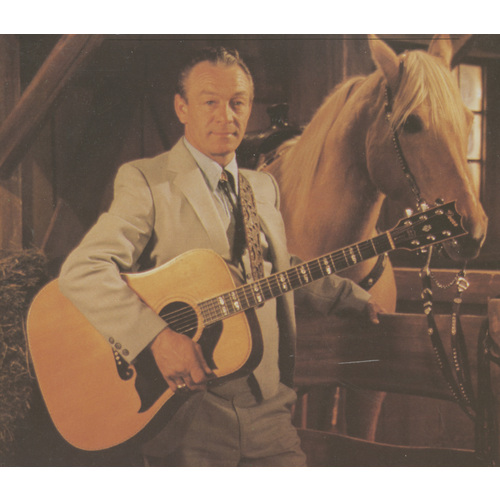
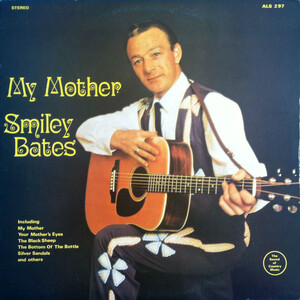
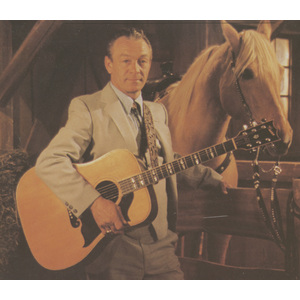
Harvey Edgar “Smiley” Bates was one of the most prolific and deeply loved figures in Canadian country music, a singer, songwriter, multi-instrumentalist, road performer, and traditional country stylist whose records circulated widely through Ontario, the Maritimes, Newfoundland, and beyond.
Born in Kirkland Lake, Ontario, on October 16, 1937, Bates grew up in a large musical family where country music was part of everyday life. His father played fiddle at square dances, often backed by local musicians or by Bates’ mother on piano. Smiley was the youngest of eleven children, and although all of his brothers and sisters played music, he was the one who turned that family inheritance into a lifelong career. Drawn first to the fiddle, he later became fascinated by the guitar, especially after hearing the music of Hank Snow. His first guitar arrived through Eaton’s mail order, and by the age of eleven he was already playing professionally.
By his early teens Bates had formed his own group, The North Star Ramblers, performing on CJKL in Kirkland Lake and later on CKGB in Timmins. The band became a training ground for his road-tested style: direct, emotional, unpretentious, and rooted in the northern Ontario dance-hall and radio tradition. He toured steadily through the northern bar circuit and small-town country venues, gradually building the loyal audience that would sustain him for the rest of his career.
Bates was best known as a country singer, but his musicianship was broader than that label suggests. He played flat top guitar, lead guitar, five-string banjo, dobro, mandolin, fiddle, and even a modified musical baseball bat, which became one of his most memorable stage novelties. His instrumental albums showed a command of old-time fiddle tunes, bluegrass banjo pieces, and rapid flat-top guitar work, while his vocal albums established him as one of Canada’s great interpreters of sorrowful country material.
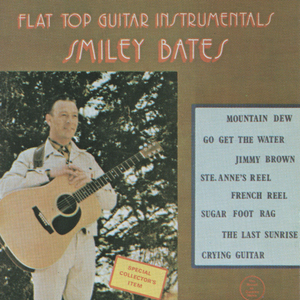
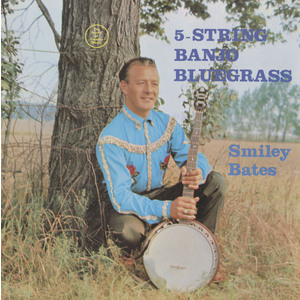
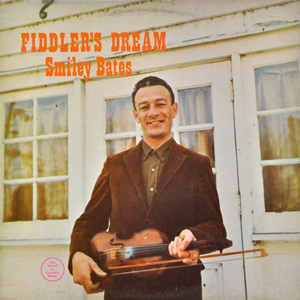
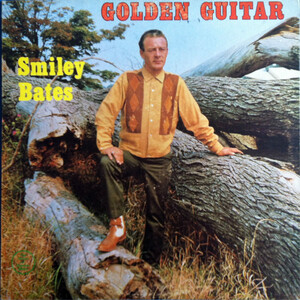
His recording career began in 1966 with a custom single, reportedly recorded in a motel room. Two years later he connected with producer Jack Boswell in Toronto, beginning a long association that helped launch Bates’ national catalogue. The early Paragon albums established the pattern: instrumental showcases such as 5-String Banjo Bluegrass, Fiddler’s Dream, Golden Guitar, and Flat Top Guitar Instrumentals appeared alongside vocal albums filled with traditional country songs, sentimental ballads, and original material. On those records Bates was often joined by The North Star Ramblers, with musicians including Clarence Deveaux, Joe Bothwell, Dusty Stokes, Bobby Hudson, Bev Van Den Berghe, and others.
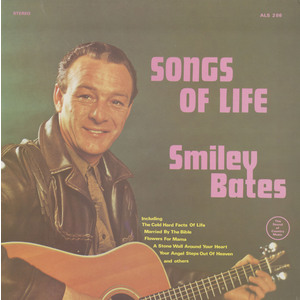
The back-cover notes to 5-String Banjo Bluegrass described Bates as a constant touring act and highlighted the musical baseball bat as one of the unusual features of his show. Fiddler’s Dream presented him as “Canada’s most versatile country music performer,” emphasizing that fiddle was the first instrument he learned. Songs Of Life, with liner notes by Vince O’Keefe, placed him firmly in the Canadian country tradition, praising his ability to make listeners “cry, dance, laugh or sing.” These early albums show how Bates was marketed not as a polished Nashville import, but as a Canadian country entertainer whose appeal came from direct contact with his audience.
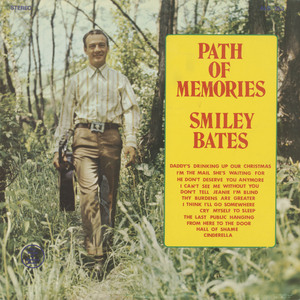
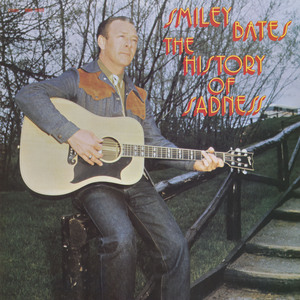
Through the 1970s Bates recorded at a remarkable pace. Path Of Memories, In The Mood For Pickin’, The History Of Sadness, Songs Of Life, Songs Of The Heart, and other releases built his reputation as a master of the “hurtin’ song.” Titles such as “Don’t Tell Jeannie I’m Blind,” “Daddy’s Drinking Up Our Christmas,” “My Daddy’s Eyes,” “Will You Love Me When I’m Old And Feeble,” “Hall Of Shame,” and “Bottle Please Let Go Of Me” reflected the emotional world his fans responded to most strongly: poverty, heartbreak, family grief, loneliness, regret, and hard-earned endurance.
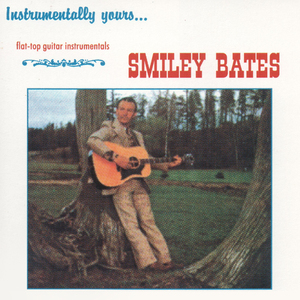
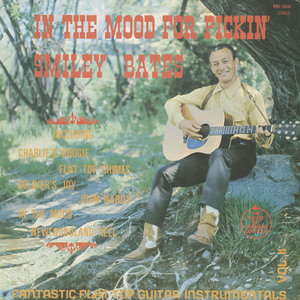
At the same time, Bates never abandoned his instrumental side. His flat-top guitar records, including Flat Top Guitar Instrumentals and In The Mood For Pickin’, mixed old-time standards with his own compositions such as “The Last Sunrise,” “Crying Guitar,” “Flat Top Chimes,” “Newfoundland Reel,” and “Charlie’s Boogie.” The liner notes to In The Mood For Pickin’ refer to the runaway success of his first flat-top guitar instrumental album and describe the follow-up as a “dazzling display” of flat-top fingering. His instrumental work gave him a second identity beyond the country ballads: he was also a picker, fiddler, and banjo player whose records appealed to fans of old-time and bluegrass music.
Bates’ career remained unusually independent. He sold records directly to fans, carried albums and tapes on the road, and reached his strongest audience through live appearances, mail-order sales, television-marketed compilations, and regional distribution. He appeared at clubs, fairs, jamborees, bluegrass festivals, fiddle events, and country shows, earning a reputation as a performer who could win over a room quickly. In 1973 he was part of an all-Canadian country package that included appearances in the United States, including Wheeling, West Virginia, a significant country music centre. His audience was especially strong in Ontario, Newfoundland, and the Maritimes, where his sentimental ballads and traditional country sound found a devoted following.
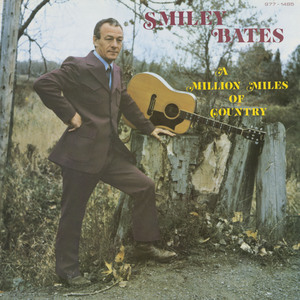
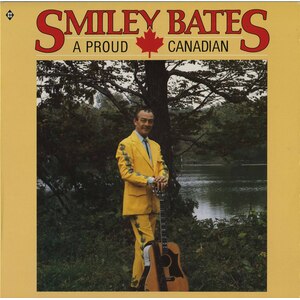
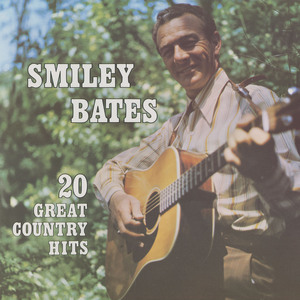
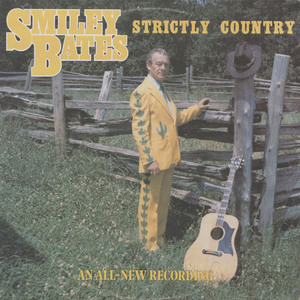
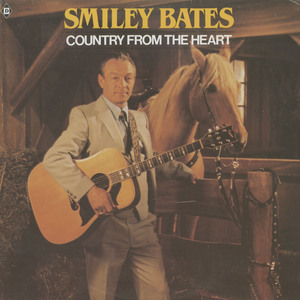
By the late 1970s and early 1980s Bates was recording for labels and distributors including Paragon, Marathon, Great Canadian Music, Trillium, Diamond, Condor, and Heritage Music Sales. Albums such as 20 Great Country Hits, Strictly Country, Country From The Heart, A Proud Canadian, The History Of Sadness, and A Million Miles Of Country show how broad his catalogue had become. He continued working with songwriters such as Ray Benedict, Jim Weir, Gene Crysler, Shell Dalton, and others, while also contributing his own songs. The patriotic A Proud Canadian placed his identity at the centre of the package, while Country From The Heart and Strictly Country kept him rooted in the plainspoken ballad tradition that had always defined him.
Although Bates sold in large numbers and reportedly moved millions of records over the course of his career, he never received the level of institutional recognition given to many more radio-friendly Canadian country acts. His success was built from the ground up: records sold from the stage, fans who bought everything he released, and songs that spoke directly to people living far from the mainstream music industry. That distance from the charts may be part of why his catalogue remains so large, scattered, and difficult to fully document today.
Bates spent his later years in Bent River, Ontario, in the Muskoka region, where he continued to be remembered by fans as both a prolific recording artist and a generous entertainer. His final years were marked by illness, but he remained grateful to the audience that had followed him across decades of touring and recording. He died on January 8, 1997, at the age of 59.
For many listeners, Smiley Bates was the sound of Canadian country music outside the official industry: northern Ontario radio, small-town halls, Maritime tours, festival stages, bluegrass arenas, sentimental LPs, mail-order cassettes, and a performer who could sing a tearjerker, pick a flat-top instrumental, play a fiddle tune, or bring out the famous baseball bat when the crowd demanded it.
-Robert Williston
Tracks
117 tracks
5-String Banjo Bluegrass (1968)
Showing 10 of 12 tracks
-
Grandfather's Clock
-
Boil Them Cabbage Down
-
Buffalo Gals
-
Thinking Tonight Of My Blue Eyes
-
Foggy Mountain Breakdown
-
Camp Town Races
-
Shamrock
-
Red River Valley
-
Turkey Hill Twist
-
Old Joe Clark
Fiddler's Dream (1968)
Showing 10 of 12 tracks
-
Fiddler's Dream
-
Ste. Anne's Reel
-
Arkansas Traveller
-
Here and There
-
Back Up Susan
-
Soldier's Joy
-
Maple Sugar
-
The French Reel
-
Old Joe Clark
-
Boil Them Cabbage Down
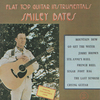
Flat Top Guitar Instrumentals (1969)
Showing 10 of 11 tracks
-
Ste. Anne's Reel
-
French Reel
-
Twentieth Century Drawing Room
-
The Last Sunrise
-
John Hardy Was A Desperate Little Man
-
Sugar Foot Rag
-
Mountain Dew
-
Jimmy Brown
-
Crying Guitar
-
Go Get The Water
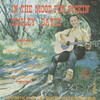
In the Mood for Pickin' (1973)
Showing 10 of 11 tracks
-
Flat Top Chimes
-
Charlie's Boogie
-
Ground Hog
-
Comin' Round the Mountain
-
Turkey In The Straw
-
Newfoundland Reel
-
In The Mood
-
Soldier's Joy
-
Blackberry Blossom
-
Old Man and Old Woman
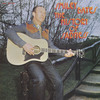
The History of Sadness (1975)
Showing 10 of 12 tracks
-
My Daddy's Eyes
-
Penetanguishene
-
A Little Toy
-
Picture Of Me
-
Cumberland Waltz
-
Heart Broken Prisoner
-
The Young Fisherman
-
Roses In Heaven
-
Tiny Broken Heart
-
My Brother's Will
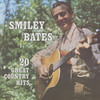
20 Great Country Hits (1980)
Showing 10 of 20 tracks
-
Jeannie's Afraid Of The Dark
-
Your Angel Steps Out Of Heaven
-
Hall Of Shame
-
Bottle Please Let Go Of Me
-
Will You Love Me When I'm Old and Feeble
-
Hundred Dollar Funeral
-
Your Mother's Eyes
-
Philadelphia Lawyer
-
Daddy And The Wine
-
Bringing Mary Home
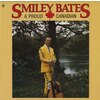
A Proud Canadian (1983)
6 tracks
-
A Proud Canadian
-
The Road to Hell
-
The Mark On My Finger
-
If Seeing is Believing
-
On the Bright Side
-
Honky Tonk Queen
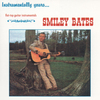
Instrumentally yours... (1983)
Showing 10 of 12 tracks
-
Distant Bells
-
Wabash Cannonball
-
Strollin' Home
-
Fastest Fingers In Town
-
Grandfather's Clock
-
Easy Pickin'
-
Patty On The Turnpike
-
Rollin' The Strings
-
Home Sweet Home
-
Blue Mountain Boogie
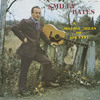
A Million Miles of Country (1984)
10 tracks
-
The Restless One
-
Sea Shores Of Old Mexico
-
Best Female Actress Of The Year
-
Don't Let Your Teardrops Show
-
I Love You More Than Yesterday
-
Rosie Is Blue
-
A Fallen Star
-
Mom Can You Hear Me
-
Old Parson's Last Sermon
-
Let's Give It Up
House of Shame (1984)
Showing 10 of 11 tracks
-
The House of Shame
-
Rockin' Alone in an Old Rockin' Chair
-
Just an Old Rose from Somebody's Past
-
Mama Used to Cry
-
Rest Awhile
-
God Do You Listen to Children?
-
The Postcard
-
Big River Train
-
Tomorrow We'll Retire
-
Old Log Cabin for Sale
Discography
Featured Titles
Albums

Compilation Tracks
Gallery
Images
1 image
Smiley Bates
Media
Videos
0 videos
No videos available for this artist.