Artist / Band
The Beastles
Biography
By early 1983 a new production house was operating in Toronto with an instrument few Canadian studios could afford. Computer Music International was built around the Fairlight CMI, the Australian sampling computer that Peter Gabriel and Kate Bush had been using to rebuild the sound of pop records. The company had three principals: composer and producer Brad MacDonald, manager and producer Frank Daller, and chief programmer Robert Yale. When Cinema Canada announced the company that April, it described the business as music and sound produced wholly or partly by computer.
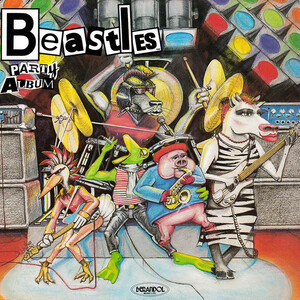
The Fairlight could take any recorded sound and play it back across a keyboard at any pitch. MacDonald fed it a farmyard. Cows, pigs, sheep, frogs and dogs went into the machine and came out as a band, and the band was called The Beastles.
The people behind it were seasoned record-business hands. MacDonald had played in the Grant Fullerton Band, the group led by the Parrsboro, Nova Scotia guitarist who had been through The Stitch In Tyme and Lighthouse. Daller had worked promotion in Toronto and Los Angeles, joined Quality Records in November 1977 and was named its National Promotion and Sales Co-ordinator a few weeks later. He also ran his own management company, Music Mind Associates, whose clients included the Madcats, another of Fullerton’s bands. Fullerton came along to play guitar on the animal records.
The project found a home at Berandol Music, the Toronto publisher run by Ralph Cruickshank. Berandol had launched its own record label in 1975 and filled it with an unpredictable mix of children’s records, classical releases and Canadian oddities. Cruickshank served as executive producer.
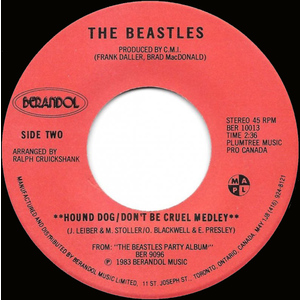
Berandol issued a Beastles single in 1983: ‘Jingle Bells’ backed with a medley of ‘Hound Dog’ and ‘Don’t Be Cruel’ (BER 10013), with both sides arranged by Ralph Cruickshank and published through Berandol’s Plumtree Music. A barking ‘Jingle Bells’ had been a novelty staple since the Singing Dogs in the 1950s, and the Beastles took that joke and handed it an entire barnyard. The labels already name the source as The Beastles Party Album, catalogue BER 9096, though no copy under that number has turned up.
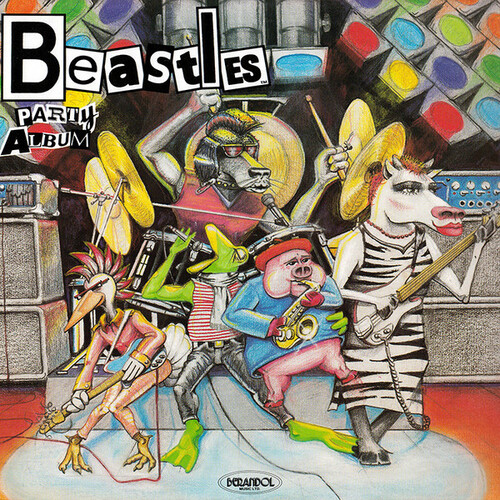
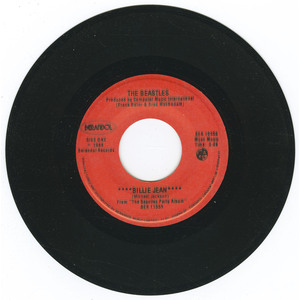
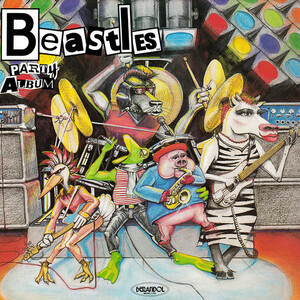
The Beastles Party Album appeared in 1984 as BER 11555, recorded at Eastern Sound and Studio 306 in Toronto with MacDonald programming and playing the Fairlight on every track, Fullerton on guitar, and MacDonald and Daller producing and arranging. The back cover carried a photograph of the Computer Music International Fairlight rig. The ten tracks ran through Michael Jackson’s ‘Billie Jean’, David Bowie’s ‘Let’s Dance’, the Rolling Stones’ ‘Satisfaction’, the Doors’ ‘Light My Fire’, ‘House of The Rising Sun’ and the Presley medley, with ‘Yellow Bird’, ‘Jingle Bells’ and ‘Happy Birthday’ for the party. The Police’s ‘De Do Do Do, De Da Da Da’ became ‘Ma Moo Moo Moo (Ba Baa Baa Baa)’. ‘Billie Jean’ backed with ‘Let’s Dance’ went out as a single (BER 10556).
In January 1984 Daller was in Cannes for MIDEM, the international music-industry market, promoting the record to foreign buyers. A Billboard advertisement that month billed The Beastles as the singing animal group under the slogan GO ANIMAL and listed Daller at the Hotel de Paris as the contact.
The same team made a second animal record that year aimed squarely at children. The Magic Singing Animal Farm (BER 11556) cast actor David E. Walden as the tour guide Dead Eye Dog and Arlene Meadows as Flakey The Frog, leading young listeners around a farm where a cow sings ‘Home On The Range’ and a chicken sings ‘Happy Birthday’. Fullerton played guitar again, and Tom Henderson engineered at Eastern Sound. The album earned MacDonald, Daller and Walden a nomination for Best Children’s Album at the 1985 Juno Awards, where Robert Munsch’s Murmel Murmel Munsch took the prize.
The animals were a sideline for a studio doing serious work. In August 1983 Billboard ran a photograph of Daller and MacDonald presenting Peter Gabriel with a gold floppy disk in recognition of his contribution to computer-enhanced music. By 1986 the company was trading as MacDonald-Daller Productions and running Fairlight Series IIx and Series III systems. Its music was heard in advertising for Ontario Hydro, Petro-Canada, Weston’s, Panasonic and Mr. Clean, and on television in Hockey Night in Canada, Man Alive, Sunday Report, What’s New, Wonderstruck and Peter Ustinov’s Russia.
Trent Radio in Peterborough keeps Party Album in its collection, and CKCU in Ottawa has played ‘Billie Jean’ and ‘Jingle Bells’ long after a room full of Toronto studio professionals taught a Fairlight to moo.
-Robert Williston
Discography
Featured Titles
Albums
Singles
Gallery
Images
1 image
The Beastles
Media
Videos
0 videos
No videos available for this artist.