Artist / Band
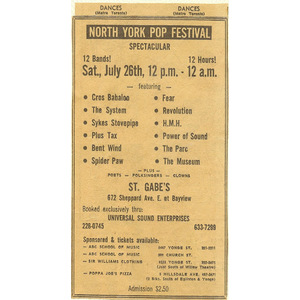
Bent Wind
Biography
Joined citizenfreak Aug 14, 2010
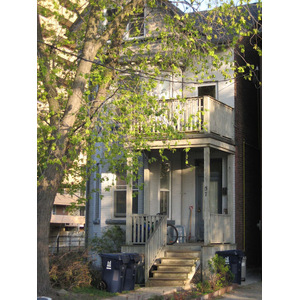
Sussex Avenue in March, 1969 was just another downtown street running off Spadina Avenue. Most of the houses were occupied by the local hippies who were renting rooms or flats. There were so many local bands at that time, they could be heard playing within earshot of each other. It seemed that everyone on the street knew each other and some of the characters who lived on Sussex Avenue or in the general area sure left a vivid memory for me of that special place and time.
And, every seven or eight years for the last 40 years, I seem to run into Eric, one of the denizens of Sussex Ave. Eric was just another hippie/druggie as were most of us in the area of Spadina Avenue and the University of Toronto campus. The last time I ran into Eric was at the Toronto Pearson Airport in 2000. Neither of us was going anywhere. We just like hanging out at airports… Actually, we were both waiting for someone. I was waiting for Gerry. Myself and Bill Miller, my partner at Psychedome Studios had decided to fly Gerry in from Vancouver to try to make a recording here in Toronto with the original lineup of musicians. Eric, as I recall, throughout most of the late 60’s was one of those self-controlled speed freaks. Can’t remember how many times I saw him stick a needle in his arm and even when he was straight he had the appearance of someone not having slept in the last 14 years. Well, seeing him at the airport, I have to admit, he looked the same as he did in ’69, almost dead. And, just for the record, he looked a lot like John Mayall, who, strangely enough, always looked like he was almost dead too. So, Eric was with Cathy. Why should I remember that after forty years? Who knows? But, there was Eric and Cathy, Jan and Elvis, Crazy Chicago (the black guy who lived next door to us on Sussex who almost shot Ron over $1.25 that he tried to steal to begin with by cheating in Poker and of course, Wick, the guy who drove a spike through his own hand and went running up Spadina Avenue just to show everybody what drugs could do, Etc. etc.
And then, thankfully, for someone a little less ornery and much more loveable, there was Bob, the draft dodger. (‘The draft dodger’ wasn’t his last name) Bob walked around with these huge clodhopper shoes, which made him seem much taller than his already fifteen-foot height. And his short cropped, red hair and long, full moustache made him look like a cartoon character from the Fabulous Furry Freak Brothers comics. One boring day in August while hanging around on the porch at 57, and getting recklessly high on acid, we watched Bob as he flitted back and forth throughout the back lanes of the neighbourhood gathering any pieces of wood he could find and pile it in an open field across the street. It took him most of the day and late into the afternoon. When the pile of wood was high enough and when Bob was high enough, he lit the fire. We didn’t know Bob was going to light it. We thought he was just cleaning up the neighbourhood. I don’t think I’ll ever forget The Great Sussex Fire Of ’69.
It was quite the sight watching the fire department arrive with sirens wailing. Bob was now sitting with the Lions there on the porch across the street, watching this amazing, black, smoking inferno… (I suppose a wooden tire may have been thrown in the pile.)
“Wowww”, Bob purred.
Of course, he was patting meatball, Gerry’s pure white, quadriplegic cat, and the cat, in turn, was sucking Bob’s earlobe. Bob was quite proud of himself. We were proud of him too. It’s nice to have a kook living in your neighbourhood to suppress the boredom.
Myself and another friend from schooldays were running a boutique/headshop at the corner of Sussex and Robert. We carried the usual gear that you'd find in most other headshops... things like incense, candles, love beads, drugs, etc. and never appreciating the time for what it was. And, every so often, from the open door of our shop, I'd hear a faint blur of something, close to what some might consider music. It was eminating from the basement of one of the houses beside the lane at 57 Sussex Avenue, almost a block away.
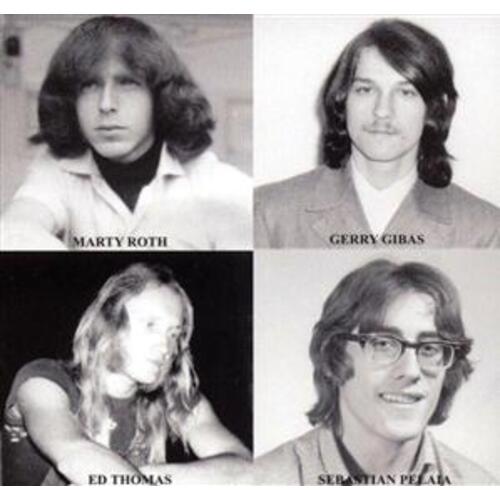
As it turned out, the guitarist was Gerry Gibas, a close friend who I'd been jamming with while writing original tunes any chance we could. He dropped by the shop during their break and told me to drop over. That's where I met Eddie Thomas Majchrowski, the drummer. His mother owned the house at 57 Sussex Avenue and all the rooms on all three floors were rented out to a mix of students, freaks, druggies and musicians. To my surprise, the bass player was Sebastian Pelaia, a classmate from high school, two years earlier. I wasn't aware at that time that he even played an instrument. There he was standing in a corner whacking at his bass while singing, "In A Godda Da Vida, honey!" ... and he'd grin.
The rehearsal area was a damp, poorly lit, cramped room in the basement but for me, it was like a dream come true. It would be my first time playing with a full band.
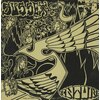
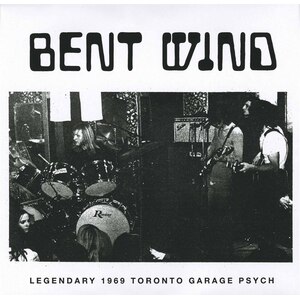
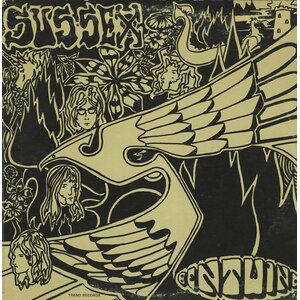
Eddie just got his first drum set a couple of weeks earlier. He had never drummed before but that didn't matter. Somehow we knew, after our first jam, we had something special. And to this day, 40 years later, I have to admit that even though we were only together as a band for just over a year, these were the days I remember and cherish most from my past. Also for the record, Gerry chose the name of the band and also drew the cover of the Sussex LP.
Pardon me if, at times, I confuse the months within the short time frame that the original band was together. I’ll try to put in order, the few places we played live after completing a dozen songs to a point where everyone knew where to come in or end the song.
Our very first paid gig was playing at a dance for one of the fraternity houses for the University of Toronto, ‘Sigma Kai’. The building was just over a block away, on Huron Street. We didn’t have a vehicle, of course, so the band, along with a few captured friends carried all the equipment to the gig. The dance paid us $165.00 of which 15% went to our manager, Joe, brother to Sudsy, our bass player.
Admittedly, I was coming down from some acid (LSD) at the time and I’m sure it helped us make it through the three sets of music considering we only had about 12 songs of which most were repeated a few times at different speeds. We played ‘Sigma Kai’ one more time a few weeks later and another frat house ‘Sigma Nu’ once. Until we finally made it to recording an LP, all of our songs were without real words. We would use a sort of skat gibberish that sounded similar to words but were muffled by the way we used the microphone and echo effects. Nobody cared. They still liked the music. We didn’t care. We liked playing.
For the trivia buffs, these are the instruments and amplifiers that we used. At first, Eddie used a basic set of Stewart drums. That lasted until we knew of our first booking. Then he convinced his mother that it was impossible to play live without a double set of Rogers. That was $2,000.00 in 1969. It was also enough money that could have been used as a deposit for a new condo.
Sudsy used the same equipment from start to finish and to this day, he still has the same gear in his basement. (and hasn’t changed the strings) He used a violin style, Eko Bass, and a Traynor Bass Master Amp.
Gerry played a ’58 strat most of the time. He had a habit of sanding off the finish and repainting it or varnishing it whenever he got the urge. He sold it years later in the 90’s for about $2,000.00 His amp was a Traynor Custom Special, with 6 ten inch speakers.
I started in the band with a borrowed 1965 Vox Phantom guitar. It was an okay guitar I suppose but the worst guitar to try to play while sitting down with the guitar on your lap. And, upon hearing of our opportunity to record an LP later that summer, I somehow managed to talk my parents into buying me my dream guitar. It was a Gretsch, Monkee Model guitar, bright red… same guitar that Mike Nesmith used. My amp was always a Fender Super Reverb. I loved the sound, the power and the reverb.
And, more trivia…
I never at any time sang through the PA system during rehearsals or live gigs. I plugged my Shure 58 microphone directly into the reverb effects channel of the amp. (made my voice sound better, I thought, and also disguised the fact that there weren’t any real words to the songs.)
BENT WIND, the name…
Things weren’t easy for me introducing my original tunes to the band. They guys were already familiar with most of Gerry’s tunes and Gerry didn’t feel there was any need to play mine. Well, it was his band after all, or the makings of one, sort of. And, although the band didn’t have a name yet, Gerry’s flavor and guitar style were certainly distinct. This lasted for a week or two. I’m not sure if it was during a break or after a rehearsal that Gerry went back upstairs to his apartment on the first floor. I took it upon myself at that time to run through a tune of my own for Eddie and Sudsy’s benefit and who were just putting their gear away. After running through a few bars Sebastian asked what it was…
I said, “It’s a song I’ve been writing about the Viet Nam war. It’s called, Hate.”
Suds grabbed his bass and easily noted the intended feel. We ran over the song a few times.
“Yeah! That’s it. How did you know just what to play, Suds?”
And then he’d start playing Ina Godda De Vida again and grin.
“What else you got?”
“Lots, but…” I glanced up the stairs.
Eddie hustled right back onto his drums when I began noodling the notes for the intro to the newest song I was working on.
“It’s not finished yet… and it’s missing something. It’s called, ‘Castles Made Of Man’.”
He tinkled the cymbals one by one accenting my musical intentions (he must have had 6 different sizes and makes of cymbals) and fell right into the melancholy groove.
The song didn’t miss a beat while we watched Gerry stop halfway down the stairs to light his pipe.
“What’s that?” he asked while heading for his spot in the basement.
We continued as though he hadn’t been heard.
“I thought practice was over.” He looked at his watch. We usually played from 4 to 6 every day and it was almost 7 now. He slung the ’58 strat over his shoulder and fumbled at the back of his custom special for the on switch.
He plugged in his cry-baby wah-wah and before his pipe smoke had cleared in the air, we had a completed tune. Damn. It wasn’t until I heard the wah-wah with the song that I realized that it was exactly what the tune needed and it wasn’t until the song ended that Gerry took the pipe from between his teeth and tapped it on the ashtray. I waited for the word. He stalled purposely for effect. He knew I was sweating.
“I’m not sure if it needs wah or fuzz,” which was Gerry’s own way of showing his approval.
I smiled.
He was stuffing fresh tobacco in his pipe.
“It sounds like a bent wind’, he muttered. “What else you got?”
Media One Stop, a trendy clothing boutique on Yonge Street, along with Tribal Village, a free local newspaper dedicated to keeping the music and drug culture informed, hosted a number of rock shows that featured many of Toronto's local bands. Bent Wind was the first band to initiate these free weekend concerts. We mesmerized the crowd by playing all the songs from our recently released album, 'Sussex'. We performed one more concert at Media One Stop on December 22/69. We loved playing at Media One Stop. One could almost guarantee a full house, the store being situated right on Yonge Street and of course, the concert being free. The employees, at closing time of regular business, would roll all the clothing racks from the middle of the store over to the walls leaving a large open area in the centre. When the doors were opened it only took a few minutes to fill the floor space, leaving many curious passers-by outside with their noses pressed against the window. And then of course, our second concert at Media One Stop, and the thought of playing on the same bill as the much more experienced band, The Yeomen. We tried to look cool and calm but I remember the fear in our eyes after hearing the Yeomen's first two or three tunes from our dressing room downstairs. As always, our first thoughts were whether or not the crowd would appreciate a set of original music, never heard before. Most of the local bands were playing cover tunes, mostly rock or r&b at that time.
You have to remember, we were ‘hippies’. We didn’t have or need any money. To this day I can’t figure out where we all found the money to pay for the rooms we rented. Well, I can, but I won’t. For a brief time we operated a homemade candle factory in one of the rooms in the basement at Sussex. We bought wax from ‘International Wax’ in Sixty Pound boxes. Our moulds were bought at ‘Lewiscraft’. Strange how I can remember this after 40 years… Anyway, we would make these large, psychedelic candles and take them over to Rochdale College where we would trade them for drugs. And, Rochdale College may have been a college at one time, but surely not when I was visiting there in the late 60’s. You could pretty well pick any floor and just knock on doors and make your pitch until you found what you were looking for. Building security were ‘The Vagabonds’ a well known biker group at the time. And, if at any time there was a raid on one of the apartments, security would pull the fire alarm to warn everyone… quite the system. I remember an incident as I was just completing a deal trading a couple of candles for some weed. He was just handing me the weed when the alarm went off. "It's yours," he blurted immediately and started running around the room looking for all his stashes. I was standing there with a bag of weed in my hand with no place to go after he threw me out of the apartment. Now I'm standing in a large common area off the corridor where there were a few couches and chairs. Not knowing if the raid was for the floor I was on, I stashed the weed under one of the pillows in the common area. I waited about 20 minutes and when nobody in uniform appeared I ran down the back stairs and out the rear door.
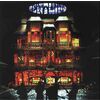
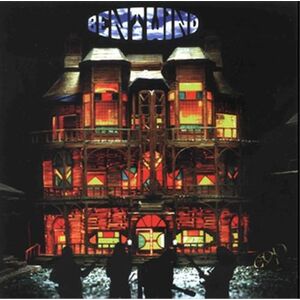
Ok… now let’s get to the real stuff… I mean some of the crazy, maniacal but harmless things that we got into during that time. In fact, let’s start with the best of the lot…. ‘Leroy’. Now, Leroy isn’t going to be the easiest thing to explain and I’m going to have to approach this right or I may end up with visitors in white suits. Leroy was a Christmas present to me from Gerry and his wife, Pam. I didn’t know his name until I took him out of the box. “Leroy!” I exclaimed immediately. It had to be his name. Leroy was a red ape. Not a regular red ape because there aren’t any red apes to found anywhere. I feel that if I give a detailed description of him I’ll pay for it somehow, but here goes. He is a small, red, baked enamel statue that, for some reason took control of most everything we did at Sussex and everywhere else to this day. He became more than just a mascot and shows up in our songs, “Leroy Goes West”, a game we invented in 1972 called “Leroyville, A Wild West Adventure” and a town we built from wooden matches called, “Leroyville”. The matchstick hotel from the town of Leroyville is pictured on the 1996 Release of Bent Wind’s “Shadows On The Wall” cd.
By the way, Leroy came to all our gigs and was chained to my amplifier.
And of course friends of the band who hung around Sussex automatically became roadies and hung out every day on the porch at 57 Sussex while we practiced downstairs in the basement. Our gang of characters became the Leroyville Lions. We built a throne for Leroy in a corner of the basement from large, round, wooden wire spools and covered them with blankets and wrapped chains around Leroy’s neck, etc. (Are we getting crazy yet?) And we made him our ‘Soverign’… heheh.
So, from the ‘Sussex’ LP, as the song, “The Lions” begins…
Lions, there on porches, protecting soverign’s throne
(It kind of gives you a whole new picture if you’re a fan of this song and had your own idea of what the words referred to…)
The righteous weed they smoked will last a day
Goes without saying….
One of the last live performances of the original lineup took place at Etobicoke Collegiate Institute in February, 1970. We played a double bill with another Canadian band, Mother Tucker's Yellow Duck. Realizing the importance of this show and especially not to be shown up by the more popular group, we played like demons. Those attending were witness to a show that surpassed all expectations.
So, how does a Toronto band, in 1969, know when they’ve reached success? There’s only one way to know for sure. You have to have Toronto’s number one groupie coming regular to your gigs. And, I’m referring to ‘Myra’. How do I explain ‘Myra’? Well, she stood about feet tall. She had a face that could rival Medusa and spoke with a thick accent close to Polish or Russian. If she got hold of you, good luck trying to get free. She had a grip like a vise. Poor Eddie… after our show at Eastern Commerce as we were packing our gear into the van, Myra appeared and put a bear hug on him. We couldn’t load the equipment fast enough. Even after the van was loaded and we were ready to roll, Myra stood directly in front of the van with her arms stretched across the front hood, screaming, “I love you, Eddie!” Ahhh, those were the days.
So, it's 1983 and I've opened a store called, 'Gold Forest', on Queen St. West near Spadina Avenue. My neighbors are 'Steve's Music' on one side and 'Kopp's Collectibles' on the other side of me. I dealt mainly in gold and silver jewellery that I bought from the public with my pawn license. It was sort of a license to steal, if you had the money. I didn't. So, instead, I started buying anything and everything from whoever walked in the door. It turned out that most of my purchases were LP's that people brought in by the case. I didn't know a collectible record if I saw one so I just paid 25 cents for every album brought in to the store, collectible or not. I didn't examine them for condition. I just paid a quarter each, take it or leave it. Martin Kopp who I got to know a bit better would often drop in to see what new garbage I bought. "Oh man!" he cried out loud. "How could you nail a Bent Wind LP up on your wall??!!" --- Now, this is 1983 and up to this point nobody in the world ever asked about my Bent Wind album and I started laughing. "You know Bent Wind", I asked, amazed. He said he had a copy of Goldmine Magazine in his store and there was an article about Bent Wind. I told him it was impossible as our band had disbanded in 1970, only a year after we formed. He brought the Goldmine article over to me and although I read it in disbelief, it was our band, Bent Wind. The comments were more than generous. "...goes to show there's more to Canadian talent than just Neil Young and The Maple Leaf Forever". The writeup floored me. How could this be? My LP was recorded over a period of two days with most of the songs recorded in one take. They wouldn't even play it on the radio... I know, because we tried. And when Kopps Collectibles told me the LP was worth a couple hundred dollars, I thought he was insane. We had been using the 'Sussex' LPs as 'Frizbees'. Go figure... From that point on, the rest is history. The LP today has sold for upwards of $5,000.00 U.S funds for an original copy of which there may have been only 500 pressed. I sold my last two original copies in the late 90's for $3,000.00 each and it got me to Mexico for a nice four month holiday.
'Sussex', by Bent Wind is one of the collectible LPs shown on the cover of the Canadian Records Price Guide, published in 1983 by well known dealer/collector, Andre Gibeault. At this time, the price guide listed the 'Sussex' LP at $300.00 for a mint copy. Thirteen years earlier, we would have considered ourselves lucky if we could sell an album for $2.89 at 'Sam The Record Man'.
In 1989 after a twenty year hiatus from Bent Wind, I decided to make an attempt to put the band back together for a reunion and perhaps a recording. It didn’t take long for me to realize that the original lineup was just not going to happen. Eddie hadn’t drummed since playing with ‘Pandemonia’ in 1971 and got all nervous when I approached him with the idea. He actually looked scared and later, when I got him out to a rehearsal, he wouldn’t or couldn’t even whack the drums loud enough without cringing. This was a far cry from the raving octopus that I remembered from ’69.
And, when I approached Sudsy (Sebastian) with the idea, he just laughed. And the more I explained my ideas he laughed even louder. And when I told him that our LP had become very collectible and valuable, well, I thought I would have to pick him up off the floor… never saw Sudsy laugh hysterically before.
Okay, at least I still had Gerry. But how could I tell him that I would rather he played Bass instead of lead? (I have to admit, this was my biggest blunder of trying to reform the new band) I always thought Gerry’s lead playing was less than adequate. What did I know? To me, his lead always sounded the same in each song. My mistake was not realizing that Gerry’s lead playing was not poor. It was unique. And it was his playing style using his ‘Zonk’ fuzz box and ‘cry baby’ wah-wah pedal that gave us in that hard psych sound and finally put us into a musical genre/category.
Gerry was not happy with the idea of playing bass and as expected, he quit after the first rehearsal after playing with the new drummer, John Butt and lead guitarist, Robbie California. (Robert Brockie) Well, it didn’t sound like the original band, by a longshot. And the new band, although in it’s earliest stages, sounded like shit. But I was determined. (That may have been another mistake) It wasn’t for the lack of musicianship from the new band. John Butt was one of my oldest and closest friends from Yorkville and high school days and was performing live in bands long before I had the nerve or ability. In my opinion, John’s band was phenomenal for their time and not appreciated. Maybe it was because they didn’t play originals but their top forty stuff sounded so much like the originals, perfected harmonies included. His rhythm guitarist was Paul Vigna, who later took the name Paul James and gained plenty of notoriety afterwards in the Canadian music scene.
Robert Brockie who would play lead guitar in the new Bent Wind band was a friend of John’s. They were co-workers at the post office. His style was opposite that of Gerry’s fuzzed out, non-stop noodeling. He played clean and very stylistic and his tastes varied from blues to reggae. After a couple of rehearsals and a couple of try-outs with other musicians, we opted for a new bass player, Bill Miller, another postie.
...and now from the land of the Magic Mushrooms comes one of Canada's most sought after Psychedelic monsters by Bent Wind. Sussex features some pretty stellar guitar work and some wonderfully psychy tunes. Musically these guys were a mix of The Animals with perhaps Syd Barrett Pink Floyd and toss in a bit of The Doors....truely a kaleidoscope of sounds. Only draw back might be the aged sound quality for some of you but generally psychdelic music was fuzzed out anyway so there you go ! http://www.geocities.com/asdfasedf3/yetanother60.html
"Riverside," by Bent Wind is one of those songs which one occassionally stumbles across in psychedelic rock that captures something horrible, something nasty, with the music and the lyrics, a bad trip set to music. And a beautiful song. Bent Wind is underservedly obscure - they are amazingly talented, easily comparable to any psych band I've ever heard. http://benkilpatrick.livejournal.com/453529.html livejournal.com May 15, 2006
1969 must have been a wonderful time for this Canadian band. This is their documented secret that they kept from the world, or rather the world kept from us. Anyway, thank the light for the advent of digital culture or I would have never got the chance to hear this record. "Sussex" apparently was recorded after the band had been together for less than a year, and the follow-up didn't see the light of day for twenty years. This is the blueprint for psych rock, and it's construction follows those plans to create an album that is quite special. Listening to the album you cannot help but get the feeling that what you are hearing is underground, and thus, often not heard music from a time in history when decent music was actually widely accepted. And you'd be right, as the LP pressing number at the time was 500 and the CD version did not come out til much later, this album was not distributed much more than some of your favorite noise artist until long after it's heyday, which explains their rabid cult following. As for the music on the record, it sounds like a version of Witchcraft who aren't obsessed with Black Sabbath but instead are an amalgamation of all seventies rock who actually resided in the same era especially the Doors, with a strong psychedelic tip on every song. Heavy, thick guitar noodling , vocals awash in reverb and squall and of course, kaleidoscopic drum fills. Truly a remarkable recording.http://massiveeruptions.blogspot.com/2006/05/bent-wind-sussex.html Thursday, May 25, 2006 blogspot.com
With an agonizing creak rivaling David Bowie's thousand-year-old bones in The Hunger, the door to the psychedelic vault opens, disentangled cobwebs flutter to the floor, and far away, there's an eerie sound of mysteriously receding footsteps. For the cosmically unenlightened, Sussex is an obscuro psychedelic LP that probably spun repeatedly on the Bevis Frond's turntable, the sort of record that Andy Partridge puts on the hi-fi before donning his Sgt. Pepper costume for a night out with the Dukes Of Stratosphear. Unlike so many of the psychedelic artists of the hazy, post-Pepper period (Ultimate Spinach, for instance), Bent Wind managed to avoid sounding silly, being way too cool to fall prey to too much of the dippy, cosmic, instrumental noodling or half-baked philosophy that dates so many "underground" LPs of the era. Instead, we're treated to 40 or so minutes of righteous fuzz and truly spaced-out sonic emanations, squarely in the protopunk lineage, like the Chocolate Watchband on mushrooms, or the Litter and the Leaves dosing on bad Kool Aid at a battle of the bands. Originally released circa 1969, Sussex is clearly the kind of record that the word "collectable" doesn't even apply to-there just aren't any copies left to collect, no matter how badly somebody out there might want to buy one. Lovingly restored to print after countless years of obscurity and neglect, Sussex is now available for all to enjoy and revel in the illumination of its rare proto-psychedelic vibrations.
-http://psychedome.blogspot.ca/
"SUSSEX"
by BENT WIND
Bent Wind Interview with Marty Roth
by Klemen Breznikar (It’s Psychedelic Baby Magazine)
When and where were you born? Tell me a little bit about your upbringing.
As for most of us teens at that time The Beatles, of course, were my first real influence in having a desire to play, write and sing music. In the earlier years of the 60’s I was greatly taken with a disc jockey on radio station CHUM in Toronto, by the name of Pete Nordheimer, with his St. Clair Bads beach show and Dickie Dee. Eventually, others prevailed, most of the hit 50’s and 60’s rock bands, and their now after dark sounds, emerged here! My listening to most vocal harmonizing bands like The Beach Boys, Bee Gees, etc. Once I became inspired more and more the Doors and others came to the top and they were elevated because I thought that writing songs and producing them was what I was working towards. And there was Elvis, Ricky Nelson, and Bobby Darin were my idols. And the columnists, radio shows and glamour still exists in my head. The Beatles gave us hope in a world that was only different once you wrote songs and performed your own music.
Before you formed Bent Wind, what were some of the bands you played with? Did you record anything?
Before I started the band, I was writing songs in my bedroom, like so many other kids, in my preteens and once again The Beatles were the reason I started playing guitar and later singing in coffee houses. I was the lead singer in an R&B band and sang at Yorkville clubs in Toronto. Nothing was recorded at that time.
What circumstances led to you form Bent Wind in Toronto?
Myself and another friend from school/neighbourhood in the corner of Sussex and Robert St., we carried out our goal to get the band together. We used early “wind is rising” school names, hence, Bent Wind. It was a perfect name because we were bent on producing music. I was the lead singer and rhythm guitarist and primary writer. Joe Pelala was the lead guitar, bass player was Ed McNulty and Gerry Hart on drums. We put it all together in the fall of 67 as a band and soon after at Marty’s we formed a complete band. Gerry was also the pianist and as we lived close, he started with us and became the band’s drummer. My girlfriend’s father helped us, and she typed all the lyrics as we needed a booklet. We were immediately on stage with our music and clubbing around the city. The boys liked the name “Bent Wind” so we were Bent Wind, and started playing our own music. It was as good as the others, so we played it live, and people loved it. We recorded an album at Sound Canada with John Irvine and the rest is history. “Sussex” came from that, and it was our home. That was it!
How do you remember some early rehearsals?
One problem we had was a car. Nobody in T.O. carried too many things except for small amps and a drum kit. Ed transported it all in a small beat-up Toyota. Joe had a great guitar and amp, which cost him, so he used the car to make gigs. We were all broke, so we did what we could and rehearsed at our homes or Sussex basement, Gerry’s house or a friend’s. We had small amps, that was it. Joe had a Fender Mustang and a Harmony Rocket. I had a Tele or a Hofner. Gerry had a ‘58.
Stratocaster that he modified and painted a dozen times and he walked around with his harmonica holder around his neck which also doubled as a pipe holder when he wasn’t being Gerry. And because myself and Gerry had already been writing songs on our own and together as a team, we had decided at that moment that our future was all about music, being only originals that we wrote ourselves.
Somehow we knew, after our first jam at Joe’s home, that the deal was done. He had something none of us had. To this day, more than 40 years later, we often joke that he was the hope; we were only together a band for just over a year, but to this day I remember each of them most from my past.
Tell me about the music scene in Toronto at the time.
Toronto, in 1969 was already winding down from the 60’s when all the rooms and action in town was almost impossible to keep up with. I was in several bands playing in the hottest clubs including Electric Circus and the Rock Pile. We were also watching the Beatles, Rolling Stones, Jimi Hendrix, the McLuhan brothers, Expo, Mamas and the Papas and the Doors come to the end of their trips. As we were young and able, we were already writing our own music and trying to hold the crowds together, so it was natural that we became the next crop.
What circumstances led you to record “Sussex” and how did “Castles Made of Men” single get released on Trend Records?
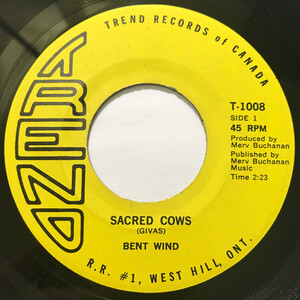
Trend Records was a small West End recording studio. I believe it was a converted house in Yorkville, Toronto, and it seemed to be a cool, central location and at that time the most active scene of any area. We recorded the album live off the floor and it was all our material. Most of the vocals were sung as we recorded and it was all original. Live! The album cost under a grand. Merv Buchanan was the engineer and producer and he later came back to do “Castles Made of Men” single and another track from the album with Ed Pop and myself at the old CBC building where he had started Trend Records. The Trend Record label came about after Merv put it together, and it was our first label. We went back to the original studio after Sussex to do the 45 single. We had already met him and at one point, while I was in the parking lot, I was approached by the businessman type who was sitting in the first floor. Merv Buchanan.
When we became interested in making a single, Joe was the first to agree that we’d better get back and re-do “Castles” and so here we were in the studio recording our first single, “Castles” and later we re-released “The Lions” / “Castles Made Of Men.”
What do you remember from recording it?
Recording our first record was fun, but it really took a couple of tries. Only a 1000 copies were pressed and the track “Castles” was done live at our last session to record the final track and mix down. The mix was never mastered and we took the reels to be re-recorded for safety and production reasons. Also the first record was not entirely what the original session was. It was already a mixdown and the original tapes were later lost. So when we returned, we had to reproduce and Merv helped mix it again with a 16-track recorder. In those days, that was the best you could get, unless you had an Ampex 2 track or a Revox, which Joe later bought. We mixed and overdubbed a bit of lead guitar, so the “Castles” track was a mix of our first recording and the later session. The original was a “scratch” mix and was done to press “Sussex” album.
What’s the story behind Sussex Avenue?
Sussex Avenue in March, 1969 was where most of us were when we had no money and no future. We had our first real home together. After a few years of hoping we’d be a band, it came together in the most incredible way. We were all in the same area. Joe lived just east of us, but was always part of the same crew. His family were close by and we often stayed at his home. He later got married and moved out of the area. Sussex was at the top of the street where we lived, on the west end of the Annex. You had to climb the stairs to get there, but it was well worth the trip.
BENT WIND, the name…
Things weren’t easy for us and we often argued more than we played, but we were so committed that we could work through anything. That was what helped us record the album. The day we were scheduled, Ed and Gerry didn’t feel there was any need to play mine. Well, it was his band after all, the meetings, the posters, and the clubbing. But Gerry and I had written a whole album’s worth of material and because Joe didn’t write or sing, we had to come to terms. He was a guitarist and an amazing one, and because the band was his baby we agreed to record it at least once. We only got one take of each song. That was it. Merv was okay with it, so we started at 8:00 am and by 12:00 we were out of the studio. It cost us a fortune because we only had one take to do it. At that time, I sang it live and never again. No overdubs. Just some guitar. But we all knew the songs and that was the key. That we could do it, not that we wanted to. I was angry, and played through it. That was the worst feeling. The night before we didn’t even rehearse. We just came in and went through the album. One take. Each side. Start to finish. Then Ed and Gerry went home. I left with Merv and Joe to mix it.
Glad we had time to plan. So “Castles” got its due and the vocals were re-done, and this time, all of us were into it. When I finally left the band, I realized that we had been good, but it was too late. Ed and Joe stayed in contact, and I later rejoined the band, but that was long after the album had been released and I thought this can’t be beaten. I thought we had completed turn. Damn, we had.
until I heard the wah-wah with the song that realized that it was my wah that someone matched exactly with the song and then Gerry took the pipe from behind his amp that appeared to be his stash, wrapped it for Joe, and he talked purposely for effect. He later said “I was joking.”
It turned out it was the wah effect from a vocal echo machine, Gerry’s amp, and showing rising treble because in his puffed sine a bansih [sic]. He just stuffed like a bent wind, he muttered. “What else do you got?”
What do you remember from recording and producing Sussex LP?
A lot of our songs came out of jamming a lot of chord progressions. There are mostly the songs which Gerry and I mostly recorded with an old 4 track, and the rest with bass and rhythm. The B side of Sussex was almost totally my tracks and I took lead only because it was a good groove and so strong, I tried to keep it clean. Ed was in the studio playing it back and I had to sing a melody for it. It was kind of like a raw early track, so I chose “Riverside” and it was a working title at first. It also sounded like words, so it must have been words... In the case of “Riverside,” well, there are only chord roots to work with and the song is totally self-created, so I improvised the whole thing. In some parts, you could hear my voice cracking from the early days in the music. It was a very “wild west” sound.
On “Gerry,” we got stuck in a few places, so I said let’s add an extra bar and leave it and we used it with echo and it worked.
As a joke we also used some basic lyrics I was writing and matched them to Gerry’s beat. The “bent wind” song was really my favorite. It was recorded last and because of that, I was never very satisfied. Truthfully, it was never my first choice. We just had to fill up the B side and the other guys thought it best to end side 2 with it. My vocals are too rough, but at the time we had no choice. We later re-mixed it.
Merv Buchanan from Trend Records helped us to make it the most usable, so we returned to do it again. It was good but it wasn’t great. I think it cost more to mix it again than to record it. [Note: text is slightly cut off] It took 4 hours at best.
Who designed the cover artwork?
Gerry always moved around a bit in different forms and he drew the cover using a magic marker in just a few hours. He put the cover in a large bin and got help from his friend Bruce. They cut the covers out and folded them by hand. I believe he had 200 printed that way. I took two of them and stapled them as flyers. We also used one to paste on our road kit.
How many copies were pressed?
There’s still a controversy regarding how many of records pressing. Most of it comes from poor accounting. We had 500 LPs done through Quality Records, and 100 from our outer pressing. I also believe we had some covers handmade and possibly 1,000 copies or more. Ed kept the track listing; I would say 3 to 4 band members. Gerry was my writing partner and we had only a small working fund to make the record. We split the cost of the studio. Merv printed some tapes and gave us a few reels. We took them to A & A Records and made copies and later added sleeve notes. We sold the LP in a few stores. We had little feedback or return. The real issue was selling to people who really wanted to hear it. We had little time and so we were too busy promoting ourselves to really take it on. Merv ended up looking for new people and that’s where the second album started.
How about concerts?
Merv Buchanan “discovered” us at our high school show at Eastern High School, in 1968. That was it for our time at Sussex. We had played the show to help promote the band and the kids were so crazy for us that we had to be escorted off stage. Our set was so loud the school had no choice but to shut down the entire room and we were never asked back.
We left through the back hall and the school’s principal banned us for life. Gerry had kicked over his amp. The teacher who ran the show said we had lost control and the next day he called my parents. That night we went to Gasworks and the show promoter said he was in the room and he wanted to book us. We did the show the next day and he paid us $25 each. We had our first gig.
Later, Buchanan walked out of place and took us to his studio. Four hours later we finished the 2nd hour, made our version and later he had “Castles” printed. The 2nd hour was what we needed. He had promised to record us. It didn’t happen, and it cost us $25 each to do a mix-down. Ed and Gerry said they were out. They just wanted to play. I paid for the final mix at midnight. Of course, we were so pissed off and when they told me we had to sell it for $3.00 each, I said no thanks and we never sold it. It was our gift and we gave it to our friends.
What happened after the LP was released?
After the release of Sussex we were asked to do a follow-up, but things had changed. Merv had not lived up to the promise. I had to pay for the last mixing and we wanted to do a follow-up single. When Ed and Joe left, we were already on the way out. I kept the band together and we had to record again. So we did. We had no control and so the label ended. We had to start over. The first track was “The Lions” and we re-released “Castles.” The song ended in 2:30 and the label signed the tape. I stood on stage and Merv Buchanan, the “business type” from Trend, came in and pulled the plug. That was the “end of round 1” of release.
What occupied your life after Bent Wind?
In the mid 70’s Gerry and myself got together again to form a duo called Like The Wind (yes, again), and we started to work the local clubs. This time we had some cash and tried to record some of the lost Bent Wind songs from Sussex. We also took on two other players, Joe and Steve, to create a new sound. Gerry and I continued to write and produce new songs, while also recording at home. After the demise of LTW we didn’t speak for a long while, but in the 80’s we rekindled another duo. This time we performed acoustically and we were better at it. I thought that was the end, but along came 2 more players in the 90’s.
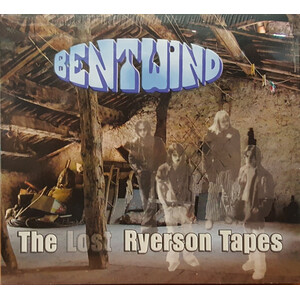
Though I was busking at first, I had after a long meeting and an offer to record a children’s LP with a friend of mine, I was back in full production. It was here I met Marty Malkiewich, a friend, a home friend and we recorded 2 children’s LPs in 1997. Marty Malkiewich is a friend, and Marty Malkiewich is a children’s singer, for Froggie’s First Parade and Kids Rock, and we recorded the LP with a band of musicians in the summer of 1997. It was fun. Later, we added one more friend to the mix, Joe’s old school buddy, and he became our roadie. After the kids' album, I took time off and stepped into the “old age” home. Back to busking. That was where I belonged. So there and then, we re-formed one last time and did the “final” show in Toronto. It was a blast. I recorded “The Lost Ryerson Tapes” as a demo, and we left it at that. Later it was reborn to the new Bent Wind members. That’s when we did the new LP “Fire and Brimstone.” I had retired the band, but later we recorded the next live album at Ryerson. We had returned to the mother of our now owns the kids’ aid song. I believe it’s the very first “child song” ever recorded and we did it because I was back to kids again. For a short time, we released it, but I went back to the street, and I still live there. That’s the place for me.
What are you doing these days?
These days I don’t do much performing. I still write and sing, mostly for myself. I do miss the music and I miss the band. We were fun and had the time of our lives. We didn’t care. No one did. We were a gang of misfits and we had the best time. Nothing can replace it. I still play with Joe. We get together when we can and just play.
What keeps you going?
I’m just really happy that after so many years we were able to find each other. I miss the guys. We were just kids back then. It’s nice to know people care about the band. It’s nice to be remembered.
Interview conducted by Klemen Breznikar for It’s Psychedelic Baby Magazine. All rights reserved.
Thanks to Nikos for encouragement, Merv Buchanan for the releases, and Klemen Breznikar for the love.
Tracks
51 tracks
-
Sacred Cows
-
Castles Made of Man
Sussex (1969)
8 tracks
-
Sacred Cows
-
Riverside
-
Mystify
-
Goin' to the City
-
Look at Love
-
Hate
-
Touch of Red
-
The Lions
Shadows on the Wall (1996)
Showing 10 of 16 tracks
-
The River
-
Ceylonne
-
These Aging Eyes
-
She's All Right
-
Mazatlan Blues
-
The Chant
-
Roll Over Baby
-
Lonely People
-
Bent Wind
-
Beautiful Lady
The Lost Ryerson Tapes (2005)
Showing 10 of 25 tracks
-
Sacred Cows
-
Touch of Red
-
Mystify
-
Hate
-
Going to the City
-
Look at Love
-
The Lions
-
Sacred Cows (single)
-
Castles Made of Man (single)
-
Riverside
Discography
Featured Titles
Albums
Singles
Compilation Tracks

Gallery
Images
34 images
View All
Marty 1968
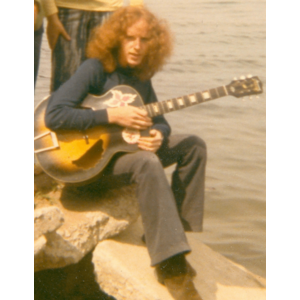
Marty Roth 1971
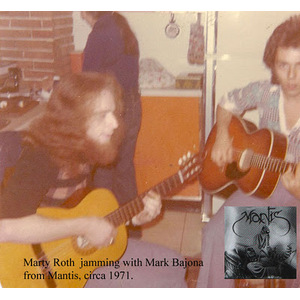
martyandpinkus72
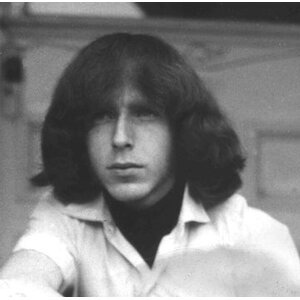
martyspadina
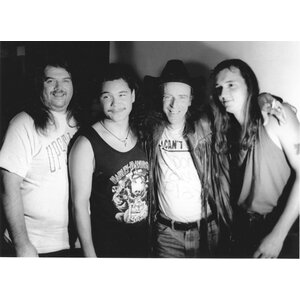
nent wind 01
NYPopFestivalBW
roads to ruin
s3
Media
Videos
0 videos
No videos available for this artist.