Artist / Band
Bob Carpenter
Biography
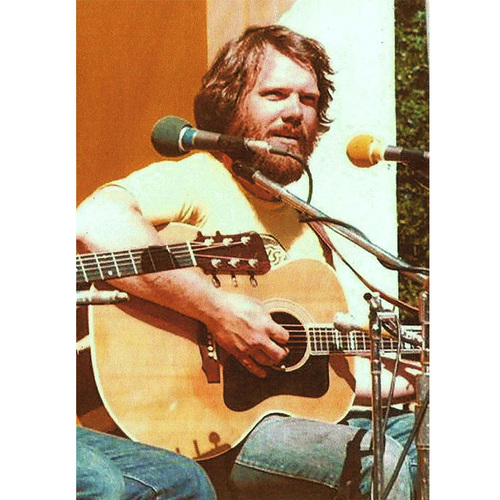
Bob Carpenter was somewhat more known in his homeland Canada than he was in the rest of the world, where he remained under the radar throughout his short musical career. A few artists such as Billy Joe Shaver and Tom Rush have recorded some of his songs, but he is still relatively unknown today and confusion abounds when his name is mentioned. He is often confused with another Bob who played with the Nitty Gritty Dirt Band, and he is not associated with The Carpenters, nor the same person who released the CD, Sun, The Moon & The Stars, as some internet retail sources suggest. Our Bob Carpenter was a west coast Canadian singer-songwriter, born on an Indian reservation near North Bay, Ontario, and Silent Passage is the only album he ever released. It is filled with keepers. The list of contributors include budding young vocalists Emmylou Harris and Anne Murray, as well as Lowell George and Bill Payne (both of Little Feat), Russ Kunkel (legendary drummer and producer), and pedal steel guitarist Buddy Cage, but this is really Carpenter’s show. What makes the album work is his excellent songwriting combined with his very striking “world weary” voice that demands empathy, the perfect conduit to get his message of simultaneous despair and hope across to his listeners – despair from a realization that somehow he has lost his way in life, painfully cognizant of the fact that “something” is missing; hope in the resolve to seek and find that “something.” He is sure of its existence (“before the final curtain fell across my weary eyes / I’m sure I saw the ghost of Truth at least a thousand times”), if only he could find his way to it. Although Carpenter uses an occasional train as the mode of transport to the “something,” it is more often a ship that takes him there, with stormy weather and tempestuous oceans used as metaphors for life’s trials and troubles. He is always searching for better weather and smooth sailing. How Carpenter musically expresses this theme elevates mere music to poetic art.
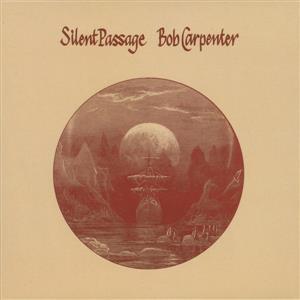
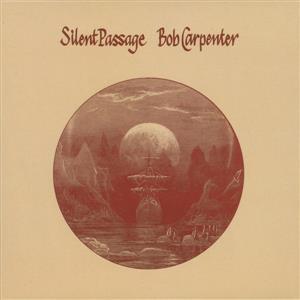
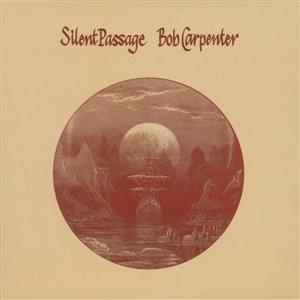
Never is this more evident than in the song “First Light,” a powerful number replete with spiritual undertones. It begins with a quiet introductory refrain: “Far across the windy, wavy ocean on a ship prepared for any weather / We sailed upon the sea, the magic ship and me / From the coast of where I’ve been to the place I think I’d rather be…” The key then changes and lush strings enter, coloring a sonic picture of a ship smoothly sailing across the waters, and we know immediately that this is indeed a “magic” ship on its way to a “magic” destination. The album’s cover art, Gustave Doré’s etching from The Rime of the Ancient Mariner, serves as the perfect thematic complement. The verses and chorus which follow take us deep into Carpenter’s world of human struggle and plea for deliverance. The song ends with another key change leading into the closing refrain which is identical to the beginning one, bringing us around full circle. Magical musical perfection.
Carpenter uses similar seascape imagery in other songs on the album with equally impressive results. Such imagery would have come naturally to him; he was once a sailor so he actually did sail the “windy, wavy ocean” on the ship of life where, as the lyrics to the title track say, ”we are the master’s sails in the wind.”
Three of the album’s songs have upbeat tempos. “Miracle Man” kicks things off with an invitation for “truth-bound lovers and truth-bound brothers” to leave all their cares and troubles behind. The other two upbeat tunes are “Old Friends,” a song about the value found in the comfort of true brotherhood including a nice trumpet solo, and ”Morning Train” which begins with a beautiful and dreamy piano passage and flighty woodwinds, and a chorus consisting of gospel-tinged vocals. It is a song of joy about an opportunity to take the train ride to “go home someday,” yet hints of persistent loneliness remain (“somebody told me if I wasn’t lonely that I’d be the man to see”). ”Gypsy Boy” stands out as a unique, ahead-of-its-time eerie tune that recounts the lonely wanderings of a young gypsy boy who senses “it’s time to move now, but I don’t know where we’re going.”
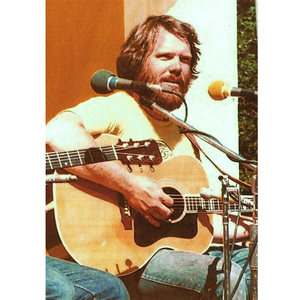
The rest of the album consists of slower reflective songs, and it is in these that Carpenter shines his absolute brightest. The original album jacket displays a photo of a young-looking Carpenter with long dark hair and beard, but songs such as “The Believer,” “Down Along the Border,” “Before My Time,” and “Now and Then,” miraculously transform the youthful singer into a timeless and wise old sage - although the sage in this case has as many questions as answers (“All these words so new to me, are they supposed to set us free? / I don’t believe in liberty, I just believe in life. / How can something perfect change into something less and back again /and in between have all this pain because we’re asking why?”)
Silent Passage is not a born-again testament. It is a journal, written down in musical form, of one man’s journey in search of the passage that will lead the way to a new world of inner peace. The journey is not an easy one. He will be thrown into the center of a clash between shadow and light and there are wars to be fought (both without and within) before he emerges at the end of the passage. It is a lonely warrior’s painful battle with his own personal dark night of the soul, but when the smoke clears and the dawn finally breaks, the road to his final destination is clearly seen. For Carpenter, that final destination is the place where Truth and Love dwell. It can be a most enriching listen for all, however one chooses to define the source of such virtues. The message is compelling. The voice makes the message profound. Former Billboard music editor Ed Ochs (who managed Carpenter for a short time), sums it up by saying,
“Bob was a prophet. His songs are meditations. Certainly he wrote his songs but they were given to him. His music came from the source, in his case a spiritual teacher who gave him a most unusual gift: the vision and the voice to express the inexpressible. He was just a regular guy until he opened his mouth and began to sing. Then, oh Lordy! There was no place to hide, nowhere to go, nothing to do but close your eyes and fly away!”
Say amen, brother, and pass the word. This one’s too good to remain in obscurity.
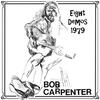
Since then: Bob Carpenter died of brain cancer in 1995, having never released another album, although Stony Plain Records released a digital download-only album in 2010 of eight previously unreleased demo tracks entitled Eight Demos 1979, and included three of the demos on their 2011 anniversary release 35 Years of Stony Plain. Riverman Music (Korea) also remastered the original recording of Silent Passage in a 24-bit limited edition remaster in 2009, which was released in a paper sleeve that reproduced the original LP sleeve in miniature form. Ed Ochs fictionized his encounter with Carpenter in his novel, “This Rock Can Talk” (published in 2010), a book which he describes as a “rock ‘n’ roll comedy adventure set in today’s fast-paced music business.” I asked Mr. Ochs about that fictionized encounter with Carpenter, to which he answered a character in the book is based on him and the book itself was inspired by him: “I guess that underscores what his music meant, and still means, to me…writing the book was my way of getting it out of my system, as far as how much it impacted my life. It is also the story of a rock writer searching for the missing chord, for the music of perfection, one greater than all the other music he’d heard before; and that would be Bob Carpenter. It had to be fiction to make the incredible believable and bring the story down to earth in a form it could be told, therefore the title.” A free excerpt of the first 8 pages of “This Rock Can Talk” can be read online. Ochs also writes about Carpenter in his new book, “Freedom Spy: David Jove and The Meaning of Existence.” Ochs knew Jove well and was a partner with him in various ventures, one of the most notable being co-writer with Jove of the pioneering cable-music show “New Wave Theatre,” a precursor to MTV. “If characters make the story,” said Ochs, “then David Jove’s twisted tale has got to be one of the most interesting ever because he was absolutely one of a kind. Before I met him he had already fled Canada on a felony charge, set up Mick Jagger and Keith Richards for a drug bust in England, and traveled Europe, the Middle East and Mexico.” Although “Freedom Spy” is labeled as fiction (Ochs had to recreate conversations, change a few names, and merge a few characters), it contains tangential facts about Bob Carpenter and his album Silent Passage, using Carpenter’s real name. The book is scheduled to be released in early 2012.
It is the world’s loss that (for whatever reason) the music industry never produced more recordings from this gifted songwriter, but I am grateful for the solitary masterpiece he left us with; thankful for having shared his vision. The power inherent in Carpenter’s gift of music cannot be overstated. Silent Passage is without a doubt one of the best and most rewarding albums I have ever had the privilege to listen to. It is an album that, once heard, cannot be forgotten. I am left wondering – did Carpenter ever find better weather? Did he ever catch that morning train? I hope so.
-Kezzie Baker
Tracks
18 tracks
Silent Passage (1984)
10 tracks
-
Miracle Man
-
Silent Passage
-
Old Friends
-
First Light
-
Morning Train
-
The Believer
-
Gypsy Boy
-
Down Along The Border
-
Before My Time
-
Now And Then
Eight Demos 1979 (2010)
8 tracks
-
Magdelana
-
Chameleon Man
-
Dreaming
-
One More Time
-
Everyone Knows
-
Falling Night
-
Every Other Road
-
Once Had a Sweetheart
Discography
Featured Titles

Albums
Gallery
Images
1 image
Carpenter, Bob
Media
Videos
0 videos
No videos available for this artist.