Cogan, Ora
Websites:
https://www.oracogan.com/
Origin:
Salt Spring Island, British Columbia, 🇨🇦
Biography:
Ora Cogan is a Canadian singer-songwriter, multi-instrumentalist, and visual artist whose music has gradually evolved from traditional and folk-rooted beginnings into one of the most distinctive bodies of work in contemporary Canadian independent music. Across a catalog that now spans nearly two decades, she has developed a singular style that draws from folk, psych, dream-pop, noir country, post-punk atmosphere, and experimental rock without ever settling comfortably into any one category. Her records are unified less by genre than by mood and voice: intimate, shadowed, emotionally direct, and deeply shaped by the landscapes and artistic communities of coastal British Columbia.
Born and raised on Salt Spring Island, British Columbia, Cogan grew up in a household where music, art, and activism were part of daily life. Her father was a photojournalist, her mother a singer-songwriter, and the family home reportedly functioned as both a creative gathering place and an informal recording space for local musicians and visiting artists. She has spoken of learning from the old records that surrounded her in childhood and of absorbing music in a setting where songs, politics, visual art, and community were closely connected. That early environment left a permanent mark on her work. Even at its most modern or sonically adventurous, her music still carries the weight and instinct of traditional song.
That connection to older material is central to her story. Long before she was described in terms like gothic folk or psych-pop, Cogan was steeped in traditional repertoire and old ballads. Early in her career she recorded and performed songs such as ‘Motherless Child,’ ‘Waterbound,’ ‘I Wish My Baby Was Born,’ and ‘Katie Cruel,’ the latter becoming a recurring touchstone in her catalog. What distinguishes her from many contemporary artists working in similar territory is that these influences do not feel ornamental or retrofitted. The emotional logic of old songs—their starkness, repetition, mystery, and tension—remains embedded in her writing and interpretations, even when the arrangements move far beyond folk orthodoxy.
Cogan’s artistic path developed outside conventional structures. She left home young and pursued a largely self-directed education, learning through lived experience, travel, craft, performance, and experimentation rather than formal musical training. After leaving Salt Spring Island, she became increasingly active in Vancouver, where exposure to the city’s underground music communities broadened her sense of what her songs could become. She has identified Vancouver’s noise and experimental scenes as a major turning point in her development, allowing her to push beyond the boundaries of a traditional singer-songwriter framework while still holding onto the emotional intensity of folk and old-time music.
Her earliest documented solo release, Tatter (2007), now somewhat elusive, stands as the first known marker of her recorded solo career. It was followed by The Boggy Mire (2010), a strikingly roots-oriented collection that leaned heavily into traditional material and old-song sensibilities. That same year, however, she issued The Quarry, a release that already pointed toward a broader and more atmospheric direction. By her own account, The Quarry represented an important shift away from the clearer, sparer traditional style of her earliest recordings toward something darker, more reverberant, and more psychologically charged. In hindsight, it now reads as an early threshold: the point where her longstanding relationship with folk song began opening into a much larger and stranger sonic world.
That process continued with Ribbon Vine (2013), the first album to fully establish Ora Cogan as a singular recording artist rather than simply a compelling interpreter of old material. By this stage, her writing was becoming more expansive and idiosyncratic, balancing ballad tradition with a more personal, immersive, and atmospheric approach. It was also around this period that she began to attract wider notice within West Coast and independent folk circles. Early support from Frazey Ford and Trish Klein of The Be Good Tanyas provided an important connection to a broader Canadian roots community that recognized the uniqueness of her voice and sensibility.
With Shadowland (2016) and especially Crickets (2017), Cogan’s mature artistic identity came fully into focus. These records deepened her move away from conventional folk presentation and toward a sound built as much from texture and atmosphere as from melody alone. What had once been heard primarily as dark folk was now taking on elements of psych-rock, dream-pop, ambient space, and post-punk tension. Crickets, in particular, has come to be seen as a pivotal work in her development—a record shaped by isolation, weather, and the emotional intensity of West Coast life, where her songs became more visual, more spacious, and more difficult to classify. Rather than abandoning her earlier influences, she absorbed them into a broader language that allowed tradition, noise, beauty, and unease to coexist.
The next major chapter came with Bells in the Ruins (2020), an album that marked both artistic consolidation and a strengthening of her independence. Produced by David Parry and Ora Cogan, with core recording sessions at Dobro Genius, the album further refined the immersive, emotionally charged atmosphere that had been gathering across her previous releases. Around this period, she also established Prism Tongue Records, her own imprint, reinforcing the degree to which her work was being shaped on her own terms not only musically, but in its visual identity, presentation, and release strategy as well.
Cogan’s career has always extended beyond music alone. She has remained active in visual art, writing, documentary work, and activism, and has spoken openly about periods in which these practices became central parts of her life. That broader creative and political engagement helps explain why her songs often feel unusually place-specific and visual. They are not simply built from melody and lyric, but from image, landscape, memory, movement, and lived social awareness. The connection between her music and British Columbia’s coastal environments—its islands, rivers, forests, weather, and distances—runs throughout her catalog and has only become more pronounced over time.
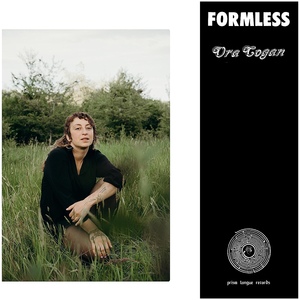
The Prism Tongue period produced some of her richest and most fully realized work. DYED (2022) offered a compact but potent glimpse of her evolving direction, while Formless (2023) stands as one of the clearest summations of her mature style. Produced by David Parry and Ora Cogan, Formless brought together a wide and carefully chosen circle of collaborators while preserving the intimacy and mystery that define her work. It also returned to ‘Katie Cruel’ in a newly reimagined form, once again underlining how deeply traditional song remains woven into her artistic language even in her most modern and exploratory material.
In 2025, Cogan issued the Bury Me EP, a limited release that functioned both as a self-contained statement and as a bridge toward the next stage of her career. Rather than folding all of that material into a larger full-length project, she chose to let those songs stand on their own, an approach consistent with the increasingly deliberate and carefully shaped identity of each release. The EP also highlighted the now-familiar network of collaborators surrounding her recent work, including Tom Deis, David Parry, and Finn Smith, all of whom have played important roles in shaping the sound of her later recordings.
That next stage arrived with Hard Hearted Woman (2026), her first album for Sacred Bones Records and one of the clearest milestones of her career to date. Written in Nanaimo, British Columbia, the album was deeply informed by the rhythms and physical landscapes of Vancouver Island life—cold-water plunges, river swims, long conversations about art and politics, and drives through the rural Lillooet landscape. It was recorded with David Parry at Dream Club in Victoria, B.C., in Cogan’s own studio in Nanaimo, and remotely with Tom Deis, bringing together musicians from both country and experimental backgrounds. The opening track, ‘Honey,’ was written in response to anti-trans legislation, a reminder that while her music is often described in mystical or dreamlike terms, it remains grounded in empathy, resistance, and the realities of the present.
By the time of Hard Hearted Woman, Ora Cogan had long since outgrown any narrow description as a cult folk singer or atmospheric songwriter from Canada’s West Coast. What emerges across her discography is a far more substantial and coherent artistic vision: a musician shaped by Salt Spring Island’s creative and activist culture, by Vancouver’s underground experimental communities, by a lasting devotion to traditional song, and by the emotional and physical landscapes of British Columbia. The deeper one looks, the clearer it becomes that the mystery in her music is not a pose or aesthetic device. It is rooted in her beginnings—an island childhood in a house full of records, artists, and political conviction—and in a career spent patiently transforming those early influences into something wholly her own.
-Robert Williston