Artist / Band
Stompin' Tom Connors

Biography
Charles Thomas “Stompin’ Tom” Connors was born on February 9, 1936, in Saint John, New Brunswick, and became one of the most unmistakable figures in Canadian music: a songwriter, performer, nationalist, storyteller, label founder, and cultural force whose work turned small towns, working people, highways, mines, hockey rinks, ferries, potatoes, postmen, truckers, loggers, railway lines, and local legends into permanent parts of the Canadian songbook.
Connors’ early life was marked by poverty, instability, and separation. After spending his youngest years with his mother under difficult circumstances, he was placed in the care of Children’s Aid and later adopted by the Aylward family of Skinner’s Pond, Prince Edward Island. That rural Prince Edward Island setting became central to his personal mythology and later surfaced throughout his songs and public identity.
By his mid-teens, Connors had left home and begun the long period of wandering that shaped almost everything he later wrote. For roughly thirteen years, he travelled across Canada by hitchhiking, working odd jobs, performing when he could, and absorbing stories from the people and places he encountered. His Canada was not abstract or ceremonial. It was the Canada of boarding houses, beer parlours, highways, farms, fisheries, bush camps, mines, railway stops, northern towns, prairie roads, and Atlantic kitchens. He carried a guitar, listened closely, and developed a songwriting voice built less on polish than on directness, memory, rhythm, and place.
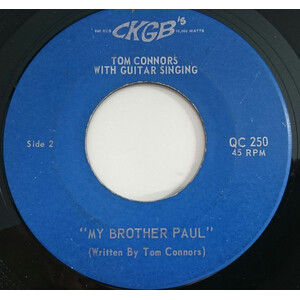
The turning point came in Timmins, Ontario, in 1964. Connors arrived at the Maple Leaf Hotel short of enough money for a drink, and bartender Gaet Lepine agreed to help him out if he would play a few songs. What began as an impromptu performance became a long engagement at the hotel, a weekly appearance on CKGB radio in Timmins, and the beginning of his recording career.
The “Stompin’” part of the name came from his physical style of performance. Connors kept time by driving his boot heel into the floor, a habit that became so closely associated with him that the stomp itself became part of the show. Over time, he used a piece of plywood as a “stompin’ board,” turning a practical solution into one of the most recognizable stage props in Canadian music. The black hat, boots, guitar, board, and stomp created an image that was instantly readable: unpretentious, stubborn, regional, and defiantly Canadian.
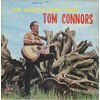
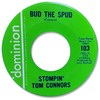
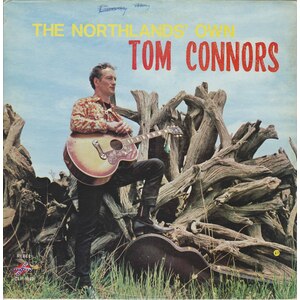
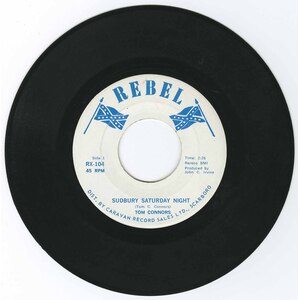
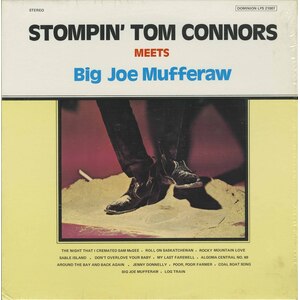
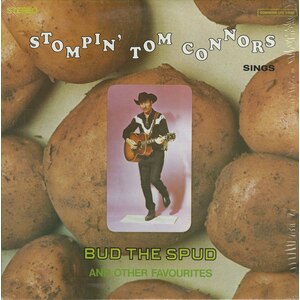
His debut album, The Northlands’ Own Tom Connors, was released in 1967 on Rebel Records. It appeared before he fully adopted the “Stompin’ Tom” name and introduced the plainspoken regional style that would define his career. Connors’ recording career accelerated after he signed with Dominion Records in 1969, producing many of the songs that became central to his catalogue, including “Bud the Spud,” “Sudbury Saturday Night,” “The Ketchup Song,” “Big Joe Mufferaw,” “The Hockey Song,” “Algoma Central No. 69,” and “The Peterborough Postman.”
What made Connors unusual was not simply that he sang about Canada, but that he treated local Canadian life as worthy of myth. He did not need to translate his subjects into American country, Nashville polish, or international pop language. A potato truck from Prince Edward Island, a nickel mine in Sudbury, a Saturday night in Northern Ontario, a hockey game, a railway run, or a rough-edged town character could carry the weight of an anthem. His songs were often comic, plainspoken, and deliberately repetitive, but they were also archival in their own way: place names, occupations, accents, local heroes, and regional pride were preserved in melody.
In 1971, Connors and his manager Jury Krytiuk co-founded Boot Records in Toronto. Boot began as a home for Connors’ own recordings but quickly became a wider platform for Canadian country, folk, bluegrass, classical, Indigenous, regional, and grassroots artists. The label and its associated budget imprint Cynda released material by artists including Liona Boyd, Rita MacNeil, The Canadian Brass, Charlie Panigoniak, Willie Thrasher, The Dixie Flyers, Humphrey and the Dumptrucks, and others.
Boot Records was central to Connors’ larger mission. He believed Canadian music needed Canadian infrastructure, not simply Canadian performers trying to fit into foreign-controlled systems. That conviction shaped his business decisions as much as his songwriting. While many Canadian artists of his era sought approval abroad, Connors built his identity around staying home, touring Canada, recording Canadian stories, and promoting Canadian artists.
His patriotism could be blunt, stubborn, and controversial. In 1978, Connors returned his six Juno Awards in protest, arguing that the Canadian music industry was rewarding artists who did not maintain a meaningful presence in Canada. The gesture marked the beginning of his self-imposed withdrawal from the mainstream music business and became one of the defining acts of his public life.
The withdrawal did not mean silence. Connors remained a symbolic presence, and in 1986 he formed A-C-T Records, short for Assisting Canadian Talent, as another vehicle for Canadian music. He resumed recording and touring in the late 1980s and returned more visibly to public life in 1990. His comeback confirmed that his audience had not disappeared. If anything, the country had caught up to him: the songs that had once seemed too homespun, too regional, or too unfashionable had become part of Canada’s shared popular memory.
Connors’ later years brought formal recognition from institutions that had once seemed far removed from his world of taverns, highways, and stompin’ boards. He was appointed an Officer of the Order of Canada in 1996 and received the Governor General’s Performing Arts Award for Lifetime Artistic Achievement in Popular Music in 2000. He also wrote books, including the autobiography Before the Fame and its follow-up Stompin’ Tom and The Connors Tone, expanding his work into memoir, film, television, children’s books, and live specials.
By the 1990s and 2000s, Connors had become something larger than a country singer. “The Hockey Song” became a rink anthem. “Bud the Spud” became part of Prince Edward Island folklore. “Sudbury Saturday Night” became a Northern Ontario calling card. “C-A-N-A-D-A” became a classroom and community singalong. His songs entered public life in ways that bypassed conventional radio success: hockey arenas, school concerts, Legion halls, Canada Day events, small-town festivals, television specials, and family gatherings kept them alive.
The roughness of Connors’ voice and writing was part of the appeal. He did not sing like a polished crooner or write like a literary folk poet. His best work sounded as if it had been hammered together in a hotel room, tested in a tavern, and carried down the highway in a guitar case. That directness made him easy to parody, but it also made him hard to replace. No other Canadian songwriter mapped the country quite the same way.
Stompin’ Tom Connors died on March 6, 2013, at his home in Halton Hills, Ontario. He left behind a catalogue that functions as a coast-to-coast folk archive disguised as barroom entertainment: funny, stubborn, regional, sentimental, political, and unmistakably his own. He toured Canada, sang Canada, recorded Canada, invested in Canadian labels, promoted Canadian artists, challenged Canadian institutions, and insisted that ordinary Canadian stories deserved their own music. For generations of listeners, that insistence made him not only a performer, but one of the country’s great keepers of place.
-Robert Williston
Tracks
67 tracks

-
Fire in the Mine
-
The Streets of Toronto

-
Movin' On To Rouyn
-
Carolyne

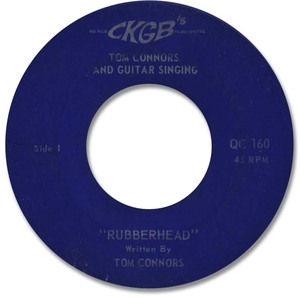
Rubberhead b/w Laura (1965)
2 tracks
-
Rubberhead
-
Laura

-
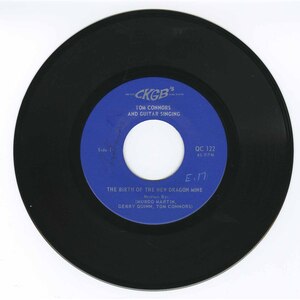
The Birth of the New Dragon Mine
-
Luke's Guitar

-
Yay Canada
-
Forever Emily

-
Going Back Up North
-
Pizza Pie Love
-
I Saw The Teardrop
-
My Brother Paul

-
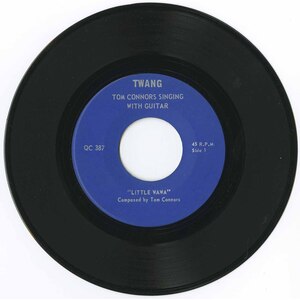
Little Wawa
-
The Northern Gentleman
-
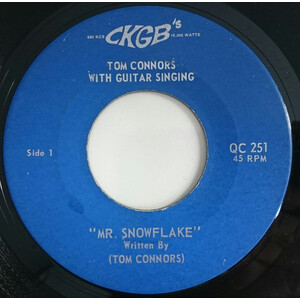
Mr. Snowflake
-
Jingle Jangle
Northland's Own (1967)
Showing 10 of 16 tracks
-
The World Goes Round (Expo 67 Montreal)
-
The Maritime Waltz
-
The Northern Gentleman
-
May, The Millright's Daughter
-
Algoma Central No. 69
-
Streets of Toronto
-
Sudbury Saturday Night
-
Movin' On to Rouyn
-
Emily, the Maple Leaf
-
My Home Cradled Out in the Waves

-
Sudbury Saturday Night
-
Don Valley Jail
-
Big Joe Mufferaw
-
The Coal Boat Song
-
Bud The Spud
-
The Old Atlantic Shore
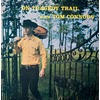
On Tragedy Trail (1969)
Showing 10 of 12 tracks
-
Tragedy Trail
-
How The Mountain Came Down
-
Shanty Town Sharon
-
Fire In The Mine
-
Somewhere There's Sorrow
-
Don Valley Jail
-
Benny The Bum
-
Black Donnelly's Story
-
Battle Of Despair
-
Reesor Crossing Tragedy
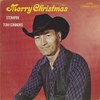
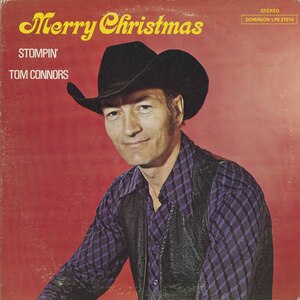
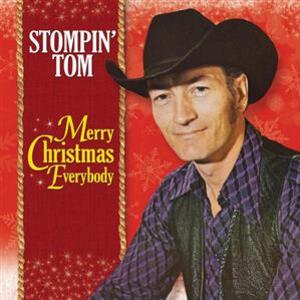
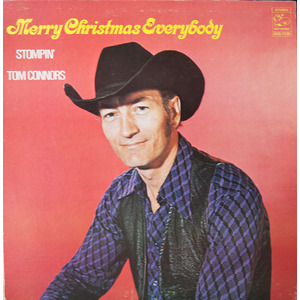
Merry Christmas Everybody (1970)
Showing 10 of 12 tracks
-
Merry Christmas Everybody
-
Merry Bells
-
Christmas Angel
-
Down on Christmas
-
Jingle Jangle Aeroplane
-
Kiss Me the New Year In
-
Mr. Snowflake
-
Story of Jesus
-
An Orphan's Christmas
-
One Blue Light
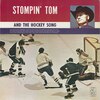
And the Hockey Song (1972)
1 track
-
The Hockey Song

-
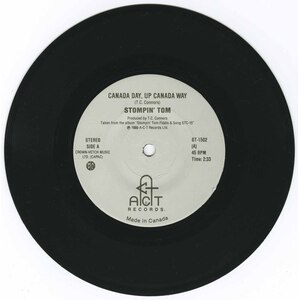
Canada Day Up Canada Way
-
I Am the Wind
Discography
Featured Titles







Albums

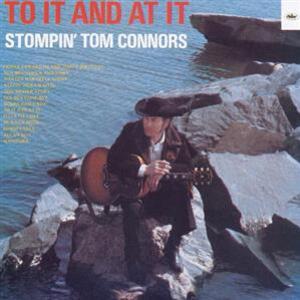
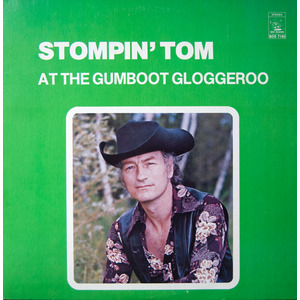

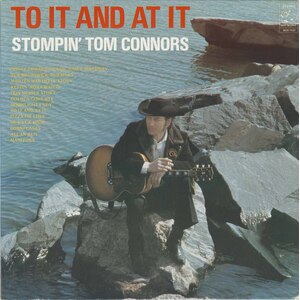

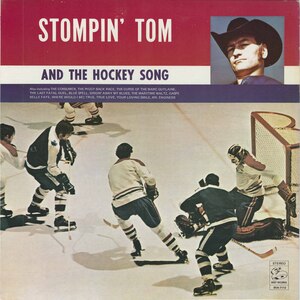
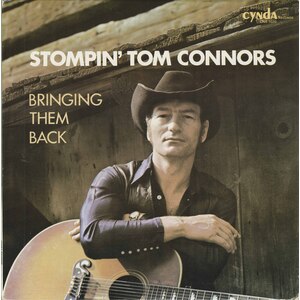
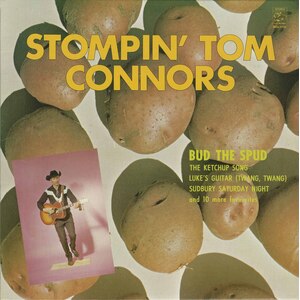


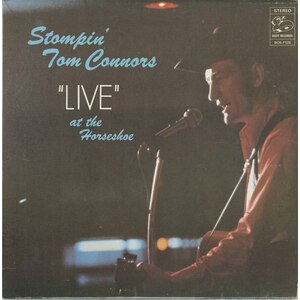

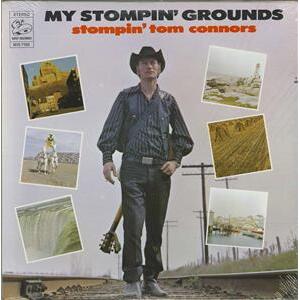
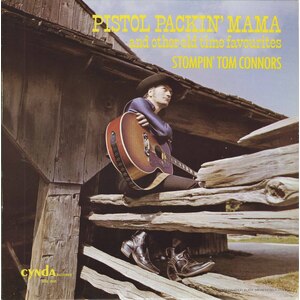
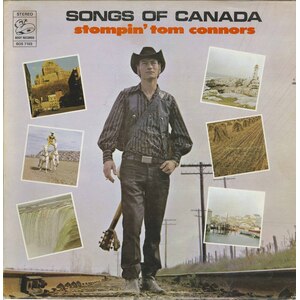


Singles
Compilation Tracks
Gallery
Images
1 image

Connors, Stompin' Tom
Media
Videos
0 videos
No videos available for this artist.