Artist / Band
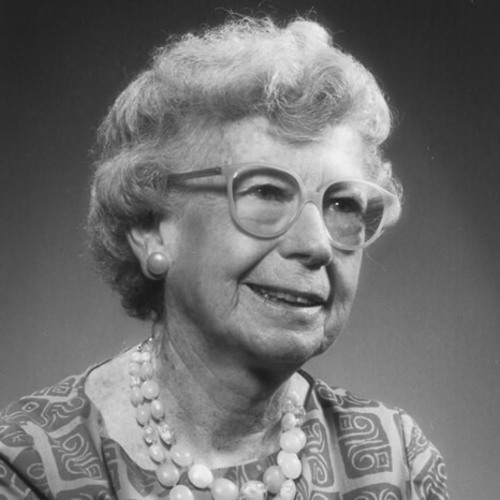
Edith Fowke (Edith Margaret Fulton)
Biography
Edith Fowke (1913–1996) was one of the central architects of modern Canadian folklore studies and the foremost collector of English-language traditional song in twentieth-century Canada. Born Edith Margaret Fulton in Lumsden, Saskatchewan, she began writing and editing early, studied English and history at the University of Saskatchewan, and moved to Toronto after her marriage in 1938. There, frustrated by how little Canadian traditional song had been published or recorded, she began the work that would define her career: locating singers, documenting repertoires, and bringing vernacular tradition into both public culture and serious scholarship. By the time of her death, she had published more than twenty books and had become the single most influential figure in the preservation and interpretation of English-language folk tradition in Canada.
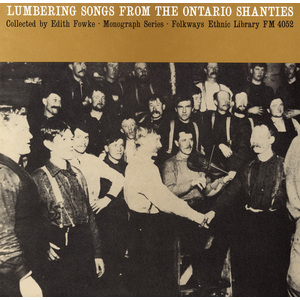
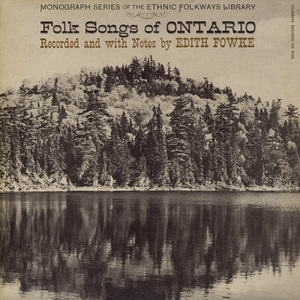
Fowke’s most transformative work began in the 1950s, when she took recording equipment into rural Ontario and demonstrated that the province—often assumed to be poor in survivals of traditional song—contained a deep and vibrant oral repertoire. In the notes to Folk Songs of Ontario (Folkways FM 4005, 1958), she positioned the album as a field-recorded survey of songs from the province; the album’s title page explicitly credits it as “Recorded and with Notes by Edith Fowke.” Smithsonian Folkways still describes the album as a 1958 collection of Ontario folksongs sung by a range of traditional performers, noting that many had not previously reached a general audience. Her own liner notes for Lumbering Songs from the Ontario Shanties (Folkways FM 4052, 1961) make the scope of that achievement clear: she writes that most of the folk songs she found in Ontario had survived through the lumber camps, that many of her best singers came from the Peterborough region, and that she had recorded the album’s singers in their homes in 1957 and 1958. Smithsonian Folkways similarly describes that LP as a set of field recordings—many made in the lumbermen’s own homes—capturing both occupational songs and memorial ballads of the Ontario shanties.
These two Folkways albums are especially important because they show Fowke at work in two complementary modes: as a broad surveyor of Ontario’s song traditions and as a specialist interpreter of the lumberwoods repertory. Folk Songs of Ontario documents a wide provincial soundscape, from local and historical ballads to crime songs and immigrant survivals. Lumbering Songs from the Ontario Shanties, by contrast, narrows the focus to the occupational world that Fowke herself identified as crucial to the survival of Ontario song. In the FM 4052 notes she explicitly argues that, with few exceptions, the traditional songs still recoverable in Ontario owed their survival to the shanties, and she singles out the Peterborough district as her richest collecting ground. That argument remains one of her most durable scholarly contributions: she did not merely preserve songs, she explained the social ecology that kept them alive.
Her reach extended far beyond fieldwork. Fowke became one of the major public voices for traditional music in Canada through CBC radio, preparing Folk Song Time (1950–63), Folk Sounds (1963–74), Folklore and Folk Music (1965), and The Travelling Folk of the British Isles (1967). She began teaching folklore at York University in 1971, later also taught in the University of Calgary’s Kodály program, helped found the Canadian Folk Music Society in 1956, and became editor of the Canadian Folk Music Journal in 1973, a role she held until her death. She was equally influential as a scholar and editor, publishing major collections and reference works including Folk Songs of Canada (with Richard Johnston, 1954), More Folk Songs of Canada (1967), The Penguin Book of Canadian Folk Songs (1973), Folklore of Canada (1976), and numerous anthologies of children’s lore, folktales, legends, and Canadian traditional song.
Fowke’s honours reflect the breadth of that legacy. She received honorary doctorates from Brock, Trent, York, and Regina; was named a Fellow of the American Folklore Society; was appointed a Member of the Order of Canada in 1978; and became a Fellow of the Royal Society of Canada in 1983. The Governor General’s citation recognized her as a folklorist, author, and York professor who had made “a valuable contribution to our heritage” by preserving the traditional songs and folklore of Ontario. After her death in 1996, her influence only broadened: her recordings continued to circulate through Smithsonian Folkways and archival collections, and in 2011 the Canadian Songwriters Hall of Fame honoured her with the Frank Davies Legacy Award, recognizing her role in safeguarding the repertories on which later generations of singers and scholars continue to draw.
-Robert Williston
Tracks
46 tracks
Folk Music of Ontario (1958)
Showing 10 of 18 tracks
-
The Poor Little Girls of Ontario
-
The Banks of the Don
-
Johnston's Hotel
-
The Murder of F.C. Benwell
-
The Railroad Boy
-
The Hobo's Grave
-
The Little Indian Maid
-
The Indian's Lament
-
Sally Greer
-
The Twelfth of July
Lumbering Songs from the Ontario Shanties (1961)
Showing 10 of 17 tracks
-
When the Shantyboy Comes Down
-
The Jam on Gerry's Rocks
-
Johnny Doyle
-
Jimmy Whelan
-
Turner's Camp
-
Hogan's Lake
-
Johnny Murphy
-
The Shantyboy's Alphabet
-
Jack Haggerty
-
Bill Dunbar
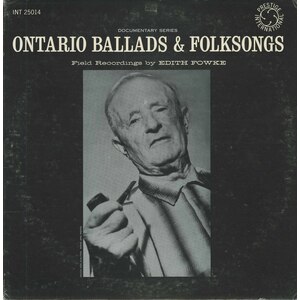
Ontario Ballads & Folksongs (1962)
Showing 10 of 11 tracks
-
Tom Brandon - Erin's Green Shore
-
O.J. Abbott - An Old Man He Courted Me
-
Mrs. Gordon Clark - I'll Go See My Love
-
Orlo Brandon - The Green Briar Shore
-
Jerry Carey - Old Erin Far Away
-
Marcelle McMahon - Sir Charles Lapier
-
O.J. Abbott - The Weaver
-
Tom Brandon - The Spree
-
Mrs. Tom Sullivan - I Love Little Willie
-
Stanley Baby - A Long Awa' Ship
Discography
Featured Titles
Albums
Gallery
Images
1 image
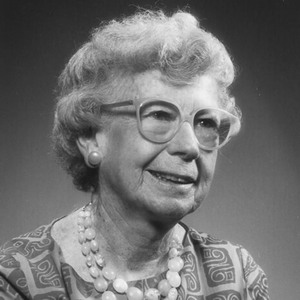
Edith Fowke
Media
Videos
1 video