Artist / Band
Guess Who

Biography
The Guess Who was the most successful Canadian rock group of the late 1960s and early 1970s, and Canada’s first rock superstars. The songwriting team of guitarist-singer Randy Bachman and lead singer-keyboardist Burton Cummings wrote such classic songs as “These Eyes,” “Laughing,” “No Time,” “No Sugar Tonight” and “American Woman” (the first song by a Canadian band to hit No. 1 on the Billboard Hot 100 chart) before Bachman’s departure in 1970. The string of hits continued with “Share The Land,” “Albert Flasher,” “Rain Dance” and “Clap for the Wolfman,” among others, until Cummings left to pursue a solo career in 1975. The Guess Who won two Juno Awards and a Governor General’s Performing Arts Award, and was inducted into the Canadian Music Hall of Fame, Canada’s Walk of Fame, the Canadian Songwriters Hall of Fame and the Canadian Music Industry Hall of Fame.
Early Years
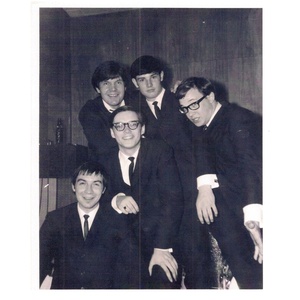
The Guess Who emerged from a series of Winnipeg bands fronted by lead singer Chad Allan. In the late 1950s, Allan formed a band called The Silvertones with other Winnipeg teenagers, including bassist Jim Kale. Randy Bachman and drummer Garry Peterson joined in 1962, when the group’s name was changed to Chad Allan & The Reflections. Keyboardist Bob Ashley rounded out the five-man lineup, which changed its name to Chad Allan & the Expressions in 1965.
Heavily influenced by the “British Invasion,” the group issued a few singles and two albums. Although they developed a loyal following in Winnipeg, they received little radio support in the rest of the country, due in part to the refusal by most radio stations in Canada to play Canadian material.
Success as The Guess Who?
When the band recorded a cover of the influential British hit “Shakin’ All Over” in 1965, Quality Records producer George Struth released it to radio stations under the moniker "Guess Who?" in the hope that DJs would be more inclined to play a song by a mysterious new British band. Whether this marketing ploy had anything to do with the song’s success is debatable, but it reached No. 1 in Canada and No. 22 in the US.
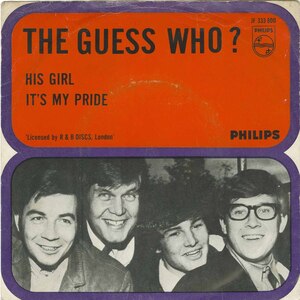
The success of “Shakin’ All Over” led the band, now known as The Guess Who?, to tour with The Kingsmen, The Belmonts and The Turtles in the summer of 1965. Burton Cummings replaced Ashley on keyboards in early 1966 and Allan left a few months later, which made the 18-year-old Cummings the group’s new lead singer. The band released the LP It’s Time (1966) and went to the UK in 1967 in support of the single “His Girl.” However, the song had dropped off the charts by the time they got there and the tour was a failure. The band returned to Canada and served for two years as the house band on the CBC TV music/variety program Let’s Go, hosted by Chad Allan, to help pay off its debts from the ill-fated trip to Britain.
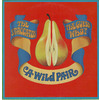
From 1966 to 1968, the band released a string of singles, primarily ballads, that reached the Top 40 in Canada — including “Hurting Each Other,” which was later a hit for The Carpenters — but its albums did not sell well. In 1968, they released A Wild Pair, a split album with The Staccatos (which soon became Five Man Electrical Band) that was part of a Coca-Cola promotion and brought the band more exposure in Canada. That year, the question mark was dropped and the group officially became The Guess Who.
International Success
With what’s generally considered the classic lineup of Bachman, Cummings, Kale and Peterson in place, The Guess Who began a productive relationship with a man who became another integral team member: A Wild Pair producer Jack Richardson. After acquiring the band’s contract from Quality Records for $1,000, Richardson placed a second mortgage on his house to pay for the album Wheatfield Soul (1969), which was recorded for his Nimbus 9 Productions and released by RCA Records. The investment paid off. In addition to yielding the million-selling “These Eyes,” which broke the Top 10 in both Canada and the US, the LP cemented a fruitful, long-term bond between band and producer.
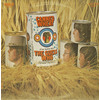
The prairie theme continued with Canned Wheat (1969), which was quickly released by RCA to capitalize on the success of the double-sided single “Laughing” (a Canadian chart-topper that reached No. 10 in the US) and Bachman’s “Undun,” which hit No. 21 in Canada and No. 22 in the US.
American Woman (1970)
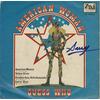
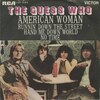
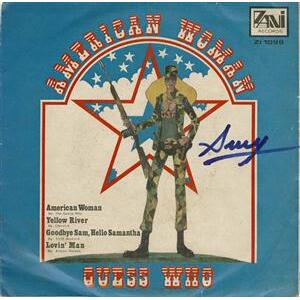
But it was the next album, American Woman (1970), which elevated The Guess Who to a higher level of stardom. The title track had its origins in a concert at a curling rink in Southern Ontario. Bachman improvised the riff while tuning his guitar after breaking a string. The rest of the band joined in and Cummings came up with the lyrics, “American woman stay away from me,” on the spot. An audience member was recording the show and the band got a copy of the cassette afterwards. Cummings added the rest of the lyrics (which include images of “war machines” and “ghetto scenes” evoked from touring in the US during the Vietnam War) before the band performed the song again the following night.
RCA fell in love with the track, as did the public. The song became the first by a Canadian rock group to hit No. 1 in the US on the Billboard Hot 100, where it remained for three weeks. (“American Woman” also became a hit for American artist Lenny Kravitz in 1999, earning him a 2000 Grammy Award for Best Male Rock Performance.)
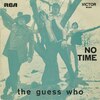
“No Sugar Tonight,” the B-side for “American Woman,” also hit No. 1 in both Canada and the US. A longer version of the song, combined with “New Mother Nature,” appeared on the album. “No Time,” which was originally included on Canned Wheat, was re-recorded for American Woman and became its third hit single, peaking at No. 1 in Canada and No. 5 in the US. American Woman reached No. 9 on the Billboard Pop Albums chart, making it the only Guess Who album to reach the Top 10.
Post-Bachman Years
Bachman had converted to Mormonism when he married his first wife Lorayne Stevenson in 1966, and as the spoils of the rock ‘n’ roll lifestyle increased with The Guess Who’s higher profile, Bachman's beliefs and lifestyle clashed with those of his band mates. He was also suffering from serious gall bladder attacks and was replaced on tour by guitarist Bobby Sabellico while he returned to see his doctor in Winnipeg. After playing a final show at the Fillmore East in New York on 16 May 1970, Bachman left the group. He later re-teamed with Chad Allan to form Brave Belt, which evolved into Bachman-Turner Overdrive.
Bachman was replaced by two guitarists: Kurt Winter, from the Winnipeg band Brother, and Greg Leskiw. Winter became Cummings’s primary songwriting partner. The first album with this new lineup was Share The Land (1970). Winter’s “Hand Me Down World” and “Bus Rider,” and Cummings’ title track kept the string of hit singles coming, as did the Cummings/Winter-penned “Hang on to Your Life” and the non-album single “Albert Flasher.” Bachman’s departure didn’t seem to slow The Guess Who down.
So Long, Bannatyne (1971), named after a Winnipeg street, followed a year later and included the popular singles “Rain Dance” and “Sour Suite.” Leskiw left to pursue a solo career and was replaced by Donnie McDougall for the acclaimed live album Live at the Paramount (1972), which was recorded at the Paramount Theatre in Seattle, WA. The album yielded the Top 10 Canadian hit “Runnin’ Back to Saskatoon” and led legendary rock critic Lester Bangs to declare “The Guess Who is God.”
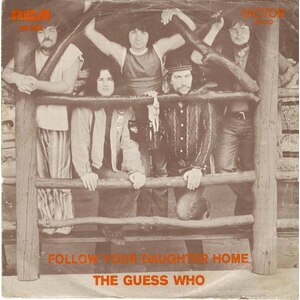
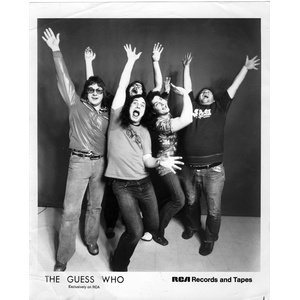
The studio album Rockin’ also came out in 1972 and was the last with Kale, who was replaced by bassist and former Brother member Bill Wallace. Artificial Paradise (1973), the first album with this lineup, featured the Top 20 Canadian hit “Follow Your Daughter Home,” but failed to match the success of its predecessors. The group’s 10th album with Cummings, appropriately titled #10, was also issued in 1973. Its only charting single was “Glamour Boy,” which hit No. 14 in Canada.
Road Food (1974) marked a commercial recovery for The Guess Who, as it spawned the Top 10 Canadian and US hit “Clap for the Wolfman” (an ode to American disc jockey Wolfman Jack, who also appears on the song) and “Star Baby,” which stayed on the Billboard Hot 100 for 19 weeks, the longest of any Guess Who single.
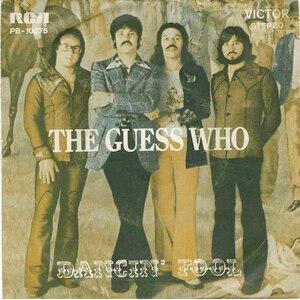
Guitarist Domenic Troiano, known for his work with Ronnie Hawkins and The James Gang, replaced Winter and McDougall, and became Cummings’ songwriting partner for Flavours (1975), which is best known for the song “Dancin’ Fool.” Power in the Music came out later that year and was Cummings’s last album; he left in the middle of a tour to pursue a successful solo career after becoming disenchanted with the more progressive rock direction he saw The Guess Who taking with Troiano.
Post-Cummings Years
Cummings’s departure seemed to mark the end of The Guess Who, but a contractual obligation with RCA brought about the release of The Way They Were (1976), a collection of previously unreleased tracks from the Bachman era. Kale, realizing that there was still an audience for the band’s music and that its name had never been registered, reformed The Guess Who with Peterson, Winter and McDougall, and acquired legal rights to the name.
Peterson left and was replaced shortly thereafter by Brother alumnus Vance Masters, while Ralph Watts joined on keyboards. This lineup released Guess Who’s Back (1978) and All This For A Song (1979), both of which had lacklustre sales. So did Now and Then (1981), which featured Kale, singer Brent DeJarlais, guitarist Mike McKenna, and drummers Sonnie Bernardi and Dan Russell.
1980s Reunions
Bachman and Cummings reunited with Kale and Peterson for a 1983 tour that resulted in the Together Again live album and concert video, as well as the Kale-written single “Let’s Watch The Sun Go Down.” The four men again went their own ways until 1987, when they gathered to be inducted into the Canadian Music Hall of Fame.
1990s to Present
Kale and Peterson reconvened The Guess Who to tour again in the early 1990s, this time with singer Terry Hatty, keyboardist Leonard Shaw and guitarist Dale Russell. Liberty (1995) was released by Aquarius Records, then re-released later that year as Lonely One by Intersound Records. Public interest was minimal. Kale put together other touring lineups in the 1990s and released the live albums The Spirit Lives On (1998) and Down The Road (1999), which were met with derision by fans. The only performances in the 1990s to feature Bachman and Cummings were a 1997 Red River Flood benefit concert and a four-song set at the 1999 Pan-Am Games in Winnipeg.
The two main men reunited and — with Peterson, McDougall and Wallace — set out on the Running Back Thru Canada Tour, one of the highest-grossing tours in Canadian music history. The resulting live double album, issued in 2000, was certified gold in Canada within a week of its release and eventually went double platinum. The reunited lineup also played the half-time show at the 2000 Grey Cup in Calgary and the Molson Canadian Rocks for Toronto “SARStock” benefit concert in July 2003. Kale’s version of the group continued to tour and issue largely ignored releases. Kale, Peterson, Shaw, lead singer/guitarist Derek Sharp and guitarist Laurie MacKenzie were still touring as The Guess Who as of 2013.
Legacy
While its record company tried to masquerade it as a British group, The Guess Who went on to forge an identity as a distinctly Canadian band, with a diverse sound that included different variations of rock, pop, psychedelia and even jazz, and lyrics that often contained explicit Canadian references. “Lightfoot” (a tribute to Gordon Lightfoot), “Maple Fudge,” “American Woman,” “So Long, Bannatyne,” “Guns, Guns, Guns,” “Glace Bay Blues,” “Runnin’ Back to Saskatoon” and “Lost and Found Town” are all examples.
As Canada’s Walk of Fame noted upon the band’s induction in 2001, The Guess Who “were the guys who made it okay to be Canadian, who proved that you didn’t have to leave our shores to score big. And they’ve influenced just about every Canadian performer who has followed since.”
Of the 14 Guess Who albums produced by Richardson during the 1960s and 1970s, 11 were certified gold (sales of 50,000) and five were certified platinum (sales of 100,000) in Canada, while five achieved gold (sales of 500,000) and three reached platinum (sales of one million) in the US.
In 2005, the CBC Radio program 50 Tracks: The Canadian Version respectively ranked “American Woman” and “These Eyes” the 5th and 23rd best Canadian songs of all time. “American Woman” and its B side “No Sugar Tonight” were ranked No. 1 in Bob Mersereau’s 2010 book, The Top 100 Canadian Singles, while “These Eyes,” “Shakin’ All Over” and “No Time” also made the list.
Bachman and Cummings were each inducted into the Canadian Songwriters Hall of Fame in 2005 along with their co-written songs “These Eyes,” “No Time” and “No Sugar Tonight / New Mother Nature,” and “American Woman,” on which all band members share credit. Kurt Winter’s “Hand Me Down World” was inducted in 2017. In July 2013, Canada Post issued a stamp in the band’s honour.
Awards
Top Vocal Instrumental Group, RPM Awards (1965)
Top Vocal Instrumental Group, RPM Awards (1966)
Top Vocal Instrumental Group, RPM Awards (1967)
Top Vocal Instrumental Group, RPM Awards (1968)
Top Vocal Instrumental Group, RPM Awards (1969)
Top Vocal Instrumental Group, Juno Awards (1970)
Top Vocal Instrumental Group, Juno Awards (1971)
Canadian Music Hall of Fame (1987)
Prairie Music Hall of Fame (1999)
Lifetime Achievement Award, MuchMusic Video Awards (2000)
Canada’s Walk of Fame (2001)
Honorary Doctorates of Music, Brandon University (2001)
Canadian Music Industry Hall of Fame (2002)
Lifetime Artistic Achievement, Governor General’s Performing Arts Awards (2002)
Canadian Songwriters Hall of Fame (2005, 2017)
Tracks
59 tracks
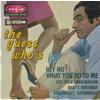
-
Hey Ho What You Do to Me
-
Use Your Imagination
-
Baby's Birthday
-
Goodnight, Goodnight
-
And She's Mine
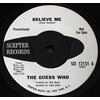
-
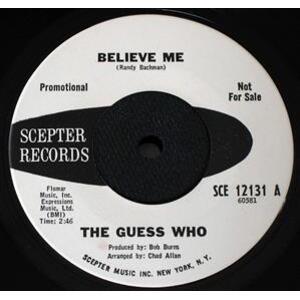
Believe Me
-
Baby Feelin'
-
Believe Me
-
Baby Feeling
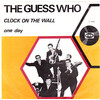
-
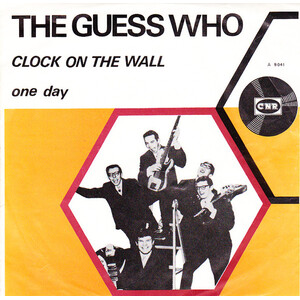
Clock On The Wall
-
One Day
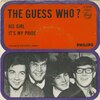
-
His Girl
-
It's My Pride
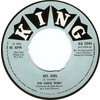
-
It's My Pride
-
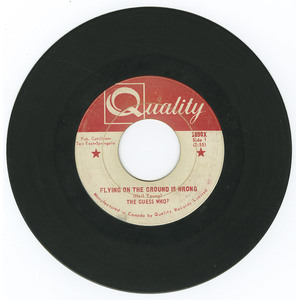
Flying on the Ground is Wrong
-
If You Don't Want Me
-
His Girl
-
It's My Pride
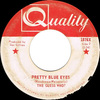
-
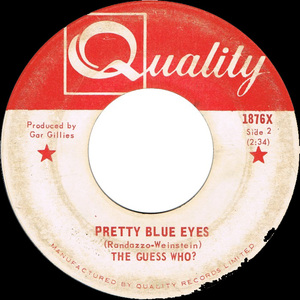
Pretty Blue Eyes
-
I Need Your company
-
Mr. Nothin'
-
Very Far From Near
-
Heygoode Hardy
-
Somewhere Up High
-
Two Wheel Freedom
-
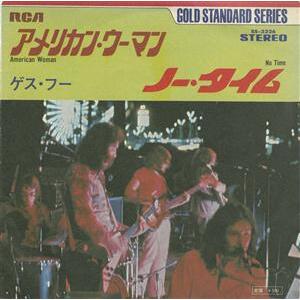
American Woman
Canned Wheat (1969)
9 tracks
-
No Time
-
Minstrel Boy
-
Laughing
-
Undun
-
6 A.M. or Nearer
-
Old Joe
-
Of a Dropping Pin
-
Key
-
Fair Warning
-
No Time
-
Undun
-
Laughing
-
Proper Stranger
-
Shakin' All Over
-
Tossin' and Turnin'
-
Stop Teasing Me
-
Like I Love You
-
Where Have You Been All My Life
-
Shot of Rhythm and Blues
-
I Want to Love Me
-
I'd Rather be Alone
-
I've Been Away
-
American Woman
-
Runnin' Down the Street
-
Hand Me Down World
-
Follow Your Daughter Home
-
Bye Bye Babe
-
Clap For the Wolfman
-
Road Food
-
Dancin' Fool
-
Seems Like I Can't Live With You, But I Can't Live Without You
-
Two Wheel Freedom
-
Two Wheel Freedom
Discography
Featured Titles






Albums

Singles


Compilation Tracks
Gallery
Images
23 images
View All
Guess Who 18

guesswholegge

gweinar
kalegw
gwein
gwcash
gwhoearly
The Guess Who 1972-74
Media
Videos
0 videos
No videos available for this artist.