Artist / Band
Roy Kenner
Biography
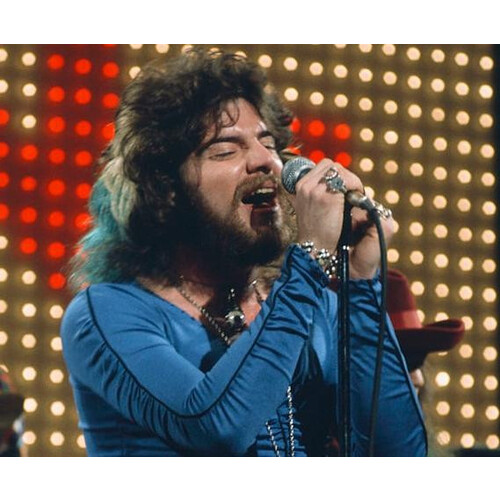
Roy Kenner was one of Toronto’s great soul-rock voices, a singer whose career moved from local R&B clubs to major American rock stages without losing the force, grit and gospel-rooted authority that made him stand out in the first place. Born Roy Douglas Kenner in Toronto on January 14, 1948, he came up in the city’s mid-1960s music scene, where Yorkville coffeehouses sat only a few blocks away from sweaty R&B dancehalls and young Canadian groups were beginning to define their own version of the “Toronto Sound.”
Kenner first emerged as the teenage frontman of Roy Kenner & The Associates, one of the city’s most electrifying but under-recorded R&B bands. The group was assembled in 1964 by guitarist Tom Beavis, who wanted to build a sharp, club-ready rhythm and blues unit. He brought in bassist Greg Carducci, a schoolmate who had little previous bass experience but plenty of determination, and began searching for the right singer. That voice turned out to be Kenner, then only 16 years old, who had grown up singing in church choirs and developing his voice through summer vocal programs in Port Hope.
Kenner’s rasp-tinged, gospel-inflected delivery was instantly magnetic. With drummer Ray Rychlewski and keyboardist Henry Babraj completing the early lineup, The Associates built a sound rooted in American soul, R&B and blues rather than the lighter British Invasion pop favoured by many local teen groups. Their sets drew from Wilson Pickett, James Brown and Ike & Tina Turner, powered by Hammond organ, hard-driving guitar and Kenner’s explosive stage presence.
By 1965, The Associates were working steadily as union musicians, appearing in Yorkville rooms such as the Purple Onion and east-end clubs including The Gogue Inn. Their shows became known for sheer energy. Kenner could work a room with James Brown-style screams, splits, mic-stand moves and the kind of emotional conviction that made audiences feel they were seeing something much larger than a local teenage band.
The group’s only single came through Toronto DJ and entrepreneur Merv Buchanan, who had launched the independent Trend Records label. Recorded after hours in a simple two-microphone session at the Modern Age Lounge, 'Without My Sweet Baby' backed with 'Baby You're What I Need' captured the raw force of the band with minimal polish. Pressed in a small run, with some single-sided promotional copies circulated to DJs, the record has since become one of the prized artifacts of the Toronto R&B scene.
What The Associates lacked in radio success, they made up for on stage. With bookings handled through Ron Scribner’s Bigland Agency, they opened for major American R&B acts including James Brown, Wilson Pickett and Ike & Tina Turner on Toronto stops. They also appeared at the Toronto Sound Showcase at Maple Leaf Gardens in September 1966, a marathon event that placed them alongside several of the city’s leading groups, including The Paupers, The Ugly Ducklings and Luke & The Apostles.
In 1966, Bigland paired The Associates with Lynda Layne and The Big Town Boys for a Maritime tour. It gave the band a taste of one-night stands and larger stages, but the trip was difficult. Equipment was stolen, money disappeared, and the group struggled to get back to Toronto. By 1967, after more mismanagement and a dispiriting Sudbury carnival engagement, the band broke apart. Their short life ended just as Toronto’s R&B scene was shifting, with groups dissolving, retooling or moving toward heavier rock sounds.
The breakup of The Associates led directly into Kenner’s next major chapter. Guitarist Domenic Troiano, rebuilding Mandala after George Olliver’s departure, brought Kenner into the group along with Henry Babraj. Mandala became one of the defining Canadian soul-rock bands of the late 1960s, and Kenner sang on the 1968 album Soul Crusade, a key release that fused R&B, psychedelia, brass-driven arrangements and hard club-band energy. It also began the long musical partnership between Kenner and Troiano.
After Mandala, Kenner and Troiano continued together in Bush, a short-lived but important Canadian rock group that also included Prakash John, Pentti Glan and Hugh Sullivan. Bush released its self-titled album in 1970 and pushed the Toronto soul-rock sound into a heavier, more American-facing direction. The band toured in the United States, and one of its songs, 'I Can Hear You Calling', reached wider exposure when Three Dog Night recorded it as the B-side to 'Joy to the World'.
Kenner’s most internationally visible period came when he and Troiano joined James Gang after the departure of Joe Walsh. Kenner fronted the band from 1972 to 1974, singing on Passin' Thru, Straight Shooter, Bang and Miami. His time with James Gang placed a Canadian vocalist at the centre of a major American rock act during a complicated transition period for the group. With Troiano first, and then Tommy Bolin on guitar, Kenner brought a soulful, muscular vocal style to material that moved between hard rock, funk, blues and pop.
Following James Gang, Kenner continued to work across rock, soul, television and studio music. He appeared on Keith Hampshire’s Music Machine, worked with drummer Garry Peterson of The Guess Who in the Toronto R&B group Delphia, and later joined the American band Law, recording the albums Breakin' It and Hold On To It in 1977. He also played an early role in the career of Lisa Dal Bello, writing '(I Don't Want To) Stand In Your Way' for her 1977 debut album.
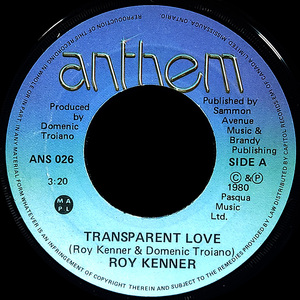
By the late 1970s, Kenner had reconnected again with Domenic Troiano. He co-wrote and sang on Troiano’s 1979 album Fret Fever, including 'We All Need Love', one of Troiano’s best-known recordings. The partnership continued into television and studio work, including music connected to the Canadian crime drama Night Heat. In 1980, Kenner released the Anthem single 'Transparent Love' backed with 'The Way To Paradise', both written by Kenner and Troiano and produced by Troiano. The single stands as one of the clearest examples of their post-James Gang collaboration: polished, melodic, and still rooted in the soul-rock chemistry that had carried them from Mandala onward.
Kenner was also part of the Toronto R&B revival centred around Club Bluenote in the early 1980s. On September 25, 1982, he appeared as one of the special guests on George Olliver & Gangbuster – Live At The Bluenote, recorded live at the reopened Toronto club and released by Quality Records in 1983. The album brought together several major voices from the city’s soul and R&B history, including George Olliver, Shawne Jackson, Roy Kenner, Jayson King and Wayne St. John, backed by Gangbuster and produced by Domenic Troiano for Pasqua Music Ltd. Kenner performed 'Midnight Hour' and 'Loveitis', reconnecting him with the live R&B tradition that had shaped his earliest work before his years on the international rock circuit.
Although Kenner worked steadily as a vocalist, songwriter, session singer and performer, he never released a full solo album. His recorded legacy is instead spread across a remarkable chain of Canadian and international projects: Roy Kenner & The Associates, Mandala, Bush, James Gang, Law, Domenic Troiano’s solo work, television music, jingles, voice-over work and live R&B revival recordings. That scattered discography has sometimes made him easy to overlook, but it also shows how deeply he was woven into the fabric of Canadian rock, R&B and soul.
Roy Kenner & The Associates never scored a chart hit, yet their importance lies in what they represented: one of the first Toronto bands to bring uncompromising R&B firepower to teen audiences, to record for an independent local label, and to serve as a proving ground for musicians who would go on to major careers. Kenner’s later success ensured his name endured, but The Associates deserve recognition as one of the hardest-working and most electrifying groups of the Toronto Sound era.
Roy Kenner remains best remembered as a singer’s singer: a Toronto vocalist with power, range, feel and authority, equally at home in R&B, funk, hard rock and polished studio pop. His long association with Domenic Troiano connects several major chapters of Canadian music history, from the Yorkville-era soul scene through international rock stages and into the studio-driven sound of the late 1970s and 1980s.
-Robert Williston
Tracks
2 tracks
-
Transparent Love
-
The Way to Paradise
Discography
Featured Titles
Albums

Singles
Gallery
Images
1 image
Kenner, Roy
Media
Videos
0 videos
No videos available for this artist.