Insight
The Blushing Brides rehearsed for three days in a Kingston basement and then went out on the road for seventeen nights. They barely stopped after that. Years later their drummer figured the band had rehearsed maybe twice in two years, which was a joke with something true underneath it. They learned how to be a band in front of people, night after night, and that is the fact that explains everything that happened to them.
It started in Montréal. Maurice Raymond was fronting a covers band called Jade, working through the Rolling Stones, Dylan, Bowie, Springsteen and the J. Geils Band, when a Kingston guitarist named Paul Martin caught the show and came to talk to him afterward. Raymond moved to Kingston and joined Martin's band Consilium late in 1978. Around them the lineup came together with guitarist James Green, bassist Martin Van Dijk, drummer Richard "Ricco" Berthiaume and keyboardist Andre Lasalie. Martin's former teacher Gord Nichol, then at Pro-Motion Management, took on the management. The band histories place the name change at a New Year's Eve show at the old Chaudière Club in Ottawa going into 1980, when Consilium became The Blushing Brides.
What they intended has been rubbed out over the years by what they became. Raymond was plain about it later. The goal was to be an original band. The Stones songs were covers in the set, played well enough that they started swallowing everything around them. In February 1981, with the group already drawing serious crowds, Raymond and Martin were still describing the Stones material as a springboard for their own show, and saying they meant to keep pushing the proportion of originals higher.
The audience had other ideas, and the audience kept growing. In Ontario and Quebec the Brides were pulling ten thousand people to fairs, amusement parks and large halls. The Rolling Stones were between tours, almost nobody else in North America was doing this, and the standard line in reviews was that the Brides sounded more like the Rolling Stones than the Rolling Stones did at that point. Then the United States opened up. Raymond remembered their first American show, at Uncle Sam's in Syracuse, as the night that changed the shape of the band. The room was packed, the reaction was immediate, an American agent picked them up on the spot and the Brides started working the northeastern states. He also remembered an outdoor show at Syracuse University with thousands of people in front of them. By his account the phenomenon got as far as a story in the Boston Globe and a question put to Mick Jagger about the Canadian band playing his songs.
The record companies came to Toronto to see for themselves. Raymond recalled a big El Mocambo show with people from RCA, CBS and MCA in the room. The band went with RCA on a five-year deal. RPM, writing in October 1982, put the situation in terms nobody has improved on since, calling the Brides the highest grossing non-recording group in Canada.
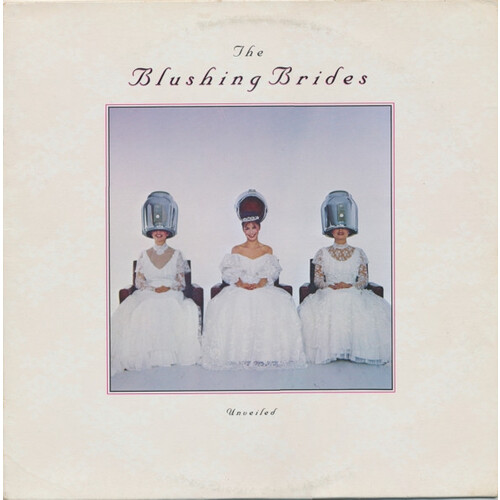
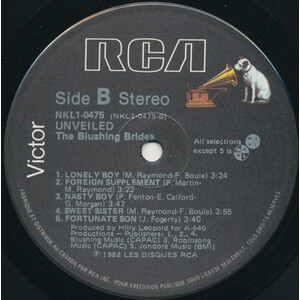
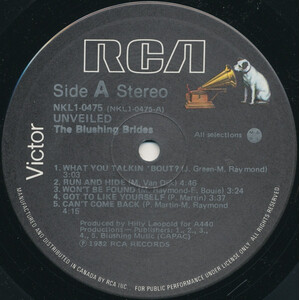
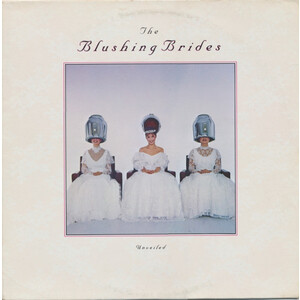
Unveiled came out on RCA in 1982, catalogue NKL1-0475, recorded at Sounds Interchange in Toronto. What You Talkin' About, written by James Green and Maurice Raymond, was the track that carried the album onto Canadian radio that fall, followed by Run and Hide and Got To Like Yourself, which Paul Martin wrote. Can't Come Back was a Martin and Raymond song, and the record also took a run at Creedence Clearwater Revival's Fortunate Son. RCA knew what it had in Quebec and had four songs re-recorded in French, issuing Can't Come Back, Lonely Boy, Foreign Supplement and Sweet Sister as an EP in 1982. The American release of the album followed in 1983.
The Brides did not see the album as a souvenir of the live show. They saw it as the way out. Speaking to the Dalhousie Gazette before it appeared, they said the plan was to eventually play their own material entirely while keeping the same intensity and the same rhythm and blues foundation underneath it. Raymond described the coming record as deliberately varied, ballads next to rockers, and Martin talked about finding a sound of their own strong enough to hold that variety together. The release date they gave was a tentative April 15 that slipped by half a year.
Then 1982 turned on them. A tour with Chilliwack took the Brides across the country that fall, through Ottawa on November 24 and Calgary on December 12, and left them badly in debt. The argument that had been running under the band for three years finally broke it open. Raymond described it himself not long afterward. Some of them wanted the Stones material gone altogether so the group could stand on its own songs, and others thought dropping it would be commercial suicide, since the Stones connection was the thing that had carried them that far. Raymond and Green were voted out. RCA stepped back, and the second album never happened.
Raymond put together Maurice Raymond & the Lonely Boys, and by January 1984 he was telling the Dalhousie Gazette that the group had eight busy months behind it and a five-song EP planned for American release, three originals and two covers. James Green went to the Toronto band Perfect Affair and then through reggae, funk and blues projects, returning to the Brides here and there over the years before settling into the blues for good and leading James Green & The Blues Electric.
The Brides came back in 1984 with Raymond, Martin and Van Dijk at the centre, Richard Diamond on guitar and Doug Inglis, formerly of Goddo, on drums. What followed was six years of hard touring, upwards of two hundred shows a year and by Raymond's own count as many as two hundred and fifty at the busiest, through bars, colleges, theatres, amphitheatres and arenas across eastern Canada and the northeastern states. He described the booking policy as playing everywhere that would have them. The lineup kept turning over, with Vic Cassis, Sascha Tukatsch, Desmond Leahy, Glen Olive and Dylan Heming among the players who came through, and the draw held up regardless.
In the mid-1990s Raymond and Martin went back into a studio together. Billed simply as The Brides, they signed to Toronto's Strawberry Records, distributed by A&M, and cut a self-titled album with Mike "Spike" Barlow producing at Phase One and Arnyard in Toronto. The lineup on it had Desmond Leahy on guitar, Glen Olive on bass, Dylan Heming on keyboards and Sascha Tukatsch, once of Platinum Blonde, on drums. Feel Like a Man went out as the single, and the eleven songs on the record are the last full statement of the Brides as a writing band. Then they went back to the clubs with a set that mixed their own material from both eras into the Stones repertoire that had never really left.
Which is the joke the whole career turns on. The songs the band spent years trying to escape are the reason there is still a band. By the early 2000s Raymond had stopped arguing with it and put the thing on the marquee, billing the group as the world's most dangerous tribute to the music of the Rolling Stones. That version of the Blushing Brides has now passed five thousand performances. In 2026 it is touring as The Rolling Stones Experience featuring The Blushing Brides, still fronted by Maurice Raymond, with Toronto in March and Clarksburg in June.
Paul Martin died on February 24, 2026, his sixty-seventh birthday. Away from the Brides he had built Martinworks, an online catalogue that put the original music of the musicians he knew in front of film and television buyers, and he had gone on making music in the Dylan Tree, formed in 2006, and Kensington Shake. He also worked as an accountant, and spent a good deal of his time getting other people out of trouble with the tax authorities.
-Robert Williston
Gallery
Images
4 images
Blushing Brides - Unveiled (3)
Blushing Brides - Unveiled (1)
Blushing Brides - Unveiled (2)
Unveiled
Media
Videos
2 videos
Credits
Musicians
Maurice Raymond: vocals, harmonica
Paul Martin: vocals, guitar
James “DB” Green: guitar
Martin Van Dijk: bass
Richard “Ricco” Berthiaume: drums
Additional musicians
Rhino Horns
Johnny Johnson: saxophone
Vern Dorge: saxophone
Mike Rosen: trumpet
Production
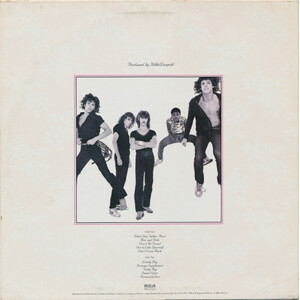
Produced by Hilel Leopold
Executive producer: Andy Nagy
Engineered by Kevin Doyle
Assistant engineer: Vic Pyle
Horn arrangements by Sam Bari
Artwork
Cover design by Hugh Syme
Photography by Deborah Samuel
Manufacturing and distribution
© 1982 RCA Inc.
℗ 1982 RCA Records
Manufactured and distributed in Canada by RCA Inc.
Lacquer cut at McClear Place
Pressed by Cinram
Release notes
Issued with a printed inner lyrics sleeve
Matrix and runout
Side A label: NKL1-0475-A
Side B label: NKL1-0475-B
Side A runout, variant 1: NKL1 0475 A'
Side B runout, variant 1: NKL1 0475 B'
Side A runout, variant 2: NKL1 0475 A' CR MiCL "DIDGE"
Side B runout, variant 2: NKL1 0475 B' CR MiCL "DIDGE"
Pressing plant ID: CR within a circle, stamped
No Comments