Insight
Breeding Ground rose out of East York, Toronto in 1981, a cold-wave trio built around singer John Shirreff, guitarist Hugh Gladish, and bassist Jonathan Strayer. Their earliest rehearsals took place in unfinished basements and rented practice rooms on the east side, with original drummer Ken Jones reportedly living out of a van parked in the driveway, ready to play at a moment’s notice. From the beginning their sound leaned toward the darker edges of the post-punk movement: Strayer’s melodic yet driving bass lines, Gladish’s wiry, echo-drenched guitar, and Shirreff’s cool, unforced baritone created a mood that placed them in the lineage of Joy Division and early New Order, even while they were still unknown outside the local club circuit. Managed by friend David Hart, who also designed their stark stage lighting, the group hustled through what band members have described as “dozens” of shows on Toronto’s Queen Street West scene before they ever set foot in a studio.
In late 1982 they recorded their debut 12-inch EP, recorded and mixed at Montclair Sound, produced by their live sound engineer Paul Tozer and released on Mannequin Records. Containing early staples like “Wintergarden,” “Thin Red Line,” and “Underground,” it quickly became a favourite among campus DJs and drew the attention of promoters who began pairing them with touring UK bands. Only months after the EP’s release they found themselves opening for Bauhaus at Larry’s Hideaway (October 12, 1983), an early sign that their tense, atmospheric sound was resonating far beyond their rehearsal spaces.
By 1983 they had written “Reunion” and “Slaughter,” two songs that would define the next phase of the band. Recorded at Quest Studio in Oshawa, these tracks were released by Fringe Product as a 12-inch single and became their first real breakthrough. CFNY added “Reunion” to rotation, college charts across the country followed suit, and all three pressings quickly sold out. During this period, original drummer Ken Jones was replaced by Jonathan Davies of Kinetic Ideals, whose sharper, more precise style pushed the band toward a tighter live sound. Through 1983 and 1984 they opened for The Stranglers and Echo & The Bunnymen, performing across Ontario and Québec and earning a reputation as one of the strongest dark-wave acts on the Canadian independent circuit.
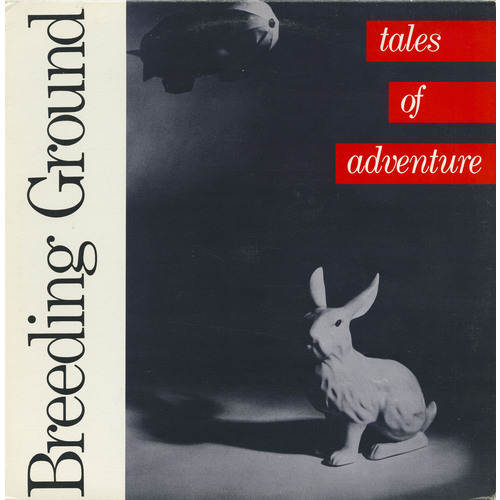
Their first full-length album, Tales of Adventure, arrived in April 1986 and marked a turning point. Produced by former Blue Peter guitarist Chris Wardman, the record expanded the band’s sonic palette while preserving their brooding core. Wardman added subtle guitar textures and tape treatments, while Jason Sniderman provided keyboards and Molly Johnson contributed haunting guest vocals to “Happy Now I Know,” the album’s standout track. Videos for “This Time Tomorrow” and “Happy Now I Know,” directed by Colin Strayer, received steady rotation on MuchMusic and helped push the album to No. 1 on the national college charts. It also secured the band a place on CFNY’s year-end “Best 86 of ’86” list, further cementing their status within Canada’s alternative landscape.
Shortly after the release of Tales of Adventure, bassist Jonathan Strayer left the group, prompting a short pause while Shirreff and Gladish decided what direction to pursue. The band re-formed in 1987 with a refreshed lineup featuring Gary Quinn on bass and slide guitar, Kevin Hunter on drums, Wardman as a full-time second guitarist and keyboard contributor, and the core songwriting partnership of Shirreff and Gladish still intact. Major labels began showing interest, but according to the band, unspecified legal complications stalled possible deals. Despite these frustrations, the group pressed ahead and returned to the studio to record their second album.
Obscurity & Flair, released in 1989, was tracked at Winfield Sound and produced again by Wardman, who shaped the album’s rich, nocturnal sound. Molly Johnson returned to add backing vocals, and Tad Winklarz of Chalk Circle contributed saxophone, further widening the band’s atmospheric reach. Quinn provided lyrics and slide guitar on “Live Like Fear,” and the album’s lead track, “Ceremony of Love,” received a moody video—darkly lit to the point MuchMusic gave it limited play, though the song became a favourite among fans. The album captured a more fluid, layered direction for the band, reflecting their matured songwriting and deepening connection to Toronto’s 1980s alternative scene.
During these sessions the band also recorded an ambitious cover of David Essex’s “Rock On,” arranged by Wardman and Shirreff and circulated privately among DJs at Toronto’s Silver Crown Tavern. According to the band, members of the group Bambi heard Breeding Ground’s unreleased version at the bar and quickly produced their own cover. When multiple “Rock On” versions suddenly saturated the market—including Michael Damian’s chart-topping hit—the Breeding Ground recording was shelved permanently.
Despite a strong catalogue and a fiercely loyal following, the combination of industry complications, membership changes and shifting musical currents led Shirreff and Gladish to quietly end the band in early 1990. A brief four-song reunion set reportedly took place during Lee’s Palace’s 15th anniversary celebrations (circa 2000), with appearances by both former bassists and guests including Maria Del Mar of National Velvet and the rumoured presence of actress Kirstie Alley. A retrospective CD, Revisited, compiled by Shirreff, Gladish and Hunter, was released in 1994, collecting highlights from their career and introducing the group to a new generation of listeners.
The spirit of Breeding Ground lived on in discussions of a possible reunion among the three original members, though these plans never advanced. The passing of bassist Gary Quinn in 2009 marked the end of that possibility. Today, their records are prized by collectors of post-punk, new wave and Canadian cold-wave, and their videos continue to circulate widely among MuchMusic archivists and fans of the era. Standing beside contemporaries like Blue Peter, Kinetic Ideals, Chalk Circle and Alta Moda, Breeding Ground hold a distinct place in the still-unfolding story of Toronto’s 1980s alternative underground—dark, melodic, inventive, and far more influential than their discography alone might suggest.
-Robert Williston
John Shirreff: vocals
Hugh Gladish: guitars
Jonathan Strayer: bass
Kevin Hunter: drums
Jason Sniderman: keyboards
Molly Johnson: vocals on 'Happy Now I Know'
Chris Wardman: wobbly guitar, tapes, and bell
Written by Breeding Ground
Produced by Chris Wardman at Quest Studios
Engineered by Paul LaChapelle
Photography by Jeffrey Scott
Sleeve by Jonathan Strayer and Bruce Wrighte
Breeding Ground would like to thank all of those who helped
Information: Groundworkers Management Group
Gallery
Images
6 images
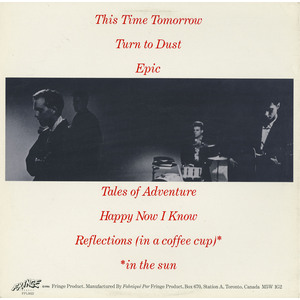
Breeding Ground - Tales of Adventure BACK
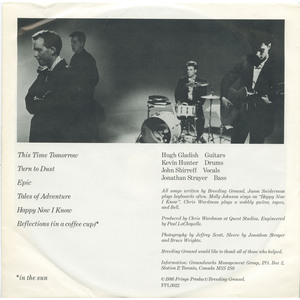
Breeding Ground - Tales of Adventure INSERT SIDE 01
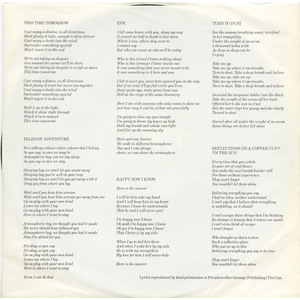
Breeding Ground - Tales of Adventure INSERT SIDE 02
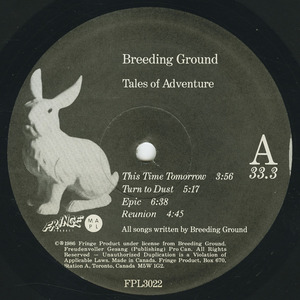
Breeding Ground - Tales of Adventure LABEL 01

Breeding Ground - Tales of Adventure LABEL 02
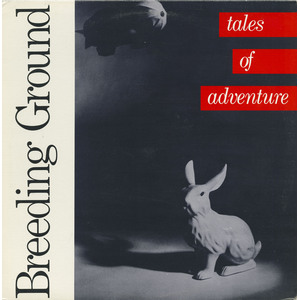
Tales of Adventure (EP)
Media
Videos
2 videos
Credits
In Transit
No Comments