Information/Write-up
Cherie Camp is a Toronto-based singer-songwriter whose career bridges Canadian folk, pop, and film music across more than four decades. A Genie Award–winning lyricist and vocalist, she has moved fluidly between the public stage and the recording studio, building a body of work that includes solo albums, television themes, film songs, and long-standing creative partnership with composer John Welsman.
Born into a prominent Canadian family — she is the daughter of political strategist and journalist Dalton Camp — she studied music and theatre at Queen’s University before entering Toronto’s late-1970s acoustic scene. Her first professional recordings came with the trio Available Space, alongside Welsman and guitarist Jeff Kahnert. Their CBC broadcast recording, later issued as Available Space Featuring Cherie Camp (CBC LM476, 1981), established Camp as a distinctive interpretive voice within Canada’s evolving folk landscape.
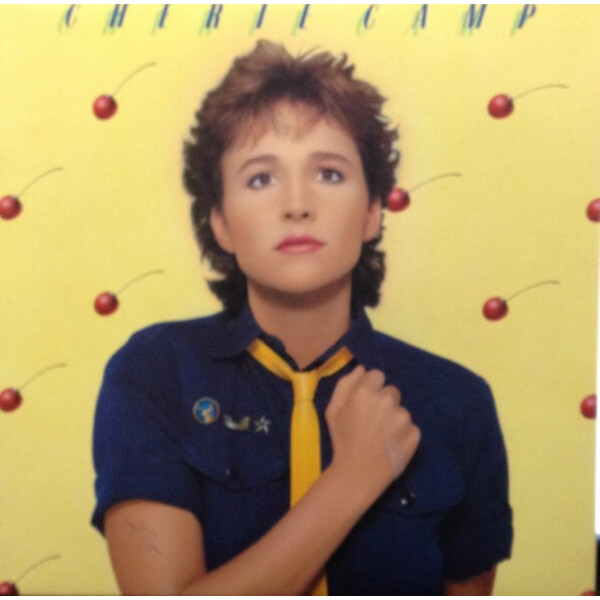
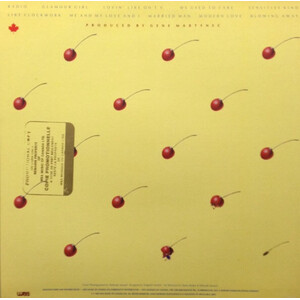
In 1983 she stepped forward as a solo artist with Cherie Camp (WEA), a polished pop release blending original compositions, co-writes, and select covers. The record earned her a nomination for Most Promising Female Vocalist at the 1984 CASBY (U-Know) Awards and marked her transition from coffeehouse folk to radio-ready contemporary pop. Critics consistently noted her songwriting strength — melodic, literate, and emotionally nuanced — even as her performing persona was described as understated and introspective. Among the album’s standout tracks was ‘Radio,’ written by Brian Bolliger in 1979 while he was a student in the music program at Fanshawe College in London, Ontario. Bolliger later went on to drum with the progressive rock band True Myth.
Through the late 1980s and 1990s, Camp became deeply embedded in Canada’s art-pop and film communities. She contributed backing vocals to recordings by Jane Siberry, performed with Shirley Eikhard and Gwen Swick in The Three Marias, and appeared in film projects including Standards and White Room. Her voice became a familiar presence in the cinematic work of Welsman, whose scores span television, film, and children’s programming.
Camp co-wrote the song “Oh Love” for the feature film Nurse.Fighter.Boy, directed by Charles Officer. The song won the Genie Award for Achievement in Music – Original Song, confirming her ability to translate intimate lyric writing into emotionally resonant film music.
During the years she devoted primarily to family life, Camp continued to write and record selectively. She composed themes for children’s series including The Mighty Jungle and My Friend Rabbit, and her song “Blow Out the Moon” appeared in the films Ms. Conceptions and Stolen Miracle. Even when largely out of the spotlight, her voice remained woven into Canadian screen culture.
Her return to full-length solo recording came with Love and Blood (2024), a contemporary folk album recorded and mixed over four years — much of it during the COVID-19 lockdown period. Produced and arranged by Camp and Welsman in their Toronto home studio, the album draws heavily on family collaboration: daughters Amy and Sophie Welsman provide background vocals, son-in-law Mack Longpré contributes drums, and Welsman performs piano, guitar, mandolin, dulcimer, accordion, and bass. Longtime engineer Jeff Wolpert of Desert Fish Studios mixed the project incrementally as each song was completed, ultimately delivering both stereo masters and Dolby Atmos mixes.
The nine-song set — including “Fits and Starts,” “You’ve Gotta Love the Moon,” the title track, and a reinterpretation of Anna McGarrigle’s “Heart Like a Wheel” — reflects Camp’s enduring attraction to emotional twilight, resilience, and love shadowed by mortality. Critics praised the album’s cohesion, cinematic atmosphere, and lyrical subtlety. Roots Music Canada described her as “a force of nature in the songwriting department,” while Canadian Beats highlighted its immersive, deeply moving quality.
Where her early work balanced folk intimacy with pop accessibility, Love and Blood embraces spacious, reflective arrangements and immersive listening. It does not mark a comeback so much as a continuation — the latest chapter in a quietly influential Canadian musical life.
-Robert Williston
No Comments