Insight
Only a few months separate the first Christmas LP from Heritage, but musically they sound like records made by two different bands. The Paragon album had happened almost accidentally, capturing a young Oshawa group still discovering itself through original songs and long studio jams. By the time Christmas entered Toronto Sound in October 1970, Gary Squires and Wolfgang Hryciuk were gone, leaving the remarkably young quartet of Bob Bryden, Robert Bulger, Tyler Raizenne and Rich Richter. Bryden was only nineteen, Bulger eighteen, while Raizenne and Richter were just sixteen. Those ages are worth remembering, because Heritage contains more ideas, confidence and sheer ambition than many bands twice their age could have comfortably handled.
Daffodil producer Frank Davies had heard the transformation for himself. He recalled auditioning Christmas on August 20, 1970 and finding the new group considerably harder and more direct than Reign Ghost while still retaining a progressive character. He was equally struck by Bryden’s writing, which had moved toward social and political concerns and a much darker view of the world facing young people. That description fits Heritage perfectly. This was no longer six teenagers experimenting simply to see what might happen. Christmas had found its identity.
The brief instrumental ‘Zenith’ opens the door before dropping almost immediately into ‘Rise Up’, and the difference from the debut is obvious. The sound is heavier and more assured, the arrangements have purpose, and Bryden’s writing has become considerably more ambitious without losing the restless quality that made the first album interesting. His presence is everywhere — guitars, vocals, piano, organ, harpsichord, electric harpsichord, celeste and assorted effects — but Heritage never feels like a solo record. Robert Bulger’s guitar gives the music another sharp edge, while Raizenne and Richter form an extraordinarily solid rhythm section for two sixteen-year-olds.
‘Goin’ to Oklahoma’ carries the romantic fantasy of simply getting on a horse and disappearing somewhere new, while ‘Something Borrowed’ turns inward, almost fragile by comparison. Then comes ‘Point Blank (It Scares Me)’, barely two and a half minutes long but one of the album’s most concentrated statements. Its imagery of the Pentagon, nerve gas, warships, predictions and military power makes clear how far Bryden had already moved from conventional teenage rock writing. When Daffodil later chose the song for a single, Davies remembered that the word “goddamn” had to be bleeped for AM radio — a small but revealing example of the awkward relationship between Christmas and the commercial world they were expected to inhabit.
Then ‘Zephyr Song’ takes over the remainder of the first side. At more than thirteen minutes, it is where the scale of the band’s ambition becomes impossible to miss. Rather than treating length as an excuse to jam indefinitely, Christmas moves through distinct moods and passages, allowing the composition to expand, collapse and rebuild itself around Bryden’s increasingly surreal imagery. There are moments when it threatens to outrun itself, but that is part of the excitement. These were teenagers who apparently had not yet been taught that there were supposed to be limits on how much could be attempted within a single song.
That willingness to stretch continues throughout side two. ‘Bustin’ Out Tonight’ is the closest the album comes to simply putting its head down and rocking, driven by the youthful need to get somewhere — anywhere — beyond the confines of home. ‘Blues on an Iceberg’ takes heartbreak and turns it into something much stranger, its frozen imagery giving what might have been a straightforward blues lament an oddly displaced, dreamlike atmosphere.
The ten-minute ‘April Mountain’ is another journey entirely. Seasons change, summer disappears, winter arrives and Bryden’s mountain becomes simultaneously a destination, a memory and somewhere to escape to. The song moves from pastoral imagery into darker territory before unexpectedly arriving at a Christmas refrain, one of those turns that should probably feel ridiculous but somehow belongs perfectly within the album’s world. Bryden’s writing continually moves between the personal, political and surreal, sometimes within a few lines, and the band follows him without ever sounding intimidated by the scale of the material.
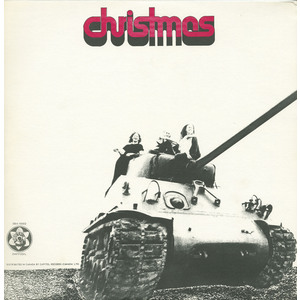
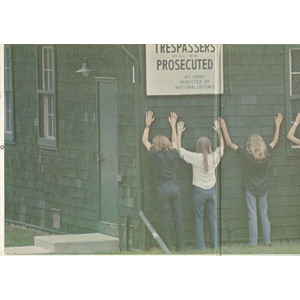
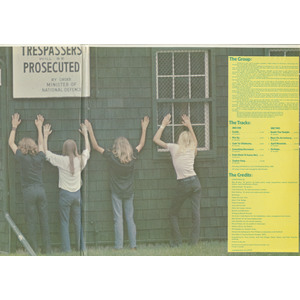
The short closing ‘Heritage’ gathers many of those concerns together. Its language of inheritance, enemies, freedom, recognition and a threatened future gives the record an appropriately uneasy ending. The title becomes even more effective when paired with the album’s extraordinary packaging. On the outside, four long-haired teenagers sit on a military tank. Open the gatefold and they are standing against the wall of an old military building beneath the warning “TRESPASSERS WILL BE PROSECUTED BY ORDER MINISTER OF NATIONAL DEFENCE.” Whether taken as political theatre, youthful irreverence or simply four teenagers amusing themselves with the surroundings, the image could hardly suit the record better.
There is another important dimension to the photograph. The album’s original liner notes explain that Christmas had rehearsed in a rotting, disused air force barracks on the outskirts of Oshawa, the same unlikely environment in which Daffodil first encountered the group. The military setting therefore was not some studio-created concept pasted onto the finished record. It was part of the landscape in which Christmas actually developed. That gives the cover and the songs an unusual unity: young musicians literally surrounded by remnants of an older order while writing about the world they were inheriting.
The contemporary reaction suggests that at least some people understood what Daffodil had found. RPM called Christmas a solid Oshawa group and, in one of the better descriptions ever applied to them, predicted strong promotion for a band that was “uniquely Canadian in a heavy way.” Davies later acknowledged that getting radio exposure for such a progressive group was difficult, but the album did not simply disappear. Heritage appeared on RPM’s album survey in early 1971, and by May the magazine was reporting that it had also been released in Australia and New Zealand.
The timing nevertheless could hardly have been worse. Heritage arrived in December 1970, just as George Harrison’s All Things Must Pass was dominating the North American album market. Harrison’s triple LP sat at the top of the Canadian album chart through much of the opening weeks of 1971, exactly the sort of enormous international release that could overwhelm a young Canadian act dependent on the same distribution machinery for attention.
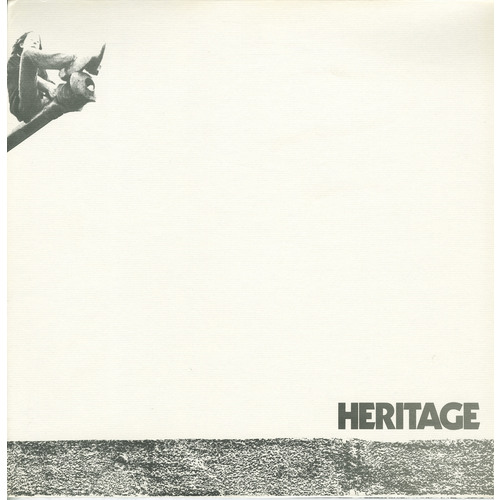
And then there was the name. Daffodil released an album called Heritage by a band called Christmas during the Christmas season, complete with an austere white sleeve that offered little immediate clue as to what was inside. Some retailers reportedly placed it among seasonal Christmas records. It is difficult to imagine a better illustration of the band’s problem: one of the strangest and most ambitious young rock groups in the country sitting in a bin beside holiday music.
Yet none of those circumstances diminished what Christmas had actually accomplished. If the first album captured a band being invented almost by accident, Heritage captures the moment that invention became deliberate. The loose psychedelic wandering of the Paragon LP has been pulled into something heavier, darker and considerably more structured, but the sense of possibility remains. Christmas still seems willing to follow an idea simply because it interests them, regardless of whether it fits neatly into a three-minute single or anything radio programmers were likely to understand.
And the album is not perfect. Some passages stretch further than they need to, some ideas collide rather than connect, and Bryden occasionally reaches beyond what the song can comfortably carry. But removing those excesses would remove much of what makes Heritage special. There is something exhilarating about hearing musicians this young trying to make a record this large. They had not yet learned to trim the edges, lower their expectations or worry about whether everything they attempted was sensible.
More than half a century later, Heritage stands as one of the great Canadian heavy psychedelic and progressive albums of its era. It is tougher, darker, stranger and vastly more accomplished than the accidental Paragon debut, yet the same essential quality remains: the feeling of young musicians following their imaginations without first asking permission.
The original liner notes ended by wondering how musicians so young could possess so much insight and understanding. Listening to Heritage today, the question still seems entirely reasonable.
They were sixteen, eighteen and nineteen years old. They should not have been this good yet.
-Robert Williston
Gallery
Images
7 images
Christmas - Heritage BACK
Christmas - Heritage INSIDE 01
Christmas - Heritage INSIDE 02
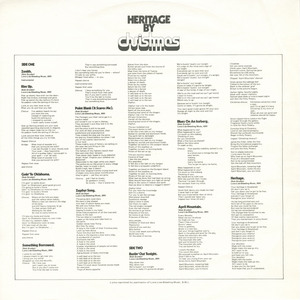
Christmas - Heritage INSERT SINGLE-SIDED
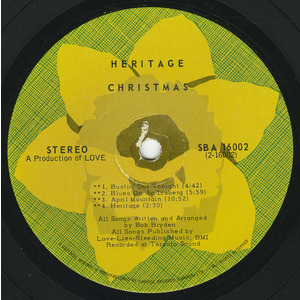
Christmas - Heritage VG+ LABEL 01
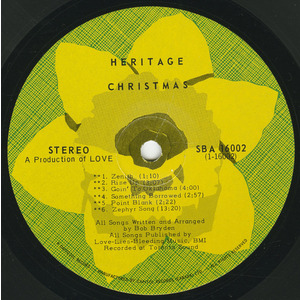
Christmas - Heritage VG+ LABEL 02
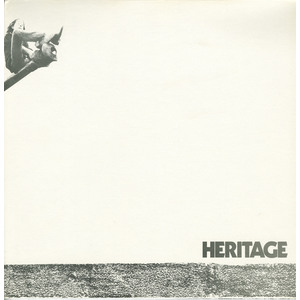
Heritage
Media
Videos
0 videos
No videos available for this title.
Credits
Musicians
Bob Bryden: guitars, vocals, piano, organ, harpsichord, electric harpsichord, celeste, miscellaneous effects
Robert Bulger: guitars
Tyler Raizenne: bass, electric zombie
Rich Richter: drums, embryonic whimper
Songwriting
‘Zenith’ written and arranged by Bob Bryden
‘Rise Up’ written and arranged by Bob Bryden
‘Goin’ To Oklahoma’ written and arranged by Bob Bryden
‘Something Borrowed’ written and arranged by Bob Bryden
‘Point Blank (It Scares Me)’ written and arranged by Bob Bryden
‘Zephyr Song’ written and arranged by Bob Bryden
‘Bustin’ Out Tonight’ written and arranged by Bob Bryden
‘Blues On An Iceberg’ written and arranged by Bob Bryden
‘April Mountain’ written and arranged by Bob Bryden
‘Heritage’ written and arranged by Bob Bryden
Publishing
All songs published by Love-Lies-Bleeding Music, BMI
Production
Produced by Francis Davies
A production of LOVE
Recording
Recorded at Toronto Sound, October 1970
Engineering
Engineered by Terry Brown with Paul Reagin and Nicky Jabour
Assisted by Peter Houston
Artwork
Design and packaging by Paul Weldon in association with Daffodil
Photography by Annette Yorke
Album title by Joe Gallant
Physical Release
Vinyl LP
Stereo
Gatefold sleeve
Canada
Distributed by Capitol Records (Canada) Ltd.
Single-sided lyric insert included
Backstage
Ralph the man, Clay
Brian ‘Fats’ Bulger
Chad Powlenzuk
Jayb and his moll
Wally the hungry volcano
Special Considerations
Wolfgang Michael Hryciuk
The lovely Linda Squires — for the handshakes, cokes, management and money
Walt Grealis — for the encouraging words
John Donabie — for the tomato ketchup
Wayne Patton — for his wealth of enthusiasm
Liner Notes
The Group:
Christmas is not, you'll probably concede, a likely choice of names for a rock group. But Christmas is not really like a group.
The average age of the four members of Christmas is a mere 17, yet lest this should deter you, we should point out very quickly that they make music many players fully ten years their senior have not yet dreamed of making.
Lead singer and composer, Bob Bryden, thought up the name a year before he put Christmas together on December 25, 1969. At the time, it seemed to fit. “Although our music is heavy, it is also optimistic. In part, it’s peaceful, and it is something to get into the spirit of.”
We felt the same way when we first heard Christmas music, in a rotting, disused air force barracks building on the outskirts of Oshawa, Ontario.
It was a cloudy afternoon, and the weeds around the building were high and healthy from the months of summer sun.
We were jammed into one small room at the end of the building, and the music was louder than hell but it was very relaxing. You weren’t being browbeaten or bashed around the ears. Indeed, when we walked out into that cloudless afternoon and looked across the criss-crossing air strips, there was a strange feeling of joy and electricity. We felt as though we’d heard something very very special.
We explored further, and as the leaves turned red across the Southern Ontario flatlands, we spent long and fascinating nights in the studio recording this album. That initial feeling we’d had at the Oshawa air force base never left us.
The flatlands are white now with the first snows, and the fires are burning in the red bricks and we’re listening to the album. We still cannot believe the depth and definition of these four young musicians. We do believe, though humbly, that this is the most original music to ever come out of the north country.
We sit before our fires, gazing into the flames, and wonder how it is that such young musicians have so much insight and understanding. And so much balls.
We reflect on the unlikeliness of Christmas, and its four members — the 16-year-old drummer, Richard Richter, the bass player, Tyler Raizenne who’s also 16, the 18-year-old lead guitarist, Robert Bulger and the 19-year-old guitarist-writer-inspirational leader, Bob Bryden.
Such a union is as fragile as an early snowfall on still-yellow leaves, as sensitive as the look of belief in a young couples’ eyes, and yet as strong as the unmortared stones in a Roman aqueduct.
We know it will grow, just as the snow melts and the ground dries up.
We feel these strange vibrations and we know they will not elude you.
We have confidence and ears and hearts and a longing to know more.
Christmas, after all, is something to get into the spirit of....
No Comments