Insight
Michel DeMars is a Canadian composer, producer, keyboardist, vocalist, and recording artist from Gatineau, Québec. His career began in the late 1970s with DeMars, a progressive new wave and techno-pop group that became one of the distinctive acts to emerge from the Ottawa–Hull/Gatineau music scene.
DeMars formed around Michel DeMars on vocals and keyboards, Luc Lanthier on guitar, Guy Séguin on bass and keyboards, and Michel Lanthier on drums and percussion. The group’s sound was never easy to reduce to one style. Period reviews heard new wave, Euro-pop, progressive rock, techno-pop, modern rock, and science-fiction-minded art rock, with comparisons reaching toward Robert Fripp, King Crimson, Rush, Steve Hackett, Genesis, Pink Floyd, Saga, Howard Jones, and the British new wave movement. What held it together was the band’s combination of synthesizers, live guitar, heavy drums, theatrical vocals, bilingual lyrics, and a strong visual identity.
The band’s first major statement was Les Télé-Têtes, released in 1981 on Zaradisc, connected to Productions Zaratt Express. The album was an independent project in the truest sense: issued through the group’s own release structure, produced by Pierre Léveillé and DeMars, recorded at Studio Ambience in Kemptville, Ontario, and built around twelve original compositions. The record mixed French and English material, electronic textures, progressive guitar ideas, and lyrics filled with images of technology, television, alienation, dreams, illusion, and futuristic unease.
Les Télé-Têtes quickly found a place in the Ottawa alternative and campus-radio world. In January 1982, the album appeared at No. 2 on CKCU-FM’s Ottawa Alternative Record Chart, behind Human League’s Dare and ahead of records by Chic, U2, Neil Young, Soft Cell, Prince, Japan, Joy Division, Elvis Costello, Depeche Mode, and others. For an independently released Gatineau album on Zaradisc, that placement showed how strongly DeMars had connected with the region’s alternative audience.
The early press also captured the unusual identity of the group. DeMars was described as a Francophone nouveau-rock band on the rise in the Ottawa–Hull area, with a sound built from synthesizers, live guitar, and drums. The lyrics, many co-written by Ramon Zaratt, gave the band a strange, futuristic edge, while Gary Haspect co-wrote ‘La nouvelle époque’ and ‘Try... You Can’t’ with Michel DeMars and also served as one of the album’s executive producers. One English-language review explained Télé-Têtes as “TV Heads” and picked up on the band’s fascination with technological alienation. At the same time, DeMars was already facing a familiar Canadian problem: how to remain rooted in French-language expression while reaching a wider English-language market.
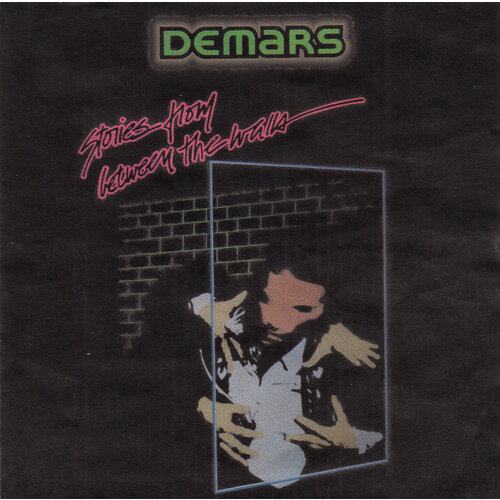
That tension became clearer with the follow-up EP, Stories from Between the Walls. Released as a four-song 12-inch on Zaradisc, the EP shifted fully into English-language material. Reviews praised the band’s strong electronic sound, modern production, and Michel DeMars’s powerful, passionate voice, while also noting that the English-language direction could distance some of the Francophone audience that had embraced Les Télé-Têtes. The EP received documented airplay on stations in Ottawa, Toronto, Montréal, and Peterborough, including CHEZ-FM, CKCU-FM, CFNY-FM, CKLN-FM, CIBL-FM, CFMB, Radio Canada, and Trent Radio.
DeMars was also a working live band, and the clippings from the period show the grind behind the ambition. One later feature recalled that the band’s first two Ottawa gigs, at Moty’s, earned $250 but cost $257 to mount, leaving DeMars with a seven-dollar loss. The group kept going anyway. By the mid-1980s, Les Télé-Têtes had reportedly sold 900 copies, Stories from Between the Walls had sold out, and the band members were still balancing music with regular jobs while pursuing a record deal.
On stage, DeMars developed a reputation for energy, theatrical presentation, and musical control. A 1983 La Rotonde review of a Café Alternatif performance called DeMars the highlight of the night, noting that the band kept the crowd on its feet with a mix of synthesized new wave, funkier rhythms, and a full live sound. The same article confirmed that the group had been together about five years by that point and listed the live organization around Michel DeMars, Luc Lanthier, Guy Séguin, Michel Lanthier, lighting by Jacques “Coco” Maisonneuve, and management by Doug Wigney.
The band’s profile continued to grow through club dates, contests, support slots, and regional events. DeMars played before 8,000 people at the Franco-Ontarien festival in 1983, later appeared on The Fame Game, placed in the top 10 of the Share Chez 85 contest, and won the grand prize in The Grizzly Music Talent Search. The group also opened for or appeared with larger acts including The Payolas, Grand Master Flash, Powder Blues Band, Strange Advance, The Spoons, and Parachute Club.
By 1986, DeMars was still being written about as a strong emerging act from Gatineau. A La Rotonde review of the band at Barrymore’s described a visually sharp, bilingual performance with comparisons to Simple Minds, Saga, and Howard Jones, while emphasizing the band’s energy, complexity, and originality. Another article on the Fête nationale celebrations at Lac des Fées listed the Gatineau rock group among the featured performers, alongside names such as Plume Latraverse, Normand Brathwaite, Steven Faulkner, Paul Latreille, and Geneviève Paris.
Alongside Les Télé-Têtes and Stories from Between the Walls, the cassette-only EP Si Fragile shows another side of the band’s independent activity. Its four songs — “Si fragile,” “Où est l’Amour,” “Les zoos arborifères,” and “Si l’Amour est là” — connect back to DeMars’s French-language art-rock and new wave identity, while the handmade visual presentation reflects the group’s surreal, self-directed aesthetic.
Through Les Télé-Têtes, Stories from Between the Walls, and Si Fragile, DeMars captured a particular moment in Canadian independent music: regional but ambitious, bilingual but market-aware, rooted in Gatineau and Ottawa-Hull but reaching toward a wider new wave and progressive audience. The band’s work belongs to the same early-1980s environment that made room for independent labels, campus radio, handmade promotion, and local acts trying to sound international without losing their own character.
After his years with DeMars, Michel DeMars moved increasingly into composition, production, and sound design. His later career expanded beyond the band format into original music for film, television, documentary, advertising, multimedia, corporate projects, voice-over recording, and other audiovisual work. Working in both French and English, he built a professional practice around custom scoring, music production, sound design, editing, mixing, and studio recording.
That work led to collaborations with a wide range of artists, producers, companies, and performers, including Howie Weinberg, Dr Draw, Glen Robinson, Moment Factory, the Zhanqi acrobatic troupe from Chengdu, China, director Mario Rouleau, and Canadian performers including Dan Aykroyd, Gaston Lepage, Yan England, Isabelle Blais, Pierre-Luc Brillant, and Sébastien Huberdeau. The range of those credits shows how far Michel’s work travelled from the original DeMars band setting, while still carrying forward the same interest in sound, image, performance, and atmosphere.
In 2011, Michel DeMars was nominated for a Prix Gémeaux in the category of best music for a documentary for his work on Last Call Indien. In 2015, he composed the soundtrack for the award-winning Canadian feature film Le Dep and created music for the multimedia aqua show Agwàtà. In 2017, his creative focus included Didascalie, a video mapping work. These projects underline the second major chapter of his career: Michel DeMars as a composer and sound designer for screen, stage, multimedia, and immersive visual work.
From the art-rock energy of DeMars in the 1980s to his later work in screen and commissioned music, Michel DeMars has followed a creative path defined by experimentation, persistence, and an instinct for combining sound, image, and story. His presence on the Museum of Canadian Music / CitizenFreak helps preserve an important voice from the Ottawa–Hull/Gatineau scene and reconnects a larger Canadian music audience with a body of work that deserves to be heard in context.
-Robert Williston
Gallery
Images
1 image
Stories from between the Walls
Media
Videos
0 videos
No videos available for this title.
Credits
Musicians
Michel Demars: vocals, keyboards
Luc Lanthier: guitar, vocals
Guy Séguin: bass, keyboards
Michel Lanthier: percussion
Production
Recorded at United Media Studios, Toronto, Ontario
No Comments