Insight
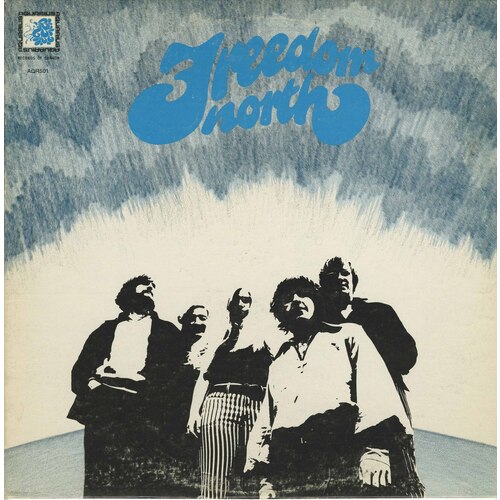
In 1970, five Montreal musicians recorded one of the great overlooked albums in Canadian rock history. Freedom North is a record of exceptional quality, a confident collision of psychedelic rock, heavy rock and acid rock that CitizenFreak.com ranks among the 100 greatest albums ever made in Canada by Canadian artists. It is carried by the voice of Frankie Hart, by the writing of Rick St. Jean and Bill Hill, and by a band that walked into the studio already hardened by months of playing. The fuzz guitar alone would earn it a place. What lifts it higher is a singer who was still discovering what her voice could do while the tape was running.
The preparation shows in every groove. “We just practiced like hell and went into the studio,” St. Jean says. Hart remembers going to the rehearsal room what felt like five days a week, and remembers liking that kind of structure in her life. There was energy in the room, camaraderie, laughter, and an enormous amount of work. They rehearsed, they gigged, they travelled, and the material tightened until arrangements that had no business working on a stage were within reach.
Fifty-six years later the album returns to vinyl. On September 15, 2026, Lion Productions and Montreal’s PQR-Disques plusqueréel issue the first official vinyl reissue of Freedom North as LION-LP 231/PQR059. The 180-gram pressing is limited to 500 individually numbered copies, 200 on black, 150 on transparent violet and 150 on silver-and-blue colour-in-colour, with a four-panel insert carrying the band’s history in their own words along with the lyrics. Four bonus recordings join the original ten: two period B-sides and two tracks making their vinyl debut.
Frankie Hart before Freedom North
Frankie Hart was born and raised in Montreal, not Ottawa as some sources still have it. Her parents were of Irish-Canadian and American-Swedish background and the house was full of music. Her mother was an accomplished classical pianist, so Hart grew up hearing the piano played properly and hearing the family’s classical records. Schools taught children to read music in those days, and she sang in church and school choirs and loved it. An older sister brought jazz and bossa nova home, and Hart fell hard for the Brazilian records.
Piano came first, and it came without pressure. Her mother had been pushed hard as a child and seems to have decided her own children would not be. Hart simply liked the sound of it, worked through the sheet music that filled the house, and taught herself by sitting down for hours at a time.
Then came the Beatles. “I remember lying on the floor in front of the stereo trying to hear all the lyrics, and what they were playing,” she says. “In those days of vinyl records, we had to keep lifting the arm on the stereo and trying to place the needle back in the right spot on the record. You couldn’t just push the pause button.” She wore out Revolver and Rubber Soul, then Sgt. Pepper, the White Album and Abbey Road on a little portable player. Around them she was listening to Dylan, Joan Baez, Donovan, Peter, Paul and Mary, Simon & Garfunkel, Roy Orbison, Dusty Springfield, The Band, Cream, Blind Faith, Jefferson Airplane, Procol Harum, CSNY, the Moody Blues, the Byrds, Pink Floyd, Stan Getz, Astrud Gilberto, Van Morrison and Stevie Wonder.
A career in music never entered her head. “I don’t think I had a particular interest in becoming a professional musician. I just enjoyed singing and playing.”
It found her anyway. Working as a secretary at the Montreal Gazette, she was sharing an apartment with Francine Jarry and Hélène Vanier, and the three discovered they all played guitar and piano and loved to harmonize. They sang for fun in Francine’s living room. Joe Padulo, who worked as Dean Morgan and hosted the CFCF-TV talent showcase Like Young, came up to the apartment one day, heard them sing a few songs and pushed them to enter the competition. They performed ‘Un Canadien Errant’ and won. Padulo became their manager.
They took the name Les Sirocco, also billed as the Sirocco Singers, after their first choice of Trilogy turned out to be taken. The sirocco is the Mediterranean wind that changes as it crosses from Africa toward Europe, which struck three young women singing in five or six languages as about right. Vanier had a rich alto, Jarry had the powerful voice, Hart landed between them, and the blend was the whole point. Their repertoire ran from Simon & Garfunkel and Leonard Cohen to Greek, Spanish and Portuguese material, and they cut two singles for Barclay Canada in 1968. They recorded at Bell Sound in New York in their first year together, sang at the Shepherds Club in the Drake Hotel on Park Avenue where Jerry Leiber turned up one night, and were handed tickets to The Ed Sullivan Show. Back in Quebec they worked at André Perry’s first studio, set up in his house in Longueuil years before Le Studio at Morin Heights. Their last sessions were made with hired symphony players, since a string section in 1968 meant hiring string players.
Hart was young, and says so. “We were so inexperienced, and it’s hard to remember all the details because it was so new and exciting and it all happened in a flash. Some deer in the headlights moments I’m sure.”
In August 1969 she climbed into a van with a few people she barely knew and drove to Woodstock. They inched along the roads leading in, walked through the crowds until they were close to the stage, spread a tarp on the mud and sat down. She remembers Santana. She remembers waking on Sunday morning in the front seat of the van with her head on a pillow against the window, listening to Jefferson Airplane, at which point everyone agreed to go home. They had brought no food and no proper clothes. “It looks pretty wild when you see movies of it all,” she says, “but we weren’t prepared and it wasn’t as much fun for us as it might have been for people who knew what to expect.”
Within months she would be screaming over fuzz guitar.
The band
Freedom North did not begin from scratch. Rick St. Jean and Eddy Kaye had already spent several years playing together in the Exit 4 and the Munks, beginning when they were still teenagers in Montreal. With guitarist Tagg Hindsgaul and René Boileau, they had been working local dances since 1963. St. Jean remembers Saturday-night dances at an elementary school and Friday nights at a community centre, making about $150 a job while his father drove them to the gigs.
Kaye joined after the group’s previous drummer left. What caught his attention was that St. Jean, Hindsgaul and Boileau had already made a demo and were trying to move beyond the high-school-band level. “These guys were recording,” he remembers. “They seemed quite ambitious.”
Ben Kaye took over management, and in 1965 the group entered Stereo Sound Studios to record ‘Hold Me Close’ and ‘Please Come Back Marie’. St. Jean was seventeen or eighteen and remembers the first session clearly. “We’re in a studio for the first time. We’re nervous as hell. And we’re doing our own songs.”
Regency R 961 survives in more than one label configuration. One pressing credits both sides to the Exit 4, while another credits ‘Hold Me Close’ to the Munks and ‘Please Come Back Marie’ to the Exit 4. Both songs were written by René Boileau and Tagg Hindsgaul and produced by Ben Kaye.
The Munks followed with ‘Heartaches Over My Head’ b/w ‘Long Time Waiting’ for Columbia in 1966 and ‘Make It Or Break It’ b/w ‘Fancy Free’ for London in 1967. By the later Munks period Del Desrosiers had joined on bass while Boileau moved to keyboards. The group also recorded the French-language ‘Avancez en arrière’ b/w ‘O-o je taime’ for Phonodisque in 1968.
After that version of the Munks came apart, St. Jean and Kaye found themselves together again in Morin Heights. Kaye remembers an opportunity arising to rent an old vacant three-storey building that was still habitable. He, St. Jean, René Boileau and Del Desrosiers moved into the space and began rehearsing, initially still using the Munks name.
The music had changed. St. Jean remembers the re-formed group playing Blood, Sweat & Tears material, including songs from the Al Kooper period, along with ‘Aquarius’ and other newer repertoire rather than relying on the earlier Munks originals.
The group decided that adding a female singer would strengthen the act. Kaye remembers it simply: “We needed a female singer. This would really spice up our act, beef up our act, and Frankie Hart came along.”
Hart was living on Crescent Street, directly across from the clubs, bars, restaurants and hotels where Montreal musicians, managers and agents crossed paths nightly. She remembers Donald K. Donald making the introduction. “I don’t think I knew Rick, or members of their band at the time. I think Donald K. Donald introduced me to them.”
The decisive arrival was Bill Hill. Kaye remembers that the group was still using the Munks name after Hart joined. “We still stayed the Munks. It was only until Bill Hill came into the group as the lead guitarist that we evolved into Freedom.”
Hill came from J.B. and the Playboys, where he had played alongside Allan Nicholls, and brought with him years of experience as a guitarist along with his developing abilities as a songwriter, arranger and producer. The early Freedom lineup therefore brought together St. Jean, Kaye, Boileau and Desrosiers from the Munks, Hart from Les Sirocco, and Hill from J.B. and the Playboys.
Boileau and Desrosiers left before the album was recorded. Les Leroux took over on bass, leaving the five musicians heard on Freedom North: Frankie Hart on vocals and piano, Bill Hill on lead guitar, Rick St. Jean on rhythm guitar and vocals, Eddy Kaye on drums and Leroux on bass.
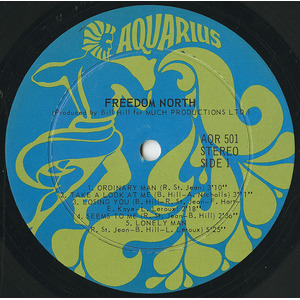
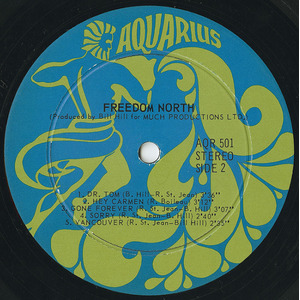
Their manager was Terry Flood and their agent was Donald K. Donald, and as Hart puts it, management, agency and label were all intertwined. Aquarius Records had been founded in 1969 by Flood, Donald Tarlton, Bob Lemm, Dan Lazare and Jack Lazare, and had no LPs yet. Freedom North gave the label its first one, AQR 501. April Wine’s debut came second.
The album was recorded by Summerlea, the Montreal company Brian Chater had co-founded with Bob Hahn in 1968 and which CHUM bought in January 1970, folding it into Much Productions, the name printed on the Aquarius and Wand labels. Chater had arrived in Canada in 1966 and would spend the next fifty years reshaping the business from the inside, running the Canadian Independent Record Production Association from 1987 to 2006, helping build FACTOR and the Canadian content rules, and entering the Canadian Music Industry Hall of Fame in 2000. Freedom North was early work. It is also the reason the album exists today in any form, since the revival of his catalogue is what led to this reissue.
Bill Hill produced. Ron Dann added pedal steel, Rayburn Blake of Mashmakhan played acoustic guitar, and musicians from Natural Gas were brought into the sessions. Brian Wray contributed piano and horn arrangements, with Carl Watral and Dave Classic among the brass players. Natural Gas were an eight-piece rock, soul and jazz band led by former Mandala singer George Olliver and were working the same Montreal circuit as Freedom North in 1969 and 1970. Three years later Blake and Hart would form Riverson together.
The engineer was Peter Tessier, and his name on this session says a great deal about how small and how good Montreal was in 1970. Tessier had already engineered Melchior’s Alias for Capitol and Sebastian’s Rays of the Sun for MCA in 1969, and in 1970 he engineered the Life album for Polydor, the record Frankie Hart sang ‘Strawberry Fields Forever’ on. Three years later he made his own By Turning a Knob for Columbia, co-produced with Ben Kaye, the man who had put Rick St. Jean on tape for the first time a decade earlier, and a record CitizenFreak.com considers the greatest electrified folk-psych album any Canadian has made. He went on to produce Morse Code’s Procréation and André Gagnon’s Neige. The sound of this album, the fuzz arriving from both channels at once and the echo swallowing ‘Lonely Man’ whole, is his work as much as anyone’s.
Onstage and on the road
Freedom North were already a practiced live band by the time they entered the studio. St. Jean remembers the work simply: “We just practiced like hell and went into the studio.” Hart remembers going to the rehearsal room what felt like five days a week and liking that kind of structure in her life. Years of club work had already taught St. Jean and Kaye what repeated playing could do for a band.
The group also found itself on some much larger stages. St. Jean and Kaye both remember Freedom North opening for Paul Revere and the Raiders. For St. Jean there was an amusing reversal in it: years earlier the Munks had been Montreal’s English-language band in monk costumes, while Freedom North dressed however they pleased and now found themselves opening for one of America’s best-known costumed rock groups.
Kaye remembers another large engagement in which Freedom North opened for Ginette Reno with the Montreal Symphony Orchestra. The size of the audience stayed with him. “You’re on stage and you’re looking over a sea of people in front of you,” he recalls. “It’s kind of intimidating but at the same time exhilarating.”
The summer touring circuit took them well beyond Montreal. Kaye remembers a package that moved through northern Quebec, Ontario and the Maritimes and culminated in a large concert at the Halifax Arena. The bill included a guitar act he remembers as Jean J. François, the Montreal group Coven, April Wine, Freedom North and Mashmakhan. April Wine were only beginning to establish themselves. Mashmakhan had ‘As The Years Go By’ on the radio, while Freedom North had ‘Doctor Tom’.
The travelling arrangements were less glamorous. Kaye remembers the musicians starting out in a large bus, with April Wine sharing at least part of the trip. Halfway through the tour the bus broke down and station wagons were sent to move the groups from one engagement to the next. “I remember the bus breaking down,” Kaye says. “I remember us continuing on.”
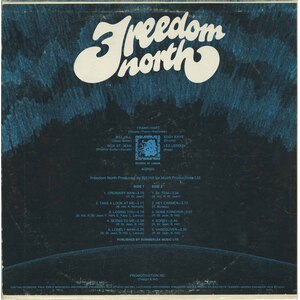
Side One
‘Ordinary Man’ opens the album, a St. Jean song written alone, with a horn arrangement by Brian Wray and players from Natural Gas, including Carl Watral and Dave Classic. The musicians were friends of the band, and St. Jean remembers the session as a good day’s work for everyone. The horns lift the track, though he has never entirely made peace with them being there. The song is a plainspoken argument that nobody in the room is better than anybody else in it, and it became the album’s first small hit.
‘Take a Look at Me’ follows, written by Hill with Allan Nicholls, his old J.B. and the Playboys frontman, who by then was in New York on his way to Hair and a long run of Robert Altman films. It is the gentlest thing on the record, horn-led and unhurried, and it sends the first side out into deceptively calm water.
Then comes ‘Losing You’.
It is a ferocious acid-rocker, the heaviest two minutes and eighteen seconds on any Canadian album that year. Hart shrieks, the guitars answer her with shrieking of their own, and underneath it the band churns like Blue Cheer with better arrangements. There are liquid, phased guitar figures in it that would sit comfortably on Electric Ladyland. The energy of the performance will jolt anything with a pulse.
The idea was deliberate. “We wanted to record Frankie doing something with a little bit more of an edge,” St. Jean says. “Frankie has a very kind of sweet voice, so it was a challenge for her to do it. She really worked hard on it to get what we wanted out of it.” Hart’s own account is characteristically modest. “I probably admired singers who had more powerful voices, so thought I’d give it a go. In those days I don’t think there were a lot of female rock singers, but it was fun listening to Grace Slick, Janis Joplin. I’m not sure how I approached it, probably just tried my best to push my voice to sound tougher.”
The song carries her only writing credit on the album, shared with St. Jean, Kaye and Leroux, and the story behind that credit is better than the credit line. “I remember all of us in the band sitting around the rehearsal studio trying to write that song together,” Hart says. “Since Bill and Rick did most of the writing, maybe Les and Eddy and I wanted a chance to try our hand at writing something, and having at least one writing credit on the album.” St. Jean remembers it from the other side. “We tried to involve other members so they’d have a stake in the thing too.”
Aquarius issued it as the follow-up single, AQ 5006, and on August 24, 1970 it sat at number 47 on the MAPL Top 50.
‘Seems to Me’ settles into a rhythmic, anthemic groove and carries an idea perfectly suited to 1970. Forget the troubles and worries weighing you down and start doing what you actually want to do. Do what turns you on. Happiness can be hard to find, and the song keeps pushing anyway, toward freedom and toward living on your own terms.
Side One closes with ‘Lonely Man’, and at five and a half minutes it is the album’s most ambitious piece and its darkest. An echoed piano figure circles without resolving. Percussion ticks underneath like a clock counting down. Hart’s voice comes back at you from somewhere down a well, and as the song ends the echo swells until the whole thing collapses in on itself. Most songs with that title are about loneliness. This one sounds like it.
St. Jean calls it haunting, and admits that arrangements like this one pushed past what the band could properly reproduce on stage. Hart remembers the room. “I’m sure the vibe would’ve been kind of tender, sentimental, sensitive in the studio. Beautiful song.” She adds something that explains a good deal about why she has spent fifty years in studios: “I always found it really enjoyable being in the studio and hearing what wonderful things could be done with sound, and when you listen back to something that has a lot of emotion, it’s a wonderful experience.”
She thinks it turned up in a film or a video somewhere. Nobody has pinned that down.
One note on the live question. On stage Hart sang and only sang. The piano parts on the record are hers and she played none of them in front of an audience. “They rose to the occasion,” she says of the band, “and I think we always gave it our best shot.”
Side Two
‘Dr. Tom’ kicks the second side open, and there really was a Doctor Tom.
Freedom North worked a Montreal club called the Laugh-In, named after the television show, and the bartender was a man named Tom Hanson who made concoctions for the musicians and everybody else. Natural Gas were also working the Laugh-In around this period, another example of how closely the two bands overlapped in Montreal. “That song is all about him,” St. Jean says. “The mixer, magic potion bit. Nobody can do it to me quite the way you do, kind of thing.” Hart knew him too. “Absolutely, I knew Tom Hanson. He was part of the scene. We played Laugh In often, and when we weren’t playing I’d go to see other bands there. It was a major hangout.”
The record they built around him is the best thing on the album. Double-tracked fuzz guitar comes at you from both channels at once, a swarm with nowhere to hide from it. Underneath, a distorted piano riff drives the whole song, close cousin to the piano on the Beatles’ ‘Don’t Pass Me By’. Over the top, Hart and St. Jean sing together in lush male and female harmony that recalls the early Jefferson Airplane or It’s a Beautiful Day, with Rayburn Blake’s acoustic guitar threaded through the middle. In a fairer world people would hum ‘Dr. Tom’ as often as they hum ‘White Bird’.
Nobody in the room called it. “I don’t know if you’re ever sure what any particular song will become,” Hart says. “Honestly, I don’t know how much attention I paid to all the details. I think I was just living day to day.”
Aquarius released it in May 1970 as AQ 5005. By August 1 it was at number 20 on the RPM 100 and number 2 on the MAPL Top 50, and it peaked at 17. (The album prints the title as ‘Dr. Tom’. The single spells it out.)
It was also the band’s one release outside Canada. In the United States and the United Kingdom, ‘Doctor Tom’ appeared under the name Freedom of Choice backed with the non-album ‘Fat Man’, issued in the US by Wand as WND-11223, produced by Hill for Much Productions Ltd. The name had already moved once, from Freedom to Freedom North, after an American group turned up using the short version. Hart shrugs at all of it. “Not sure why we went with Freedom of Choice for international release, but sounds like a good name to me, so it probably didn’t affect our identity.” A Gamma pressing of the same coupling exists as well, catalogue 611.
‘Hey Carmen’ is the album’s biggest swerve, and the only song on it written by someone who was no longer in the band. It came from René Boileau, the keyboard player from the first Freedom lineup, and it opens as straight country with Ron Dann’s pedal steel out front. It holds that pose for about a minute. Then the fuzz guitar arrives and washes the whole thing away. What the song is reaching for is the biggest subject anyone was writing about in 1970, a perfect society and what it would take to live free inside it, and the arrangement hands you that idea twice, first as a country lope and then as a squall.
‘Gone Forever’ follows, a St. Jean and Hill song built on a hard idea: living without love is a waste of the life you were given. What is gone is gone forever, like yesterday’s weather, and the song refuses to leave it there. It has to get better. Aquarius thought enough of it to pull it as a single in 1971 under the billing Franki Hart and Freedom North, as AQ 5015.
‘Sorry’ puts the band back where it belongs, hard and loud. Sorry is the word for how you feel once someone you love is gone, and the song works it over at full volume rather than sitting with it. It is the last of the album’s rockers.
The record closes with ‘Vancouver’, and its origin is as plain as it sounds. St. Jean’s girlfriend left him and went west. “So that’s where that came from,” he says. He took the situation and wrote it out, and it gives the album a quiet, rueful exit after everything that comes before it.
What was and was not released
‘Fat Man’, the B-side of the international single, is a Bill Hill song with Hart on lead, St. Jean on rhythm guitar and vocals, and Kaye, Hill and Leroux behind them. It never made the LP.
Neither did ‘Franki’s Song’, the flip of ‘Gone Forever’, written by St. Jean and Hill and cut in both French and English. Hart’s memory of it is a single image. “I think it was just Bill and me in the studio, and maybe he would have tried to make the atmosphere quite relaxed, so we could get a kind of sweet sound.” She had forgotten the song entirely until it turned up on YouTube, and did not know until then that they had done it in two languages.
Two further tracks, ‘Francy’ and ‘Time For Lovin’ Is Now’, appeared on the 2018 Unidisc CD reissue credited to Freedom North. Both were written by Hilly Lee, a Montreal songwriter St. Jean knew and who died recently. Neither St. Jean nor Hart has any memory of recording them. St. Jean is blunt about it. It is not Eddy Kaye drumming, and to his ear it is not the band playing. Two of the people credited on those recordings cannot account for them, and buyers of the reissue deserve to know that.
Eddy Kaye and the album
Kaye remains particularly attached to the record more than half a century later. “I listen to it quite often, actually,” he said in 2026. “I still love that album.”
His recollections also reinforce how closely connected Montreal musicians were at the time. Kaye remembers the horn section from Natural Gas taking part in the sessions, and the album credits place Brian Wray on piano and horn arrangements with Carl Watral and Dave Classic among the horn players. St. Jean remembers the Natural Gas musicians as friends who were brought in for ‘Ordinary Man’. Kaye also mentioned George Olliver while recalling the Natural Gas connection; Olliver led the group but is not credited as a musician on the Freedom North album. Graham Lear, Natural Gas’s drummer, later replaced Kaye in Freedom North before moving through Riverson and Gino Vannelli and then spending twelve years with Santana.
Kaye’s contribution went beyond the drums. ‘Losing You’ carries a writing credit shared by Frankie Hart, Rick St. Jean, Eddy Kaye and Les Leroux. Hart remembers the band sitting around the rehearsal room trying to write the song together, while St. Jean says he and Hill deliberately tried to involve the other musicians so they would have a stake in the writing.
The end, and after
By the time Freedom North began winding down, the touring lineup had already changed. Eddy Kaye left and Graham Lear came in from Natural Gas, the same band whose musicians had already contributed to the Freedom North album. Les Leroux was eventually replaced on bass by Bob Burgess. The band had toured Eastern Canada heavily and played concerts in Montreal, Toronto and New England.
Freedom North wanted a second album. St. Jean says the money was not there, and that while the band could play the whole record live, there was little new material coming down the pipe. They came apart in 1971. Kaye, St. Jean and Leroux all landed in Don Graham’s band Graham County that year. Graham Lear went from Freedom North to Riverson, then to Gino Vannelli, then to twelve years with Carlos Santana.
Kaye also worked with George Bowser, later known for Bowser and Blue, and spent time overseas with Rick’s Asia. The Montreal scene that had produced the Exit 4, the Munks and Freedom North continued to send its musicians into new groups and sessions.
Hart went out alone, which she calls a big step. Donald K. Donald sent her out one summer as the opening act for a run of Montreal bands, and the tour did two things at once. It gave her confidence and it deepened her friendships with musicians she would work with for years. She started writing after Freedom broke up, having written nothing before ‘Losing You’. She performed through Quebec under her own name for the rest of the decade, sang backing vocals on the Wackers’ 1973 LP Shredder at André Perry’s studio, and turned up again at the Wackers’ fortieth anniversary reunion in Toronto in 2011. By 1971 she was in Riverson with Rayburn Blake and Brian Edwards.
She was never a member of Life, a point worth fixing in the record. She sang on ‘Strawberry Fields Forever’ and possibly one other track, because Montreal at the time was a community where people simply sang on each other’s records.
Bill Hill went on to produce April Wine’s 1971 debut, founded Montreal Sound Studios in 1974, taught at Trebas and worked steadily as a producer for decades. He died of cancer on April 23, 2026, at 82. In his last years he was playing again with Rick St. Jean in a band called The Keepers, alongside Bob Burgess, who had taken the bass chair in Freedom North’s final touring lineup, and drummer Nick Saraceno. They played everything from soup to nuts, in St. Jean’s phrase, and some new original songs as well. Les Leroux died young. “He was a very talented guy too,” Hart says.
Before Hill’s death, Kaye remembers taking part in a Zoom meeting with Hill, Hart and St. Jean concerning the proposed Freedom North reissue. The four musicians were able to discuss the album together more than fifty years after they had made it.
What the record represents
Hart does not spend much time listening back to her own work. Asked what the album means to her, she came at it sideways and landed somewhere better than a compliment.
“That album represented collaboration, teamwork, lots and lots of rehearsals and hanging out together, and hours playing in clubs and being on the road. When you play a lot, it only makes you tighter musically, and able to give a better performance.”
“I think it gave me a focus, and helped establish my part in the music scene of the time, while helping me learn more about singing and playing professionally.”
The record has been finding its way back for a while. On October 31, 2025, RidingEasy Records placed ‘Losing You’ second on Brown Acid: The Twenty-First Trip, their long-running series of early hard rock excavated from the years when nobody was listening, and used it as the first track revealed when the compilation was announced. Fifty-five years after five Montrealers pushed a folk singer into screaming over a fuzz guitar, that performance is what a new audience heard first.
Near mint originals of AQR 501 now change hands for up to USD $500. On September 15, 2026, for the first time since 1970, you can buy a new one.
-Robert Williston (with separate interviews between Robert W and Rick St. Jean, Frankie Hart, and Eddy Kaye)
Gallery
Images
4 images
Freedom North - ST
Freedom North - ST LABEL 01
Freedom North - ST LABEL 02
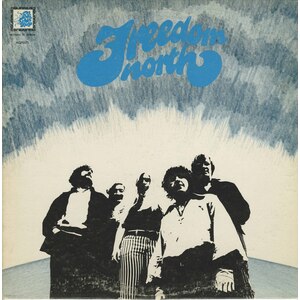
ST
Media
Videos
0 videos
No videos available for this title.
Credits
Musicians
Franki Hart: lead vocals, piano, recorder
Bill Hill: lead guitar, vocals
Rick St. Jean: rhythm guitar, vocals
Les Leroux: bass
Eddy Kaye: drums
Songwriting
‘Ordinary Man’ written by Rick St. Jean.
‘Take A Look At Me’ written by Bill Hill and Allan Nicholls.
‘Losing You’ written by Bill Hill, Rick St. Jean, Franki Hart, Eddy Kaye and Les Leroux.
‘Seems To Me’ written by Rick St. Jean and Bill Hill.
‘Lonely Man’ written by Rick St. Jean, Bill Hill and Les Leroux.
‘Dr. Tom’ written by Bill Hill and Rick St. Jean.
‘Hey Carmen’ written by René Boileau.
‘Gone Forever’ written by Rick St. Jean and Bill Hill.
‘Sorry’ written by Rick St. Jean and Bill Hill.
‘Vancouver’ written by Rick St. Jean and Bill Hill.
Production
Produced by Bill Hill for Much Productions Ltd.
Recording engineers: Gaetan Desbiens and Paul Emile Mongeau at RCA Studio, Montreal, Quebec; Michel Lachance at André Perry Studios
Mixed by Pete Tessier at RCA Studio, Montreal, Quebec
Artwork
Design and artwork by Promotivation Inc.
Publishing
Published by Summerlea Music Ltd.
No Comments