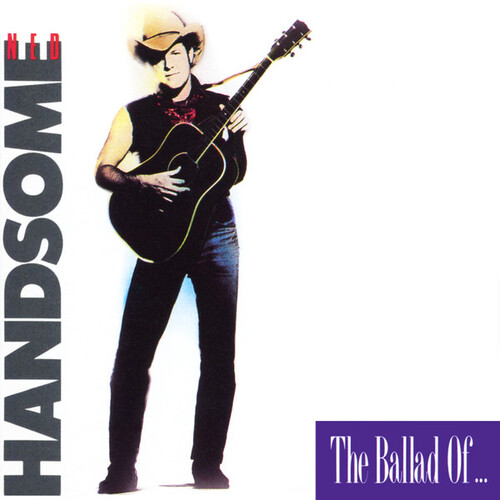
Album / Title
The Ballad Of
By: Handsome Ned (Robin David Masyk)
Origin: Zweibrücken, West Germany → Stoney Creek → Toronto, Ontario, 🇨🇦
Insight
Handsome Ned was the stage name of Robin David Masyk (June 4, 1957 – January 10, 1987), a Toronto-based country singer and songwriter whose influence on the early-1980s Queen Street West music community far exceeded his recorded output.
Born in Zweibrücken, West Germany, to a Canadian Air Force family, Masyk spent his early childhood on military bases in Europe before returning with his family to Stoney Creek, Ontario in 1970. During his teenage years he developed parallel interests in proto-punk and classic American country music — a combination that would later define his musical identity. Artists such as Iggy and the Stooges and the Velvet Underground existed in his listening habits alongside Hank Williams, Johnny Cash and the Sun Records catalogue. In his late teens he left school and hitchhiked extensively across Canada and the United States, absorbing the culture and mythology that would inform many of his original songs.
In 1978 he spent time in Austin, Texas, immersing himself in outlaw country and honky-tonk traditions before returning to Toronto in 1979. With his brother Jim Masyk he formed a band called The Velours, whose repertoire combined early Elvis Presley material, Velvet Underground songs and original compositions. In early 1981, with the addition of bassist Ronny Azzopardi and drummer Jimmy Weatherstone of The Demics, the group adopted the name The Sidewinders and moved toward a more focused rockabilly and country direction.
The Sidewinders performed regularly within Toronto’s punk circuit, opening for acts such as the Viletones and playing venues including Larry’s Hideaway. Their sound — original country-based songwriting delivered with punk-era intensity — attracted an audience that had not previously embraced traditional country forms. In 1983 they recorded at Marigold Studios with engineer Rich Dodson, issuing the single “Put the Blame on Me” b/w “Cryin’ Heartache Misery” on Handsome Records (H-101). “Put the Blame on Me” would become Masyk’s best-known composition and a defining song of the early Queen Street country movement.
On January 9, 1982, Masyk began a Saturday matinee residency at the Cameron House on Queen Street West. The weekly performances continued for nearly five years and became a focal point for Toronto’s downtown music community. Musicians, artists and writers gathered regularly, and the room became a proving ground for country-influenced bands emerging from a predominantly punk and new wave environment. The residency played a significant role in shaping the roots revival that would later include artists such as Blue Rodeo, Prairie Oyster, Skydiggers and Cowboy Junkies.
Throughout the early 1980s Masyk performed under several project names, including The Sidewinders, The Running Kind, Handsome Ned & The Hayseed Hellions, The Handsome Neds and later The New Neds. A key mid-period lineup of the Handsome Neds featured Steve Koch on guitar, Rene Fratura on upright bass and Jimmy Weatherstone on drums. During this period he also hosted the Honky Tonk Hardwood Floor Show on CKLN-FM, programming vintage country alongside contemporary roots-oriented artists and further expanding his influence within the scene.
In addition to club performances, Masyk organized annual outdoor gatherings known as the Handsome Ned Picnic on Toronto Island, which featured appearances by fellow Queen Street musicians and helped solidify a growing country-roots community in the city. In 1985 the Handsome Neds released the single “In Spite of the Danger” b/w “Ain’t No Room for Cheatin’,” which received airplay on CKLN, CBC and select country stations in Ontario.
By late 1986 discussions were underway regarding a full-length album, with Murray McLauchlan preparing to produce initial sessions. Demo recordings were scheduled for January 1987. On January 10, 1987, Masyk died in Toronto at the age of 29 from a heroin overdose, one day before the fifth anniversary of his Cameron House residency.
Following his death, archival recordings were compiled by Jim Masyk and issued by Virgin Records Canada in 1989 as The Ballad of Handsome Ned. The release led to a posthumous Juno Award nomination for Best Male Country Vocalist in 1990. In 2000, EMI Music Canada and Linkhorn Music released the two-CD anthology The Name Is Ned, a comprehensive collection of studio sessions, live performances and radio recordings that documented the full scope of his work.
Although Handsome Ned released only a small number of singles during his lifetime, his role in establishing country music within Toronto’s downtown music culture was significant. His Saturday matinees at the Cameron House and his original songwriting helped create the conditions for a broader Canadian roots revival in the late 1980s and 1990s. His legacy continues to be recognized through archival releases, documentaries and the ongoing influence of the community that formed around his performances.
-Robert Williston
Musicians
Handsome Ned: vocals, rhythm guitar
Steve Koch: lead guitar
Rene Fratura: bass
Jimmy Weatherstone: drums
Songwriting
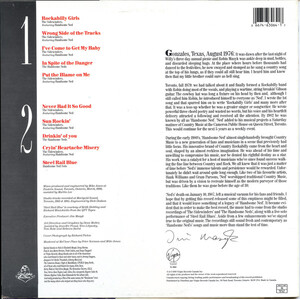
‘Rockabilly Girls’ written by Ned R. Masyk
‘Wrong Side of the Tracks’ written by Ned R. Masyk
‘I’ve Come to Get My Baby’ written by Ned R. Masyk
‘In Spite of the Danger’ written by Ned R. Masyk
‘Put the Blame on Me’ written by Ned R. Masyk
‘Never Had It So Good’ written by Ronny Azzopardi
‘Sun Rockin’’ written by Jim Masyk
‘Drinkin’ of You’ written by Ned R. Masyk
‘Cryin’ Heartache Misery’ written by Jim Masyk and Ronny Azzopardi
‘Steel Rail Blue’ written by Ned R. Masyk
Production
Manufactured by Virgin Records Canada Inc.
Distributed by Virgin Records Canada Inc.
Liner notes
Gonzales, Texas, August 1976: It was dawn after the last night of Willy’s three day annual picnic and Robin Masyk was ankle deep in mud, bottles, and discarded sleeping bags. At the place where hours before thousands had danced to the festivities, he now swayed and stomped as he sang a country song at the top of his lungs, as if they could all still hear him. I heard him and knew immediately this brother could sure as hell sing.
Toronto, fall 1979: we had talked about it and finally formed a Rockabilly band with Robin doing most of the vocals, and playing a wartime, string-breakin’ Gibson guitar. The cowboy hat was long a fixture on his head by then and, although I still called him Robin, he introduced himself to everyone as “Ned”. I wrote the list of songs and that spurred him on to write “Rockabilly Girls” and many more after that. It was a toss-up whether he was a greater singer or songwriter. He wrote powerful three chord poetry and wasted words, but his music and his heartfelt delivery attracted a following and received all the attention. By 1982 he was known by all as “Handsome Ned.” Ned added to his musical projects a Saturday matinee of Country Music at the Cameron Public House on Queen Street, Toronto. This would continue for the next 4 years as a weekly event.
During the early 1980’s, “Handsome Ned” almost single-handedly brought Country Music to a new generation of fans and musicians at a scene that previously had little focus. His innovative brand of Country Rockabilly came from the heart and soul, shaped by an almost reckless imagination. He was ahead of his time and unwilling to compromise his music, nor be denied his rightful destiny as a star. His work was a catalyst for a host of musicians who’s songs would eventually unite the fine line between Country and Rock. We all knew that it was just a matter of time before Ned’s immense talents and persistence would be rewarded. Unfortunately he didn’t wait around quite long enough. Like two of his favourite artists, Hank Williams and Gram Parsons, Ned worshipped traditional Country Music, but was driven by a vision to recreate himself as the modern purveyor of those traditions. Like them he was gone before the age of 30.
“Ned’s death on January 10, 1987, left a musical vacuum for his fans and friends. I hope that by getting this record released some of this emptiness might be filled, and that it would leave something of a legacy of Handsome Ned. It became evident that in order to make the best record, the music had to come from the studio recordings of The Sidewinders and The Handsome Neds, along with a live solo performance of ‘Steel Rail Blues’. Aside from a few enhancements we’ve stayed true to the original music. The recordings still sound fresh and contemporary as ‘Handsome Ned’s’ songs and music more than stand the test of time.”
— Jim Masyk
Gallery
Images
5 images
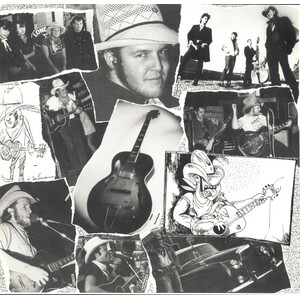
Handsome Ned - The Ballad Of
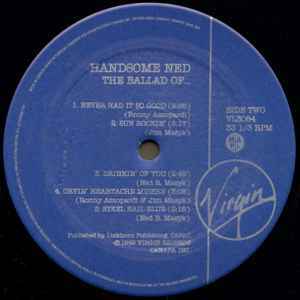
Handsome Ned - The Ballad Of
Handsome Ned - The Ballad Of
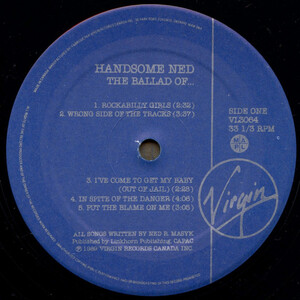
Handsome Ned - The Ballad Of
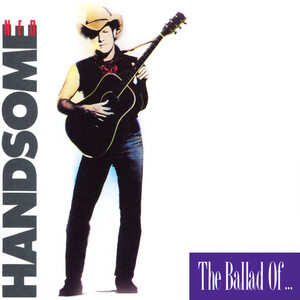
The Ballad Of
Media
Videos
0 videos
No videos available for this title.
Credits
In Transit
No Comments