
Insight
Sheree Jeacocke is a Toronto, Ontario singer, songwriter, session vocalist, and pop recording artist whose career moved through Canadian television, commercial studio work, major-label pop, and 1990s dance music. Known professionally as Sheree during her best-known recording period, she brought together a strong lead voice, polished pop instincts, and the versatility of a working studio singer.
Jeacocke first came to wider attention in the early 1980s through television and session work. She appeared in the CBC-TV musical The King of Friday Night and became a familiar voice in Toronto’s professional studio scene, singing backing vocals for artists including Gordon Lightfoot, Rita MacNeil, Glass Tiger, and Kim Mitchell. She also became highly active in commercial music, recording jingles for Canadian broadcast advertising during a period when national campaigns often relied on the country’s top studio vocalists. Her commercial work became an important part of her career, giving her both financial stability and a regular presence in Canadian popular media even outside the record charts.
Her first known single, “Maybe You’ve Gotta Hurt,” appeared in 1982, followed by “You Get To Me” in 1985. That same period led to her debut album, Feel It, released in 1985. The album introduced Jeacocke as a polished Canadian pop-rock vocalist and helped earn her a Juno Award nomination for Most Promising Female Vocalist of the Year in 1986.
Jeacocke’s breakthrough as a solo artist came after signing with BMG/RCA for her self-titled album Sheree, released in Canada in 1989. The album placed her in a sophisticated late-1980s pop setting, drawing on dance-pop, synth-pop, adult contemporary, and studio R&B elements. It also surrounded her with a strong group of Canadian and international musicians, arrangers, and producers, including Lou Pomanti, Fred Zarr, David Bendeth, Kevan McKenzie, Guido Basso, Vern Dorge, Bashiri Johnson, Fonzi Thornton, Joel Feeney, and others.
The album’s defining single was “Woman’s Work,” written by Sheree Jeacocke, Lou Pomanti, and B.J. Cook. The song became Jeacocke’s biggest hit as a lead artist, reaching the Canadian Top 10 in February 1990, and remains the recording most closely associated with her name.
“Woman’s Work” also travelled beyond its original Canadian release. In 1990, Jeacocke participated in the Japanese film soundtrack Best Guy, performing “Best Guy,” “Woman’s Work,” “Bang On,” and “Where Do We Go From Here?” The soundtrack was released by BMG Victor in Japan, further extending her catalogue outside Canada. The song was later recorded by other artists, including Tina Arena, giving it a second life beyond Jeacocke’s own version.
In 1993, Jeacocke released her third album, Miss My Love, continuing in a polished pop and dance-pop direction. The album produced the singles “Miss My Love” and “Serious,” but it would become her final major-label album. After her BMG period ended, she independently issued the 1995 EP Jeacocke, which included a new version of “Woman’s Work” and a remake of Jean Knight’s “Mr. Big Stuff.”
The club response to “Mr. Big Stuff” led Jeacocke further into dance music. During the mid-1990s she recorded under variations of her name and under pseudonyms, including J-Cock and Deeva, and was associated with Eurodance and club-oriented releases including versions of “First Time,” “Come Together,” “You Are the Sunshine of My Life,” and “We Will Rock You.” She also worked in connection with Pleasure Beat during this period.
Jeacocke eventually stepped away from the recording industry as a frontline artist, but her career captures several overlapping sides of Canadian pop music in the 1980s and 1990s: the CBC television musical world, the Toronto studio-vocalist circuit, the national jingle industry, major-label pop, Japanese soundtrack licensing, and the dance-club remix culture that followed. Today she is also known professionally as Sheree Cerqua.
-Robert Williston
Gallery
Images
2 images

Sheree Jeacocke - Feel It BACK
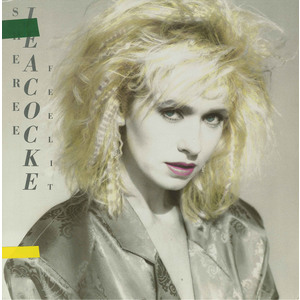
Feel It
Media
Videos
0 videos
No videos available for this title.
Credits
Musicians
Kevan McKenzie: drums
Greg Kavanagh: guitar
Bob Mann: guitar
Vern Dorge: alto saxophone
Lou Pomanti: solo on ‘It’s Got to Be Love’
Graydon Hillock: keyboards, LinnDrum
Backing Vocals
Sheree Jeacocke
John Rutledge
Aubrey Mann
Wayne St. John
Shawn Jackson
Patrice Black
Production
Produced by Graydon Hillock
Music produced, arranged, and programmed by Graydon Hillock
Vocal arrangements by Sheree Jeacocke and Graydon Hillock
Recorded at Eastern Sound, Toronto, Ontario
Engineered by Peter Mann and Mike Baskerville
Digitally mixed at Metalworks, Mississauga, Ontario on the Mitsubishi X-80 by Ed Stone and Graydon Hillock
Awards
Nominated for Most Promising Female Vocalist of the Year at the 1986 Juno Awards
No Comments