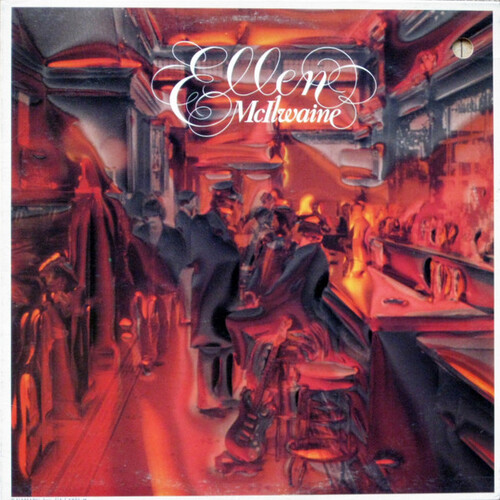
Album / Title
Ellen McIlwaine
By: Ellen McIlwaine
Origin: Nashville, Tennessee, 🇺🇸 → Kobe, Japan → Atlanta, Georgia → Greenwich Village, New York City, New York, 🇺🇸 → Montréal, Québec → Toronto, Ontario → Calgary, Alberta, 🇨🇦
Insight
Ellen McIlwaine was one of the most singular and uncompromising artists to emerge from the blues-rock era: a powerhouse vocalist, fearless interpreter, adventurous songwriter, and pioneering slide guitarist whose music fused blues, gospel, folk, funk, soul, psychedelia, and global influences into a style that was unmistakably her own. Though born in the United States, her long and important Canadian chapter — beginning in earnest in the 1980s and continuing for the rest of her life — makes her a vital figure in the story of Canadian roots, blues, and independent music.
Born Frances Ellen McIlwaine in Nashville, Tennessee on October 1, 1945, she was adopted as an infant by Southern Presbyterian missionaries William and Aurine McIlwaine. At the age of two, she moved with her parents to Kobe, Japan, where she spent the next fifteen years as part of the small but remarkably international community surrounding Canadian Academy, the school she attended from childhood through graduation. That unusual upbringing would shape her artistic identity for life. She began playing piano at age five, sang in school and church choirs, and absorbed an astonishingly wide range of sounds: New Orleans rhythm and blues, country music, American jazz, Japanese folk and classical traditions, Latin vocal groups, European classical music, and the diverse musical cultures represented by classmates from around the world. Long before the term “world music” became fashionable, McIlwaine was already living inside it.
Returning to North America in 1963, McIlwaine spent two years in college in Tennessee before moving to Atlanta, Georgia to attend art school. It was there, in the absence of a piano, that she borrowed a guitar and found the instrument that would define her career. Immersed in the sounds of B.B. King, Otis Spann, Bobby “Blue” Bland, James Brown, the Isley Brothers, Rufus and Carla Thomas, Tina Turner, Gladys Knight, and countless rhythm and blues and gospel performers, she began appearing in Atlanta clubs and steadily developed her own voice as both a singer and instrumentalist.
A major turning point came in 1966 when singer-songwriter Patrick Sky encouraged her to head to Greenwich Village. There she entered one of the most fertile musical scenes in North America, buying a well-travelled Guild acoustic and quickly finding herself in the orbit of Richie Havens, Dave Van Ronk, Odetta, Mississippi John Hurt, Muddy Waters, Buddy Guy, Junior Wells, Sonny Terry, and Brownie McGhee. Through the Blue Flames, who backed John Hammond, she met Jimi Hendrix. The two became friends, played music together, and struggled on the New York scene at roughly the same moment. McIlwaine would later recall rejecting a manager who discouraged her from working with Hendrix because he was Black — an early and telling reminder of the racism and sexism that still shaped the music industry in that era.
After a brief return to Atlanta, she formed Fear Itself in 1967 and relocated to Woodstock, New York. The group’s lone self-titled album, released by Dot Records in 1968/1969 and produced by Tom Wilson, remains a cult landmark of late-1960s psychedelic blues-rock. Heavy, exploratory, and unusually fierce, it also established McIlwaine as one of the very few women of her generation fronting a hard-edged electric band as a guitarist rather than simply a vocalist. When the group dissolved around 1970, she was already poised to emerge as a remarkable solo artist.
Her solo breakthrough came with Honky Tonk Angel (Polydor, 1972), a deeply original album that drew together blues, country, gospel, soul, funk, and folk with little regard for conventional marketing categories. It was followed by We The People (Polydor, 1973), another adventurous and stylistically elastic statement that cemented her reputation as both an extraordinary interpreter and a distinctive songwriter. In 1974, Polydor included her on The Guitar Album alongside John McLaughlin, Link Wray, T-Bone Walker, Rory Gallagher, Roy Buchanan, and others — a notable recognition, especially as the only woman represented in that company.
In 1975 McIlwaine spent a year in Montréal, recording The Real Ellen McIlwaine for Kot’ai/United Artists with members of the Ville Émard Blues Band appearing on some tracks. It was a key early intersection with the Canadian scene and one of the most important albums in her catalogue: earthy, eclectic, and less constrained by commercial expectations than some of the label work around it. She continued to tour widely, often in eclectic company, sharing bills over the years with artists as diverse as Laura Nyro, Howlin’ Wolf, Son House, Weather Report, Lily Tomlin, Taj Mahal, George Thorogood, Tom Waits, Chicago, Bruce Springsteen, and Koko Taylor. Her reputation was built the hard way: live, relentlessly, and often well ahead of the audience’s expectations.
Her self-titled Ellen McIlwaine album followed in 1978, and by the end of that decade she had returned decisively to electric guitar, aided in part by a solid-body Guild instrument. In 1980 she embraced the power trio format again, and the sessions that year eventually yielded Everybody Needs It, released in 1982 on Blind Pig. Recorded in Chicago with Jack Bruce on bass and background vocals, Paul Wertico on drums, and Howard Levy on one cut, the album won the NAIRD Award for Best Rock Album and stands as one of the finest distillations of her electric vision. By then, her unorthodox slide style — often suggesting bass lines, rhythm, and lead ideas at once while she sang with remarkable force and agility — had earned her enduring cult status among guitarists and critics alike.
McIlwaine toured Australia in 1980 and 1984, and in 1987 recorded Looking For Trouble in Toronto for Stony Plain Records. That same year she became a permanent resident of Canada, a major turning point in both her life and career. Settling first in Toronto, she immersed herself in the city’s rich musical crosscurrents, particularly its reggae and Caribbean influences, which subtly but unmistakably filtered into her later work. Canada would remain her primary home for the rest of her life, and it was here that she found some of her most loyal audiences through the blues club circuit, festivals, and independent music community.
In 1990 she toured with one of her guitar heroes, Johnny Winter, and in 1992 Calgary became her long-term home. Throughout the 1990s she continued to work constantly across North America, often drawing on strong regional rhythm sections in cities such as Vancouver, Calgary, Winnipeg, Toronto, Montréal, and Albany, New York. Reissues such as The Real Ellen McIlwaine / Everybody Needs It (1996) and Up From The Skies: The Polydor Years (1998) helped restore major parts of her catalogue to circulation. Around the same time, her version of Stevie Wonder’s ‘Higher Ground’ found an unexpected second life in electronic music circles through a David Holmes remix and the later sampling of its guitar intro by Fatboy Slim on ‘Song for Lindy.’
The late 1990s and 2000s brought some of the most adventurous work of her later career. She created a live musical score for Tom Cone’s True Mummy, composed for film, and in 1997 appeared on the live German release Women in (e)motion / Ellen McIlwaine. In 2000, Spontaneous Combustion was recorded in Seattle with Taj Mahal’s Rhythm Ambassadors — Bill Rich and Kester Smith — and featured Taj Mahal himself on two tracks. She later toured Germany, Switzerland, and Austria with Taj Mahal and his band, as well as with her own trio.
Her ties to Japan deepened dramatically in the 2000s. In 2001 she collaborated with Shinichi Osawa of Mondo Grosso, writing the melody and lyrics for ‘Don’t Let Go,’ and in 2002 she returned to Japan for the first time since childhood to record Live At Yellow in Tokyo for Polydor/Universal Japan with Bill Rich, Kester Smith, and saxophonist Kayoko Kimura. It was a remarkable late-career full circle: the child who had grown up in Kobe returning decades later as a revered international cult artist.
Back in Canada, she entered one of the most distinctive collaborations of her later years with Calgary-based tabla virtuoso Cassius Khan. Their partnership brought together blues, improvisation, Indian classical textures, and spiritual intensity in a way that felt entirely natural within her long-established musical worldview. The resulting album, Mystic Bridge, released in 2006 on her own imprint, Ellen McIlwaine Music, remains one of the clearest late-career statements of her lifelong commitment to borderless musical conversation.
McIlwaine continued to perform well into the 2000s and 2010s, appearing in projects such as Sue Foley’s Blues Guitar Women and Patty Larkin’s La Guitara ensemble, while also contributing to documentary work, including an interview for the 2013 Hendrix film Hear My Train A Comin’. Like many revered but undercompensated cult artists, she often had to support herself outside the music business; in later years, she worked as a school bus driver between tours, a poignant reminder that artistic influence and financial reward do not always move together.
In 2019, the Toronto Blues Society honoured her with the Blues With A Feeling Award, its lifetime achievement recognition at the Maple Blues Awards. It was a fitting tribute to an artist whose stature among musicians and serious listeners had long been secure, even if mainstream fame remained elusive. McIlwaine died in Calgary, Alberta on June 23, 2021, at the age of 75, after a brief battle with esophageal cancer. In the years since, her reputation has only grown clearer: not simply as a cult blues performer, but as a genuine pioneer — a woman who claimed electric and slide guitar as vehicles of personal expression in a deeply male-dominated era, and an artist whose catalogue remains one of the most original and underappreciated bodies of work in North American roots music.
-Robert Williston
Musicians
Ellen McIlwaine: vocals, guitar, backing vocals
Don Moore: backing vocals
Gerry Moore: backing vocals
John Lee: bass
Gerry Brown: drums, percussion
Daryll Thompson: guitar
T.J. Tindall: guitar
Cotton Kent: keyboards
Jerry Cohen: organ
Bobby Mallach: saxophone
Songwriting
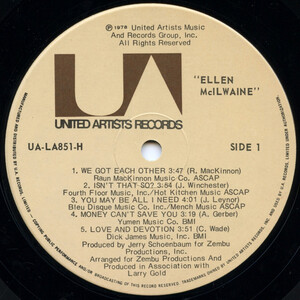
'We Got Each Other' written by R. MacKinnon
'Isn't That So?' written by J. Winchester
'You May Be All I Need' written by J. Leynor
'Money Can't Save You' written by A. Gerber
'Love And Devotion' written by C. Wade
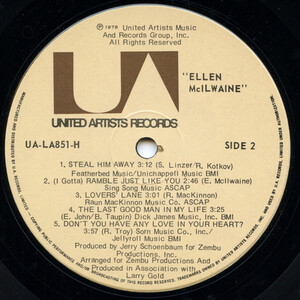
'Steal Him Away' written by R. Kotkov and S. Linzer
'(I Gotta) Ramble Just Like You' written by Ellen McIlwaine
'Lovers' Lane' written by R. MacKinnon
'The Last Good Man In My Life' written by Elton John and Bernie Taupin
'Don't You Have Any Love In Your Heart?' written by R. Troy
Production
Arranged by Zembu Productions
Produced by Zembu Productions for Zembu Productions, Inc.
Produced in association with Larry Gold
Jerry Schoenbaum: additional percussion
Engineered and mixed by Jay Mark
Engineered by Gerry Block and Michael Hutchinson
Assistant engineering by Carla Bandini and Jeffrey Stewart
Recorded at Sigma Sound Studios
Mastered at Frankford/Wayne Recording Labs
Lacquer cut by NS
Artwork
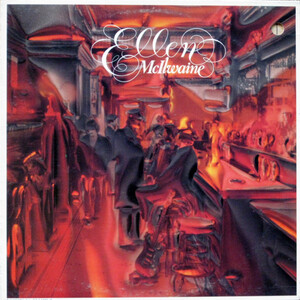
Design and art direction by Paula Bisacca
Album photography by Robert Belott
Cover photography by Robert Monroe
Notes
String contractor: Don Renaldo
Management: Baker Street Irregulars and Shirley Craig
Published by Raun MacKinnon Music Co., Fourth Floor Music, Inc., Hot Kitchen Music, Bleu Disque Music Co., Inc., Mench Music, Yumen Music Co., Dick James Music, Inc., Featherbed Music, Unichappell Music, Sing Song Music, Sorn Music Co., Inc., and Jellyroll Music
© ℗ 1978 United Artists Music And Records Group, Inc.
Manufactured by United Artists Music And Records Group, Inc.
Pressed by All Disc Records, Inc.
Rights Society (Side 1 tracks 1 to 3, Side 2 tracks 2 and 3): ASCAP
Rights Society (Side 1 tracks 4 and 5, Side 2 tracks 1, 4 and 5): BMI
Matrix / Runout (Side 1 runout, variant 1): 771 UALA-851-RE1-1 M1 F/W NS NY
Matrix / Runout (Side 2 runout, variant 1): 777 UALA-851-RE1-2 M-1 F/W NS
Matrix / Runout (Side 1 runout, variant 2): UALA-851-RE1-1 LA F/W NS
Matrix / Runout (Side 2 runout, variant 2): UALA-851-RE1-2 LA F/W NS
Gallery
Images
6 images
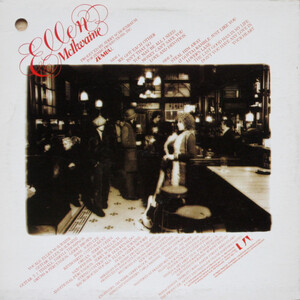
Ellen McIlwaine - ST (8)
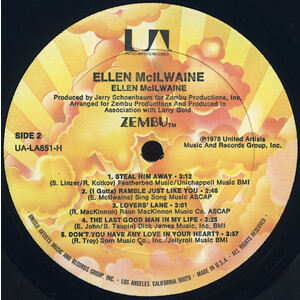
Ellen McIlwaine - ST (3)
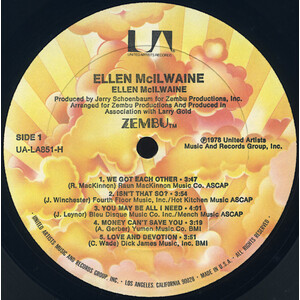
Ellen McIlwaine - ST (4)
Ellen McIlwaine - ST (6)
Ellen McIlwaine - ST (7)
Ellen McIlwaine
Media
Videos
0 videos
No videos available for this title.
Credits
In Transit
No Comments