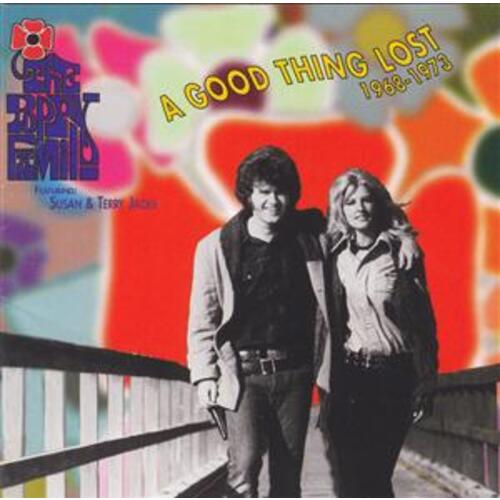
Album / Title
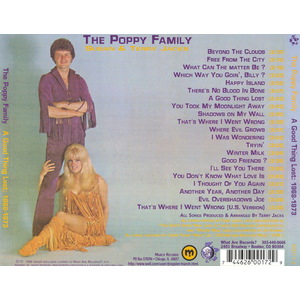
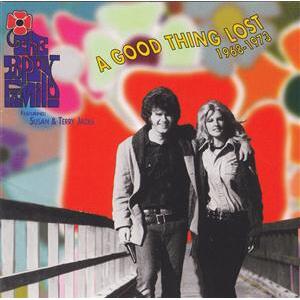
A Good Thing Lost: 1968-1973 (compilation)
By: Poppy Family
Origin: Vancouver, British Columbia, 🇨🇦
Insight
The Poppy Family emerged from Vancouver's rapidly evolving music scene in the mid 1960s, a period when West Coast folk clubs, teen television shows, and garage bands were shaping a new Canadian pop identity. The group began not as a formal band but as a creative alliance between two young performers moving through the same circuit. Susan Pesklevits was a gifted teenage singer from Saskatchewan who settled in British Columbia and quickly found steady work on CBC’s Music Hop. Terry Jacks, a guitarist and songwriter active in several local groups including The Chessmen, appeared on the same program. Their chemistry, both musical and personal, was immediate.
The first configuration of what would become The Poppy Family formed when Susan invited Terry to accompany her at live shows. By 1966 they were performing as a trio with guitarist Craig McCaw, a player whose mixture of folk technique and emerging psychedelic influences added a distinctive colour to their arrangements. The group passed through several names, among them The Powerline and Winkin’, Blinkin’ and Nob. When the time came to establish something more permanent, they settled on The Poppy Family, a name discovered in a dictionary and chosen for its combination of gentleness and possibility. Susan and Terry married in 1967, anchoring the project with a shared commitment to songwriting and studio experimentation.
The Poppy Family’s definitive sound took shape with the addition of Satwant Singh, a classically trained Indian percussionist who played tabla and other hand drums. Singh’s arrival in 1968 expanded the trio’s palette into territory few North American pop groups were exploring. The group’s early singles were recorded in Vancouver and reflected the hybrid that would define them: folk inspired melodies, lush string arrangements, West Coast psychedelia, and the rhythmic grounding of South Asian percussion. Their debut single, Beyond the Clouds, introduced Susan’s clear, unaffected vocal style and Terry’s preference for understated but emotionally direct lyrics. Its flip side, Free From the City, hinted at their growing interest in blending pop structure with non Western textures.
Their national breakthrough came with Which Way You Goin’, Billy?, recorded in 1969 and released the following year. The song, inspired by the emotional toll of the Vietnam War on those left behind, was shaped through an intense recording session in which Susan delivered one of her most vulnerable performances. The single reached number 1 in Canada and climbed to number 2 on the Billboard Hot 100 in the United States, held back only by The Beatles’ The Long and Winding Road. It sold more than two and a half million copies worldwide and cemented the group’s international reputation.
The success of Which Way You Goin’, Billy? propelled the release of their debut album of the same name in 1970. Recorded partly in Vancouver and partly in London with members of the London Philharmonic Orchestra, the album showcased the full extent of their stylistic reach. Songs such as You Took My Moonlight Away and That’s Where I Went Wrong demonstrated Terry’s evolving production approach, Craig McCaw’s sitar and guitar textures, and Singh’s tabla patterns that gave the group a character unlike any other pop act in North America. The record produced several Canadian hits and reinforced Susan as one of the most compelling vocalists of the period.
By the time of their second album, Poppy Seeds (1971), the internal dynamics of the group had shifted. Terry released Craig and Satwant from the project and completed the record using studio musicians, tightening the arrangements and leaning further into pop structure. Though less eclectic than the first album, Poppy Seeds generated a run of popular singles including Where Evil Grows, Good Friends?, I Was Wondering, and Tryin’. Where Evil Grows in particular became a cult favourite, remembered for its unusual lyrical darkness and tightly wound rhythmic feel. Despite their continued chart presence, the marriage between Susan and Terry was deteriorating, and by 1972 the Poppy Family name was phased out.
Both continued recording, often still working on each other's projects. Terry had begun issuing solo singles as early as 1970, while Susan prepared her own material even as the group was unravelling. The two assisted one another on their first solo albums, with Terry developing Seasons in the Sun and Susan recording what would become I Thought of You Again. By 1973 they had separated, bringing an abrupt end to a band that had, within a short span, bridged folk, light psychedelia, baroque pop, and Indo Canadian musical influences in ways that prefigured later explorations by artists seeking to merge Western and non Western forms.
Onstage and in the studio The Poppy Family were never a conventional pop combo. They were a Vancouver band shaped by the Coast’s hybrid sensibilities, comfortable working between genres and among diverse musical traditions. Susan’s voice carried a clarity and emotional steadiness that anchored even the most experimental arrangements. Terry’s songwriting drew from personal experience, environmental concerns, and an interest in understated storytelling. McCaw’s sitar and guitar lines, paired with Singh’s tablas, placed them in a lineage that touched on raga rock and modal folk without ever losing the grounding of North American pop.
The group’s recordings, long unavailable after their initial release, have since been reissued and reappraised, drawing attention to their role in defining a uniquely Canadian form of late 60s and early 70s pop music. Their blend of acoustic and electric textures, orchestral elements, and non Western instrumentation remains striking for its era. For a few years The Poppy Family created a sound that was both intimate and expansive, optimistic and melancholic, rooted in the Pacific Northwest yet open to the wider world, a reflection of the possibilities and tensions that defined the period in which they worked.
-Robert Williston
A Good Thing Lost: 1968-1973 is an excellent best-of collection from the Poppy Family, a great, if largely forgotten, late-'60s Canadian soft rock/psychedelic group. The meticulous songwriting, production, and arranging skills of guitarist/mastermind Terry Jacks (who later had a huge solo hit with the classic pop single "Seasons in the Sun") lift these recordings above the work of many of the group's better-known contemporaries. Singer Susan Jacks has a beautiful voice that sometimes sounds like (but predates) Karen Carpenter, but is eminently more soulful. Although characterized in the liner notes as a "soft pop" band, the Poppy Family was also capable of a somewhat tougher sound that sometimes recalled Surrealistic Pillow-era Jefferson Airplane and folkier material in the Kenny Rogers & the First Edition/Roger McGuinn vein. Throughout, Jacks frames the songs with creative, if often dated, arrangements that compare favorably to his obvious influences, the Beatles, the Beach Boys, and Phil Spector. In addition to "Which Way You Goin' Billy," the group's biggest hit (number two in 1970) and a generous helping of singles and high-quality album tracks, the disc includes an alternate, wildly psychedelic mix of "There's No Blood in Bone" and two different versions of "That's Where I Went Wrong" (the second of which features some cool country guitar leads). Overall, A Good Thing Lost: 1968-1973 is a fantastic find — one of those hidden gems that record fanatics always hope to discover.
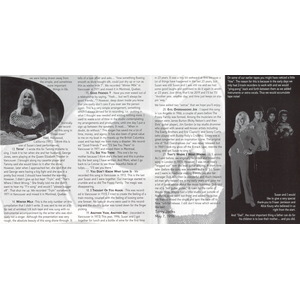
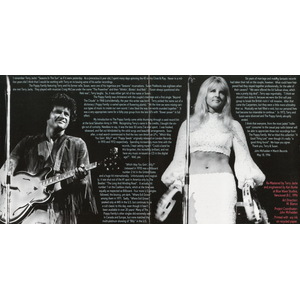
I remember Terry Jacks’ “Seasons In The Sun” as if it were yesterday. As a precocious 6 year old, I spent many days spinning the 45 on my Close & Play. Never in a million years did I think that I would be working with Terry on re-issuing some of his earlier recordings.
The Poppy Family featuring Terry and his former wife, Susan, were one of his ingenious pre-“Seasons” incarnations. Susan Pesklevits was eighteen when she met Terry Jacks. They played with musician Craig McCaw under the name “The Powerline” and the “Winkin’, Blinkin’ And Nob.” Susan always questioned who Nob was. “Terry later told me it was me,” says Susan. “So, it was after we got married that he told me Nob was me.”
The Poppy Family was christened with the couple’s marriage and a first single “Beyond The Clouds” in 1968 (coincidentally, the year this writer was born). Terry picked the name out of a dictionary (‘Poppy Family: a varied species of flowering plants’). “At the time we were mixing various types of music to create our own sound. I also liked the way the words sounded together.” It was a very appropriate name for a folksy pop group from the late 60’s with “flower power” in full effect.
My introduction to The Poppy Family came while thumbing through a used record bin at the local Salvation Army in 1994. Recognizing Terry’s name in the credits, I bought the single out of curiosity. Needless to say, it was the best 50 cents I’ve ever spent. I was hooked, obsessed, and flat out blindsided by the solid songs and beautiful arrangements. Soon after, a mad search commenced to find the two rare American LP’s, “Which Way You Goin’, Billy?” and “Poppy Seeds” originally released on London Records in 1970 and 1972 respectively. Spending increasingly more time with the records, I kept asking myself, “Could a band be this forgotten, this incredibly brilliant, and not have any music re-issued on CD in the digital age?”. Well, yes.
“Which Way You Goin’, Billy?” (released in 1970) was a Billboard number 2 hit in the United States and a huge hit internationally. Unfortunately and tragically, it was shut out of the #1 spot in America only by The Beatles’ “The Long And Winding Road.” It actually hit number 1 on the Cashbox charts, which at the time was equally as respected as Billboard. Four more U.S. singles followed, the bouncy, yet dark, “Where Evil Grows” in 1971. Sadly, “Where Evil Grows” peaked only at #45 in the U.S. but continues to be a cult classic to this day, even though it hasn’t been available in over 20 years! Many of The Poppy Family’s other singles did extremely well in Canada and Europe, but none matched the multi-platinum showing of “Billy” in the U.S.
Six years of marriage and making fantastic records had taken their toll on the couple, however. What could have happened had they stayed together professionally, for the sake of their careers? “We were offered the Ed Sullivan show, which was a pretty big deal,” Terry says regrettably. “I think we should have done it, because we were the first soft pop group to break the British rock ’n’ roll invasion. After that came the Carpenters, but they were a little more schmaltzy than us. Musically we had filled a void, but our personal lives had become too miserable to continue.” In 1973, Terry and Susan were divorced and The Poppy Family abruptly ended.
I think that everyone, from the most jaded “indie-rock” consumer to the casual pop radio listener will be able to appreciate these lost recordings from The Poppy Family. We’ve titled this collection “A Good Thing Lost” even though it’s really “a good thing found.” We hope you agree. Thank you, Terry & Susan.
John McFadden • March Records
May 18, 1996
Re-Mastered by Terry Jacks
and engineered by Ken Burke
at Blue Wave Studios,
Vancouver,B.C. 1996
Art Direction:
M. Bianco
Project Coordinator:
John McFadden
Printed with soy ink
on recycled paper.
THE POPPY FAMILY
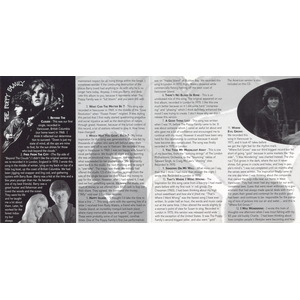
BEYOND THE CLOUDS – This was our first single, recorded in Vancouver, British Columbia (our home town) in 1968. I think it reflected our determination to succeed. “Down is just my state of mind, all the ups are mine to find, for the sun shines for those who look beyond the clouds.”
FREE FROM THE CITY – (The flip side of “Beyond The Clouds”) I didn’t like the original version so we re-recorded it in London, England in 1970. I wrote this song in the middle of winter, lying on my back on top of a little tug boat, up the coast of British Columbia. We had been jigging red snapper and ling cod, and gathering oysters with Barry Buse. (Barry was a kid at the time and a few years younger than me. He became one of my best friends). Barry was a great hunter and fisherman and loved the woods and the ocean. They were his life and he taught me a lot about them. Later, he worked for the forest industry and always maintained respect for all living things within the forest. I sometimes wonder if the continuing destruction of the places Barry loved had anything to do with why he is no longer here today. Anyway, I miss you Barry, and dedicate this album to you, because it represents when The Poppy Family was in “full bloom” and you were still with us.
WHAT CAN THE MATTER BE? – This song was recorded in Vancouver in 1969, in the middle of the “Love Revolution” when “Flower Power” reigned. It was during this period that I first really started questioning prejudice and social injustice as well as the destruction of nature through greed. However, because of the lyrical content of this record, a lot of stations refused to play it. How times have changed!
WHICH WAY YOU GOIN’, BILLY? – My initial inspiration for this song was generated by the loss felt by thousands of women who were left behind when their men were sent off to war in Vietnam. We recorded it one night in Vancouver in 1969. I was not happy with Susan’s vocal performance. We fought all night and by morning she was an emotional mess. However, this was exactly what was needed for her performance. She returned home, we went back to the studio the next morning and re-sang it in “one take.” The magic was there! We initially had offered the studio 1/3 of the royalties received from the sale of the single because we didn’t have the money to pay for the session. However, after I had mixed it, I realized we had something special. We knew the studio was short of money so we offered them $500 cash to buy out their share. They agreed. We borrowed the money (“Billy” sold over 2.5 million records).
HAPPY ISLAND – “I thought I’d take the time to blow a line”. This song starts with the opening of a letter I received from Rusty Waters, a friend who lived on Texada Island, an incredibly tranquil laid back place where many memorable days were spent “just groovin’”. These were probably some of our happiest, carefree times. One of The Poppy Family’s first live performances was on “Happy Island” at Blubber Bay. We recorded this song in London in 1970. Rusty Waters drowned while commercially fishing herring off the west coast of Vancouver Island.
THERE’S NO BLOOD IN BONE – This is an unreleased mix of this song. The original appeared on our first album, recorded in London in 1970. I like this one much better because it did some hard “compressing” and “phasing” which I think definitely enhanced the mood I was trying to create. I don’t know why we didn’t release this version.
A GOOD THING LOST – This song was written when I was 19, before The Poppy Family came to be. It was about someone whom I cared an awful lot about and who gave me a lot of confidence and encouraged me to continue with my music. However it would have been very hard for this relationship to continue because it would have become very complicated. The song was finally recorded in 1970 in London.
YOU TOOK MY MOONLIGHT AWAY – This is one of my favorites, from the “dancing strings” of The London Philharmonic Orchestra, to the “bouncing” tablas of Satwant Singh, to Craig McCaw’s “droning” sitar. Recorded in 1970.
SHADOWS ON MY WALL – What more can I say, than that I think I had more than enough the night I wrote this. Recorded in London in 1970.
THAT’S WHERE I WENT WRONG – The inspiration for this song came from a bus trip I had made years before with my first rock ’n’ roll group, The Chessmen (1965). I had been thinking about my high school sweetheart and how she’d jilted me. “That’s Where I Went Wrong” was the fastest song I have ever written. In under half an hour, the words and music came out at the same time. The song’s words change slightly to a woman’s point of view for Susan to sing. Recorded in London in 1970, this version was released world wide and a new version for the United States was The Poppy Family’s second biggest seller, and also went “gold”.
WHERE EVIL GROWS –
We recorded this song in Vancouver in 1971, and it took 47 takes before we got the right feel for the rhythm track.
“Where Evil Grows” was our third biggest record but fell short of going “gold” because in some markets the “flip-side”, “I Was Wondering” was charted instead. The chorus (“Evil grows in the dark, where the sun it never shines. Evil grows in cracks and holes, and lives in people’s minds.”) was not completed until six months after the verses were written. The inspiration finally came to me one day when I was thinking about the companies that owned the pulp mills near our home in West Vancouver. They had never had any regard for our environmental laws. (Laws that were never enforced by a government that had always made special deals with them.) For years their greed and contempt for the public good had been—and continues to be—responsible for the pumping of tons of poisons into our air and water… and this is where “Evil Grows”!
I WAS WONDERING – I wrote this train of thoughts one afternoon when I was trout fishing with my 83 year old buddy Charlie. I had been thinking about how complex people’s lifestyles were becoming and how we were being drawn away from the simple, and sometimes more important things in life.
TRYIN’ – I wrote this for Tammy Wynette to sing. I took it to her when she and her husband, George Jones, were playing at the Queen Elizabeth Theater in Vancouver. I brought along my cassette player and Tammy said she would listen to it after the show. However, later when I approached her, she said that she and George were having a big fight and she was in a pretty foul mood. I should have heeded the warning. However, I didn’t give up but kept “Tryin’” and “That’s Where I Went Wrong.” She finally told me she didn’t want to hear my “F’n song” and told me I “pleased the s—t off.” That shut me up. We recorded “Tryin’” ourselves in 1971 in Vancouver and mixed it in Montreal, Quebec.
WINTER MILK – This is the only number on this compilation that I didn’t write. It was sent to me on a little reel of wrinkled 1/4 inch tape and was sung with no instrumental accompaniment by the writer who was obviously not a singer. Although the presentation was very rough, the absolute beauty of this song shone through. It tells of a love affair and asks… “how something flowing smooth as store bought silk, could just dry up or run as this winter milk?”. We recorded “Winter Milk” in Vancouver in 1971 and mixed it in Montreal, Quebec.
GOOD FRIENDS? – Have you ever eased out of a relationship by saying, “Yeah… but we’ll always be good friends…”? However, deep down inside you know that you really don’t care if you ever see the person again. This is a very simple arrangement, something with which I always wrestled in the recording, i.e., putting in what I thought was needed and adding nothing more. I used to waste a lot of time in the studio contemplating my arrangements and only later, until one day I put a sign up between the speakers. It read… “When in doubt, do without”. This slogan has saved me a lot of time, money, and agony. It has also been of great value to me on my boat in my travels up the British Columbia coast and has kept me from many a disaster. We recorded “Good Friends ?” and “I’ll See You There” in Vancouver in 1971 and mixed them in Montreal.
I’LL SEE YOU THERE – This one’s for my mother because I think she’s the best and this is probably the best song I have written. And Mom, when I go back to La Conner to see those beautiful fields of tulips… “I’ll see you there.”
YOU DON’T KNOW WHAT LOVE IS –
We recorded this song in Vancouver in 1972. This is the last year Susan and I were together. Our marriage started to crumble and so did The Poppy Family. The magic was disappearing.
I THOUGHT OF YOU AGAIN –
This was recorded in Vancouver in 1973. I tried to create the feeling of a train moving, coupled with the feeling of loosing someone forever. No bass or drums were used in this recording and the electric guitar was tuned down for the finger picking.
ANOTHER YEAR, ANOTHER DAY –
(recorded in Vancouver in 1973) This year, 1996, Susan and I got together for lunch and a bottle of wine for the first time in 23 years. It was a tiny bit awkward at first because a lot of things happened in the last 23 years, but Susan was still Susan and I was still me and we had some good laughs and promised to do it again in another 23 years. Just think, it’ll be 2019 and I’ll be 75!
“Another year, another day, and time just keeps on slippin’ way.”
We have added two “extras” that we hope you’ll enjoy.
EVIL OVERSHADOWS JOE –
I taped this song in Los Angeles in 1968, a couple of years before The Poppy Family was formed. Among the musicians on the session were James Burton (Ricky Nelson’s and then Elvis’ guitar player), Jim Gordon (a top studio drummer who played with several well-known artists including The Everly Brothers and Eric Clapton), and Sonny Curtis (who played with Buddy Holly’s Crickets). Sonny was a great songwriter and an inspiration to me. The original mix of “Evil Overshadows Joe” was never released but in 1969 I took my voice off the 8-track tape, rewrote the song, and got Susan to sing it.
THAT’S WHERE I WENT WRONG – (U.S. version)
As I said before, we originally recorded and mixed this song in London in 1970. However, I was never really “wigged out” over the lead guitar playing. A short time later (before the song was released in the U.S.), Susan and I were in Nashville visiting Brenda Lee and her manager Dub Allbritten (a wonderful and much respected man who helped me in my early years and gave me a lot of good advice about the music business). Dub told me of a “hot guitar picker” in town by the name of Wayne Moss. Wayne had a little studio just outside of Nashville so we went out there and added his guitar. We then remixed the single and sent the tape off to New York for release. I still don’t know which version I like best.
Terry Jacks
May 7, 1996
On some of our earlier tapes you might have noticed a little “hiss”. The reason for this is because in the early days we only had 2-track recorders to work with and we would “ping-pong” back and forth between them as we added instruments or extra vocals. Thus we would accumulate tape noise!
(Under group photo)
Susan and I would like to give a very special thank-you to Fraser Jamieson and Alice Koury who believed in us right from the start.
And “Dad”, the most important thing a father can do for his children is to love their mother… and you did.
Gallery
Images
5 images
Poppy Family - A Good Thing Lost: 1968-1973 (compilation)
Poppy Family - A Good Thing Lost: 1968-1973 (compilation)
Poppy Family - A Good Thing Lost: 1968-1973 (compilation)
Poppy Family - A Good Thing Lost: 1968-1973 (compilation)
A Good Thing Lost: 1968-1973 (compilation)
Media
Videos
0 videos
No videos available for this title.
Credits
In Transit
No Comments