Insight
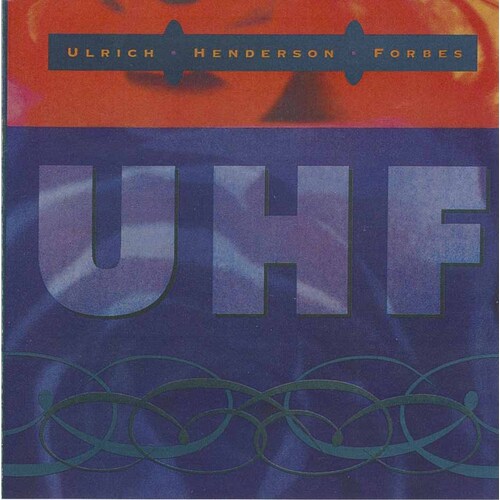
UHF brought together three of British Columbia’s most respected singer-songwriters: Shari Ulrich, Bill Henderson, and Roy Forbes. The name was simple and almost understated — Ulrich, Henderson, Forbes — but the combination carried decades of Canadian music history. Each member arrived with a fully established identity, and together they created one of the most natural acoustic collaborations to emerge from the West Coast folk and roots scene.
By the time UHF formed in 1989, all three artists had already left deep marks on Canadian music. Bill Henderson was known nationally as the voice, guitarist, and principal songwriter behind The Collectors and Chilliwack, moving from late-1960s psychedelic rock into some of the most enduring Canadian pop-rock recordings of the 1970s and early 1980s. Shari Ulrich, originally from California but long rooted in British Columbia, had been a key member of Pied Pumkin, The Hometown Band, and a Juno-winning solo artist whose work bridged folk, pop, roots, and singer-songwriter traditions. Roy Forbes, from Dawson Creek, British Columbia, first became known as Bim, building a reputation as one of Canada’s finest folk and roots writers, with a voice and guitar style that made him a fixture on the national folk circuit.
The trio began almost by accident. Vancouver’s Winter Roots Festival organizers invited Forbes and Ulrich to assemble a one-off collaboration with a third musician. Forbes suggested Henderson, and the chemistry was immediate. What was meant to be a single concert quickly became something more durable. The three musicians discovered that their voices blended naturally, their songs complemented one another, and their different musical histories gave the project a depth none of them could have created alone.
UHF worked because it did not try to smooth out those differences. Henderson brought melodic architecture, harmonic intelligence, and the instincts of a veteran bandleader. Forbes brought roots clarity, rhythmic drive, and the grounded storytelling of a lifelong folk performer. Ulrich brought instrumental colour, emotional precision, and a songwriter’s ear for melody, texture, and vocal placement. Rather than competing for space, the three artists created a shared setting where each could lead, support, answer, and reshape the others’ songs.
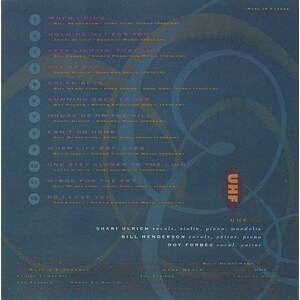
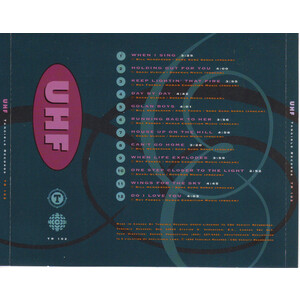
Their self-titled debut, UHF, released on Tangible Records, captured that balance with remarkable economy. Recorded at Mushroom Studios in Vancouver and produced by UHF with Claire Lawrence, the album featured only the essential elements: Henderson and Forbes on guitars, Ulrich on violin, mandolin, and piano, with all three sharing vocals. The songwriting was evenly distributed, with Henderson, Ulrich, and Forbes each bringing original material to the project. Songs such as ‘When I Sing,’ ‘Holding Out For You,’ ‘Keep Lightin’ That Fire,’ ‘Day By Day,’ ‘House Up On The Hill,’ and ‘Do I Love You’ showed how naturally the trio could move between intimate folk, acoustic pop, and West Coast singer-songwriter craft.
The first album also revealed the project’s greatest strength: UHF sounded lived-in from the beginning. These were not young musicians trying to find a style. They were experienced artists setting aside ego and trusting the direct power of strong songs and sympathetic performance. The recordings have a conversational quality, as though the listener has been invited into the room while three friends trade songs and harmonies, each one bringing a different part of British Columbia’s musical history with them.
The follow-up, UHF II, released in 1994, deepened the collaboration. Again produced by Claire Lawrence with Shari Ulrich, Bill Henderson, and Roy Forbes, the album continued the trio’s democratic structure, with each member contributing songs. ‘Watching The River Run,’ ‘Changed Forever,’ ‘Stand,’ and ‘Time Will Take Its Toll’ represented Ulrich’s contributions, while Henderson and Forbes brought equally strong material of their own. Recorded at Mushroom Studios with additional work at Creation Studios, the album retained the acoustic intimacy of the debut while showing a more seasoned ensemble sound.
For Shari Ulrich, UHF was one of several important collaborative chapters in a career that has always moved between solo work and ensemble music. It connected directly to her history with Pied Pumkin and The Hometown Band, but in a more mature and distilled form. In UHF, she was not simply adding violin or harmony to someone else’s songs; she was one-third of a fully balanced creative triangle. Her piano, mandolin, violin, and voice helped define the group’s sound, while her songs gave the albums some of their most reflective and emotionally centred moments.
For Henderson and Forbes, UHF offered a similar kind of renewal. Henderson stepped away from the larger rock-band framework associated with Chilliwack and returned to the acoustic clarity of voice, guitar, and song. Forbes, already a master of that territory, found himself in a trio where harmony and arrangement could expand his material without overwhelming it. Together, the three artists created a project that felt informal on the surface but was built on deep musicianship.
UHF remains one of the great understated collaborations in Canadian roots music. It brought together three writers from different corners of the West Coast story and let them meet on equal ground. No member needed introduction, and none needed to dominate. The result was a warm, intelligent, melodic body of work that carries the sound of artists who had already spent their lives shaping the country’s musical landscape — and who still found something new by listening closely to one another.
-Robert Williston
Gallery
Images
5 images
UHF (Shari Ulrich, Bill Henderson and Roy Forbes) - UHF
UHF Ulrich, Henderson, Forbes – UHF (2)

UHF Ulrich, Henderson, Forbes – UHF (3)
UHF Ulrich, Henderson, Forbes – UHF (5)
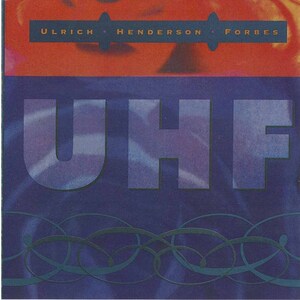
UHF
Media
Videos
0 videos
No videos available for this title.
Credits
Musicians
Bill Henderson: vocals, guitar, piano
Shari Ulrich: vocals, violin, mandolin, piano
Roy Forbes: vocals, guitar
Songwriting
‘When I Sing’ written by Bill Henderson
‘Holding Out For You’ written by Shari Ulrich
‘Keep Lightin’ That Fire’ written by Roy Forbes
‘Day By Day’ written by Shari Ulrich
‘Golan Boys’ written by Bill Henderson
‘Running Back To Her’ written by Roy Forbes
‘House Up On The Hill’ written by Shari Ulrich
‘Can’t Go Home’ written by Bill Henderson
‘When Life Explodes’ written by Shari Ulrich
‘One Step Closer To The Light’ written by Roy Forbes
‘Wings For The Sky’ written by Shari Ulrich
‘Do I Love You’ written by Roy Forbes
Production
Produced by UHF and Claire Lawrence
Engineered by Rolf Hennemann
Assistant engineering by Marc L’Esperance
Digital editing by Gary Heald
Supervising producer: Tod Elvidge
Recorded at Mushroom Studios, Vancouver, British Columbia
Artwork
Sleeve by Steven R. Gilmore
Copyright
℗ Tangible Records
℗ Variety Recordings
Manufacturing
Licensed to Variety Recordings
Pressed by Cinram
Thanks
Special thanks to Robert Ouimet, Tod Elvidge, and Andre Lariviere
Notes
Glass master date: March 1, 1991
No Comments