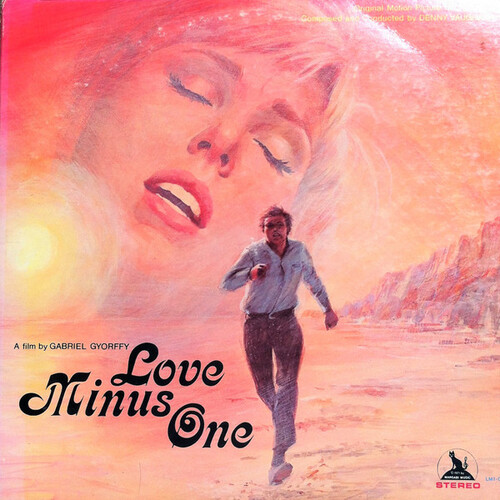
Album / Title
Love Minus One, performed by Denny Vaughn (OST)
By: Denny Vaughan
Origin: Toronto, Ontario, 🇨🇦 → London, England, 🇬🇧 → New York City, New York, 🇺🇸 → Toronto, Ontario → Montréal, Québec, 🇨🇦 → California, 🇺🇸 → Montréal, Québec, 🇨🇦
Insight
Denny Vaughan was one of the most versatile and internationally accomplished figures in mid-century Canadian popular music: a singer, pianist, arranger, orchestra leader, composer, and broadcaster whose career carried him from Toronto dance bands to wartime military entertainment, postwar stardom in Britain, national prominence on CBC radio and television, major orchestra leadership in Montreal, and later high-level music work in American television.
Born in Toronto, Vaughan was active as a musician while still in his teens, appearing on CFRB radio and performing with bandleader Horace Lapp before continuing his studies at the University of Toronto. During the Second World War, he joined the Canadian Army Show and toured extensively in Canada and Europe entertaining Allied troops. He served as vocalist, pianist, and arranger with the Canadian Band of the Allied Expeditionary Force under Captain Robert Farnon, an experience that helped launch him into an international professional career.
After the war, Vaughan remained in Britain, where he worked with leading dance orchestras including those of Geraldo, Carroll Gibbons, George Melachrino, and Cyril Stapleton. Between 1945 and 1949 he sang, arranged, and recorded in the British dance-band world, becoming popular enough to be described as one of England’s leading singing idols and earning the nickname “the English Sinatra.” In 1949 he joined Robert Farnon on the BBC program Journey into Melody, further cementing his standing as a transatlantic musical personality.
A period in New York followed, where Vaughan worked as an arranger for prominent American performers including Eddie Fisher, Ezio Pinza, and Kate Smith, and also held arranging work with Coral Records and Muzak. By the early 1950s he had returned to Canada, where he quickly became a major broadcasting presence. He first starred on CBC radio and then on CBC television, where The Denny Vaughan Show ran from 1954 to 1957, placing him among the most visible male musical personalities on the national network.
The Music World issues you’re working from provide a valuable contemporary snapshot of Vaughan at the height of that television visibility. In the July 15, 1957 issue, he appears on the magazine’s “Canada’s Kings” page alongside Bob Goulet, Tommy Common, and Wally Koster, explicitly identified as a “Singer-pianist-arranger” who “stars in his own show” and is expected back on Canadian television after the summer recess. That placement makes clear that Vaughan was understood at the time not simply as a capable musician, but as one of CBC-TV’s marquee male entertainment figures.
The June 22, 1957 issue adds further evidence of his stature. In a roundup of CBC summer scheduling, Music World notes that Vaughan’s program came off the air for the summer on June 17, when it was replaced by Front Page Challenge—a small but telling confirmation that his show occupied a regular and recognized place in the national television schedule. Another June 1957 photo caption reports that 15-year-old recording sensation Joy Layne had recently appeared on the Denny Vaughan CBC-TV show, while a July Montreal scene item mentions The Add 4’s vocal group from the CBC-TV Denny Vaughan show playing a club engagement. Together, these notices suggest that Vaughan’s program functioned not merely as a solo showcase, but as a working variety platform that introduced guests and supported an orbit of associated performers.
Even outside formal editorial copy, Vaughan’s professional profile is visible in the magazine. In the June 22 issue he appears in a congratulatory advertisement signed “Denny Vaughan Orchestras,” complete with a Toronto business address, reinforcing his identity as an established bandleader and musical entrepreneur as well as a broadcaster.
In 1958, when Montreal’s Queen Elizabeth Hotel opened, Vaughan was engaged to lead the music in the prestigious Bonaventure Room, where he and his orchestra accompanied many internationally known entertainers. This Montreal phase marked another important chapter in his career. He became a central figure in the city’s hotel and broadcasting scene, and later led the Queen Elizabeth Hotel Orchestra on CBC radio. From there, Vaughan continued to build a reputation not only as a front-line performer but as a sophisticated arranger and conductor trusted in high-profile professional settings.
In the 1960s, Vaughan’s career extended further into television and recording. He appeared with his orchestra on CTV’s BA Musical Showcase and TVA’s Le Grand Prix Musicale, and recorded for the Canadian Talent Library, contributing both as performer and arranger. Among the recordings associated with him are Denny Vaughan (ca. 1951, Coral), Girls I Knew (1967, CTL), and Denny Vaughan and His Orchestra (1969, CTL), while his recording of Johnny Cowell’s “Walk Hand in Hand” (1956, Spiral) was reportedly his most successful single. His papers were later deposited at the National Library of Canada.
Late in his career Vaughan moved to California, where he worked in American television as a bandleader and choral director. He served as musical consultant or choral director on major network productions including The Smothers Brothers Show and The Glen Campbell Hour, and also worked with arranger-conductor Nelson Riddle. This final chapter confirms what his earlier career had already demonstrated: Vaughan was not simply a Canadian television personality of the 1950s, but a highly adaptable professional musician whose skills translated across countries, formats, and eras.
Denny Vaughan died in Montreal in 1972. Although some secondary sources differ on his exact birth year, all agree on the breadth of his accomplishments. He remains an important figure in the history of Canadian popular entertainment: a rare all-rounder whose career linked dance bands, wartime performance, radio, television, hotel orchestras, commercial recording, and international music direction at the highest level.
-Robert Williston
Gallery
Images
4 images
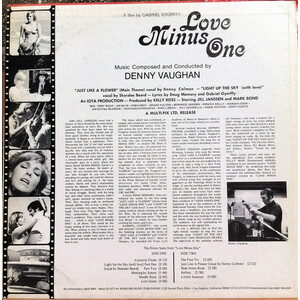
Denny Vaughn - Love Minus One, performed by Denny Vaughn (OST) (3)
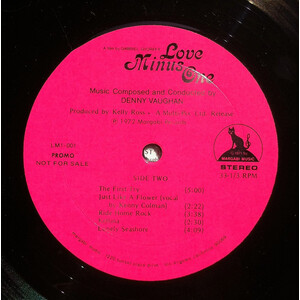
Denny Vaughn - Love Minus One, performed by Denny Vaughn (OST) (1)
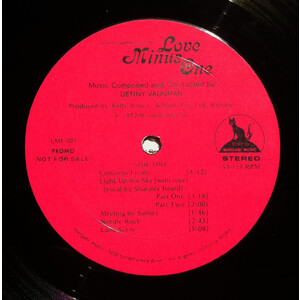
Denny Vaughn - Love Minus One, performed by Denny Vaughn (OST) (2)

Love Minus One, performed by Denny Vaughn (OST)
Media
Videos
0 videos
No videos available for this title.
Credits
In Transit
No Comments