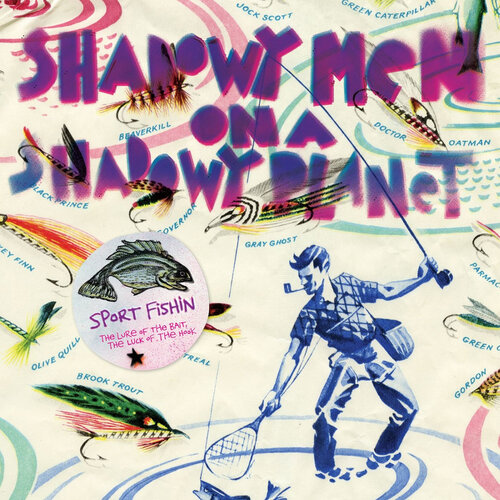
Insight
Shadowy Men on a Shadowy Planet were one of Canada’s most distinctive and influential instrumental rock bands, emerging from Toronto’s post-punk underground in the mid-1980s and redefining the possibilities of instrumental guitar music in a scene otherwise dominated by vocal-driven alternative rock. Equal parts surf-influenced twang, punk energy, lounge-pop irony, and experimental collage, the band built a body of work that was both playful and rigorously constructed, earning them a reputation as one of the most creative instrumental groups in Canadian music history.
The group was formed in Toronto in 1984 by guitarist Brian Connelly, bassist Reid Diamond, and drummer Don Pyle, whose shared history stretched back to earlier punk and new wave projects. Connelly and Diamond had previously played together in Calgary in the late-1970s punk band Buick McKane before relocating to Toronto, where they became involved in Crash Kills Five, an early hardcore-leaning group that released a single EP in 1980. After several years of side projects, Connelly, Diamond, and Pyle reconvened with a new focus on instrumental music, drawing inspiration from classic surf guitar, soundtrack music, exotica, post-punk minimalism, and the DIY aesthetics of Toronto’s emerging indie scene.
Signing to Cargo Records, Shadowy Men quickly established themselves through a steady stream of 7-inch singles and EPs during the second half of the 1980s. Rather than positioning themselves as a retro surf revival act, the band approached instrumental music as a flexible framework for humor, texture, and composition. Their song titles — often absurd, cinematic, or surreal — became a key part of their identity, while musically they blended reverb-drenched guitar lines with muscular, inventive rhythm section work that owed as much to punk and experimental rock as to The Ventures.
Their wider breakthrough came through their close association with the Canadian sketch comedy troupe The Kids in the Hall. Shadowy Men not only wrote and recorded the iconic theme song, “Having an Average Weekend,” but also supplied much of the incidental and transitional music used throughout the show’s early seasons. This exposure introduced the band’s sound to a national and international television audience and firmly linked their music with one of Canada’s most successful comedy exports. The relationship also reinforced the group’s reputation for combining sharp musical craft with a strong sense of humor, though the band consistently resisted being framed as a novelty act.
In 1990 and 1991, the group consolidated their singles and expanded their studio work into full-length releases, culminating in Savvy Show Stoppers and Dim the Lights, Chill the Ham, which showcased their increasingly confident blend of surf-styled guitar, organ textures, and tightly arranged rhythm tracks. The latter was recorded in Toronto and featured production involvement from Coyote Shivers, further refining their sound while maintaining their DIY ethos.
Their most sonically distinctive album, Sport Fishin’: The Lure of the Bait, The Luck of the Hook (1993), was recorded in Chicago with legendary engineer Steve Albini, who was a vocal admirer of the band and offered to work with them at Chicago Recording Company. The resulting album captured a rawer, more spacious sound, emphasizing the physical impact of the trio while preserving their melodic and conceptual quirks. The record is widely regarded as one of the strongest Canadian instrumental rock albums of the era.
Beyond their own releases, Shadowy Men were deeply embedded in the broader alternative music ecosystem of the time. They recorded a BBC John Peel Session — a rare achievement for a Canadian independent band — toured extensively in North America and the UK, and collaborated with artists such as Fred Schneider of the B-52’s, backing him on his 1996 solo album Just Fred. They also contributed music to films and television beyond The Kids in the Hall, including independent Canadian productions, further cementing their reputation as a go-to source for distinctive instrumental scoring.
In 1992, the band won the Juno Award for Instrumental Artist of the Year, defeating high-profile nominees and marking a rare moment of national industry recognition for a fully instrumental indie rock act. Despite this success, internal differences and diverging creative interests led to the band’s breakup in 1996.
After the split, Connelly formed and led Atomic 7, while Diamond and Pyle went on to form Phono-Comb with Dallas Good of The Sadies and Beverly Breckenridge of Fifth Column, continuing their exploration of instrumental and experimental rock. Diamond later also formed Danny & Reid’s Motion Machine. Tragically, Reid Diamond died of cancer in February 2001, cutting short a uniquely inventive career.
Shadowy Men on a Shadowy Planet’s legacy grew substantially in the years following their breakup. Their albums became sought-after cult classics, and the band was regularly cited by musicians, critics, and fans as one of Canada’s most important instrumental groups. In 2012, Connelly and Pyle reunited the band for select performances and a comprehensive reissue campaign, with Dallas Good stepping in on bass. The group’s catalog was remastered from first-generation tapes and reissued in deluxe editions, culminating in the expansive box set Oh, I Guess We Were a Fucking Surf Band After All, which helped solidify their historical standing.
Today, Shadowy Men on a Shadowy Planet are widely recognized as pioneers of Canadian independent instrumental rock — a band that combined technical skill, conceptual wit, and deep scene involvement to create a body of work that remains influential, distinctive, and unmistakably Canadian.
-Robert Williston
Musicians
Brian Connelly: guitar, keyboards, organ
Reid Diamond: bass, lead vocals
Don Pyle: drums, percussion, backing vocals
Songwriting
All songs written by Shadowy Men on a Shadowy Planet
except ‘Mecca’ written by N. Nader and J. Gluck (January Music Corp.)
Production
Recorded around Christmas by Steve Albini at Chicago Recording Company, Chicago, Illinois, USA
Tracks 2 and 10 recorded by Ormond Jobin at Reaction Studios, Toronto, Ontario
Artwork
Original photo ‘Wedding in Forest, Sudbury, Ontario’ by Mark Diederichs
Notes
Thanks to Gene Pinney for tossing it our way.
Thanks to our editor Derek von Essen, our hairdresser and keyboard konsultant Kevin Lynn, and to Beck and John for food, lodging and maps.
For Louie Beeson.
For information or seasonal catalogue of fashion tops, records and other stuff, write to:
Ted Rogues, Station “C”, P.O. Box 645, 1117 Queen St. W., Toronto, Ontario, Canada M6J 3R9
In Canada, include self-addressed stamped envelope. Outside of Canada include International Reply Coupon. Allow 4–60 weeks.
SOCAN © 1993.
Gallery
Images
4 images
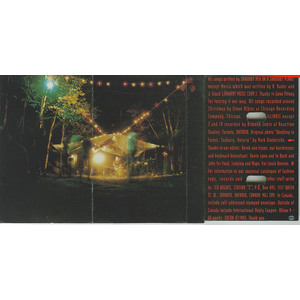
Cassette - Shadowy Men - Sport Fishin INSIDE 01
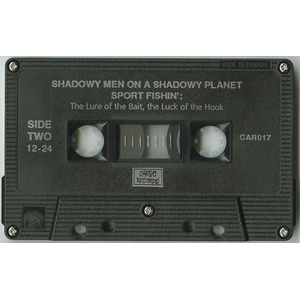
Cassette - Shadowy Men - Sport Fishin CASSETTE 01
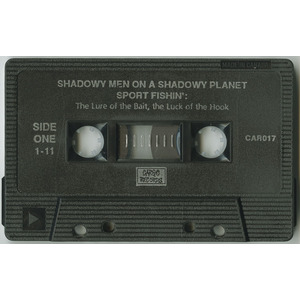
Cassette - Shadowy Men - Sport Fishin CASSETTE 02
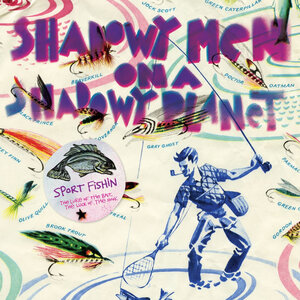
Sport Fishin'
Media
Videos
0 videos
No videos available for this title.
Credits
In Transit
No Comments