Insight
Terry Watada is a Japanese Canadian singer-songwriter, poet, novelist, playwright, essayist, historian, teacher, and activist whose work has moved across music, literature, theatre, community history, and cultural commentary. Born in Ontario in 1951 and based in Toronto, Watada emerged from the Sansei generation of Japanese Canadians who came of age after the wartime uprooting, dispossession, and dispersal of Japanese Canadian communities. Across more than four decades, his songs, poems, plays, novels, essays, and historical works have returned again and again to questions of memory, exile, identity, racism, family, resistance, and cultural survival.
Watada’s music began as part of a wider Asian Canadian artistic awakening in the 1970s. His early recordings were privately produced and circulated outside the commercial mainstream, but they now stand as rare documents of Japanese Canadian independent music. Runaway Horses, released in 1977 on Wind Chime Records, introduced Watada as a folk-based songwriter whose work joined personal lyricism with political and community memory. The album featured Terry Watada on vocals and guitar, Martin Kobayakawa on acoustic guitar, slide guitar, guitar, and harp, Garry Kawasaki on harmony vocals and bass guitar, Frank Nakashima on flute, Larry Sasaki on acoustic simulator, and Alan Hotta on wind chimes. Produced by Larry Sasaki and Terry Watada, it included songs such as ‘Go For Broke’, ‘Weeping Stars’, ‘Sansei Theme (Where Do We Go From Here?)’, ‘Women Of The Earth’, ‘Alberta Blues’, ‘Runaway Horses’, and ‘New Denver’, with ‘Scenes’ written by Martin Kobayakawa. The album’s dedication to Alan Hotta, Reimi Chiba, Beverley Ohashi, and the 1972 Powell Street Review placed it directly inside Japanese Canadian cultural memory.
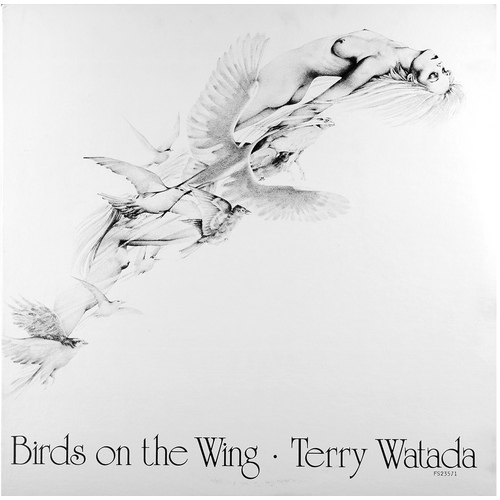
The follow-up, Birds On The Wing, issued in 1978, expanded Watada’s sound and community of collaborators. Produced by Terry Watada and Larry Sasaki for Windchime Records, the album brought in musicians including Dave Kai, John Saisho, Bill Lum, Ed Koyama, Frank Nakashima, Ted Lumb, Ken Azuma, Doug Kawasaki, Ying Chung, Arlene Chan, Steve Isozaki, Garry Kawasaki, and Larry Sasaki. Its songs included ‘Morning Star’, ‘Midnight Highway’, ‘Blue Bar Blues’, ‘China Nights’, ‘Birds On The Wing’, ‘Crying The Blues Away’, ‘Warm Asian Love’, ‘Ballad Of Yellow Boy And The Wandering Chinaman’, and ‘Shogatsu’. The record blended folk, blues, jazz textures, Asian Canadian theatrical references, community dedications, and poetic social observation, with Watada’s writing already moving between autobiography, protest, memory, and myth.
In the early 1980s, Watada’s music moved into a larger ensemble setting through Night’s Disgrace, a double album released by World Records and Windchime Records in 1983. Credited to Night’s Disgrace and Terry Watada, the record documented a broad Japanese Canadian musical collective performing mostly live at the Japanese Canadian Cultural Centre in Toronto. The album included Terry Watada, Roy Miya, Dave Kai, Ed Koyama, Frank Nakashima, Garry Kawasaki, Ted Lamb, Larry Sasaki, John Saisho, Bruce Tadamichi, and others. Songs such as ‘Romance On The Road’, ‘The 505’, ‘If I Sing The Blues’, ‘Jazz On A Rainy Day’, ‘Only Dreams’, ‘Crazy Love’, ‘City Of Lights’, ‘Cheyenne And The Weasel’, ‘Maverick Chinaman’, ‘Closing Time’, ‘Only For You’, ‘Little Geisha’, and ‘Rose Of St. Urbain’ revealed Watada’s widening musical palette: blues, jazz, folk-rock, spoken social commentary, urban storytelling, and Asian Canadian identity work all sharing the same stage.
The same year brought Yellow Fever, a four-song Night’s Disgrace EP tied to the Canasian Artists Group theatre production Yellow Fever by R.A. Shiomi. Produced by Terry Watada for the Canasian Artists Group and Windchime Records, it included ‘Yellow Fever’, ‘If I Sing The Blues’, ‘Crying The Blues Away’, and ‘Kyoto Romance’. With musicians including Ed Koyama, Ian Nishio, Frank Nakashima, Dave Kai, Bruce Tadamichi, Ted Lamb, and a group of background singers, the recording connected Watada’s songwriting directly to Asian Canadian theatre, anti-racist cultural production, and the creative networks that grew around Toronto’s Japanese Canadian and broader Asian Canadian arts communities.
Watada’s later album Living In Paradise continued this fusion of song, memory, and community. Released through Windchime Records, it featured Watada with David Henry Hwang, Garry Kawasaki, Ted Lamb, R.A. Shiomi, Roy Miya, Ed Koyama, John Seetoo, Dave Kai, and the Minto Choir. Songs such as ‘Living In Paradise’, ‘Heaven Can Wait’, ‘Waltz Of The Stars’, ‘Manila Maru’, ‘The Fast Lane’, ‘I Don’t Care’, ‘The Magic’, and ‘Minto Days (I’ll Meet You At The Festival)’ continued his practice of writing from personal and collective experience. ‘Minto Days’ was written to commemorate the 10th annual Powell Street Festival in Vancouver, while the album was dedicated to the loving spirit of Chisato Watada.
By 1994’s The Art of Protest: The New York Sessions, Watada’s songwriting had become even more explicitly political. Released by Windchime Records, the cassette included ‘My Heart’s On Fire’, ‘Radio Zone’, ‘Highway 99’, ‘Barbara Joe’, ‘Freedom Day’, ‘The Promise’, ‘Night’s Disgrace’, ‘Hymn For The Common Man’, ‘Southern Girl (In A Northern Town)’, and ‘And There Will Be Good People’. The credits placed Watada with John Seetoo, Bill Asai, Naomi Lyum, Joanna Seetoo, Lynette Char, Jean Woo, Pam Wu, and Rie Fujita Koko. Several songs carried dedications: ‘The Promise’ was for Vincent Chin, and ‘Hymn For The Common Man’ was for Lawson Inada and his Highway 99. The cassette was dedicated to Bill Kochiyama, underscoring Watada’s connection to Japanese American and Japanese Canadian histories of activism, redress, labour, race, and memory.
These records make Watada one of the few Japanese Canadian singer-songwriters of his generation to leave an extensive independent recorded catalogue. His music does not sit neatly inside one genre. It moves through folk, blues, jazz, protest song, theatre music, pop, and community performance, often shaped by the musicians, activists, writers, and theatre artists around him. Just as important, his records were not simply personal albums; they were community documents, tied to Japanese Canadian cultural centres, Powell Street Festival memory, Asian Canadian theatre, and the political language of redress-era activism.
Watada’s literary career developed alongside and beyond his music. He is a poet, novelist, short story writer, playwright, essayist, columnist, and historian whose published work has become part of the broader field of Asian Canadian literature. His books include Daruma Days: A Collection of Fictionalised Biography, Ten Thousand Views of Rain, Obon: The Festival of the Dead, Kuroshio: The Blood of Foxes, The Game of 100 Ghosts, The Three Pleasures, The Four Sufferings, and Mysterious Dreams of the Dead. He has also written manga, children’s biographies, histories of the Buddhist Church in Canada, and works that explore Japanese Canadian family stories, wartime incarceration, migration, memory, and spiritual inheritance. The Japanese Canadian Artists Directory describes him as a poet, novelist, short story writer, historian, playwright, columnist, essayist, and music composer, noting that he has published poetry collections, novels, short fiction, manga, histories, and children’s biographies.
As a playwright, Watada has had multiple works produced on main stages. Dear Wes/Love Muriel premiered during the Earth Spirit Festival at Harbourfront in 1991, and Vincent, first produced in 1993, became one of his best-known plays. The University of Toronto’s finding aid for the Terry Watada Papers notes that Vincent was later restaged, including for the Madness and Arts World Festival, and identifies Runaway Horses as his best-known album, reissued on CD in 2015. His theatre work, like his music, frequently crosses personal history, community memory, and social crisis.
For 25 years, Watada contributed a monthly column to Nikkei Voice, one of the major Japanese Canadian community publications. He later wrote regularly for the Vancouver Bulletin/Geppo and contributed to Discover Nikkei, where his essays continued to examine Japanese Canadian culture, memory, politics, and community institutions. Toronto Metropolitan University’s Asian Heritage in Canada project notes both his long-standing Nikkei Voice column and his work across fiction, poetry, drama, prose, music, and composition. His essays have also appeared in Maclean’s Magazine, Canadian Literature, Ritsumeikan Hogaku, and other journals and collections.
Watada’s work has received significant recognition. He was awarded the Queen Elizabeth II Diamond Jubilee Medal and the National Association of Japanese Canadians National Merit Award in 2013, followed by the Dr. Gordon Hirabayashi Human Rights Award in 2014. Lighthouse Festival also notes that his personal, academic, literary, and musical papers have been installed in the East Asian Library Collection and the Thomas Fisher Rare Books Library at the University of Toronto, and that he delivered the keynote address at the opening of the Being Japanese Canadian exhibition at the Royal Ontario Museum.
Across music, fiction, poetry, theatre, essay, and history, Terry Watada has built one of the most sustained bodies of Japanese Canadian cultural work in Canada. His early albums preserve a rare independent musical record of Sansei artistic life in Toronto, Vancouver, and the wider Asian Canadian cultural movement. His books and columns extend that same project into literature and public memory. Whether writing about family, migration, racism, love, redress, community, or ghosts of the past, Watada’s work insists that Japanese Canadian experience belongs not at the margins, but at the centre of Canadian cultural history.
-Robert Williston
Gallery
Images
3 images
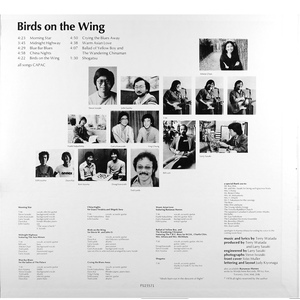
Terry Watada / Birds on the Wing BACK
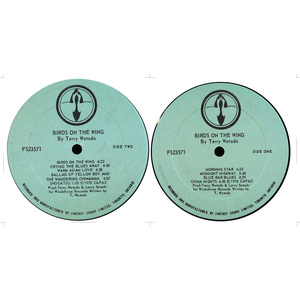
Terry Watada / Birds on the Wing LABELS
Birds on the Wing
Media
Videos
0 videos
No videos available for this title.
Credits
Musicians
Terry Watada: vocals, electric guitar, acoustic guitar, taiko
Steve Isozaki: background vocals
Garry Kawasaki: background vocals
Larry Sasaki: background vocals, percussion
Dave Kai: Fender Rhodes piano, Hammond organ, piano bass, ARP Odyssey synthesizer
John Saisho: sax
Bill Lum: bass, percussion
Arlene Chan: background vocals
Ted Lumb: drums
Ken Azuma: fiddle, acoustic piano
Ed Koyama: electric guitar
Frank Nakashima: flute, electric guitar, bass
Ying Chung: harp
Doug Kawasaki: acoustic guitar
Songwriting
‘Morning Star’ written by Terry Watada
‘Midnight Highway’ written by Terry Watada
‘Blue Bar Blues’ written by Terry Watada
‘China Nights’ written by Terry Watada
‘Birds On The Wing’ written by Terry Watada
‘Crying The Blues Away’ written by Terry Watada
‘Warm Asian Love’ written by Terry Watada
‘Ballad Of Yellow Boy And The Wandering Chinaman’ written by Terry Watada
‘Shogatsu’ written by Terry Watada
Production
Produced by Terry Watada and Larry Sasaki for Windchime Records
Engineered by Larry Sasaki
Artwork
Photographs by Steve Isozaki
Front cover by Robin Muller
Lettering and layout by Judy Kiyonaga
Publishing
All songs CAPAC
© 1978 all rights reserved by the author
Notes
Fantasy Sound Limited FS23571
Recorded and manufactured by Fantasy Sound Limited, Toronto, Ontario
‘Midnight Highway’ featuring The Asia Minors
‘Blue Bar Blues’ for the Ladies of The Palace
‘China Nights’ for Grace Terakita and Shigeki Sora
‘Birds On The Wing’ for Stevie W. and John O.
‘Warm Asian Love’ featuring Runaway Horses
‘Ballad Of Yellow Boy And The Wandering Chinaman’ featuring The T.B.C. Boys for M.S.K., Charlie Chin, Mrs. Ishihara and Mrs. Machibata
‘Shogatsu’ thanks to Frank N. for the first chord
Special effects selected and arranged by Larry Sasaki on ‘Birds On The Wing’
“Ideals burn out in the descent of flight.”
Audio and Artwork Restoration
Audio Transfer/Restoration by Scott Edward
spinningmywheelsinternational@gmail.com
226-235-6005
No Comments