Insight
Groovy Aardvark formed in Longueuil, Quebec in 1986, emerging from the south-shore Montreal underground at a moment when hardcore punk, metal, and progressive rock were colliding in unpredictable ways. Built around the songwriting and vocals of Vincent Peake, the band’s earliest incarnation included Danny Peake (drums), Marc-André Thibert (guitar), and Stéphane Vigeant (guitar). From the outset, Groovy Aardvark distinguished themselves by refusing stylistic boundaries—shifting tempos abruptly, stretching song structures, and pairing confrontational energy with dark humour and social commentary.
The group documented its formative years through a series of self-released cassette demos recorded between 1987 and 1991, including One Fine Day (1987) and The Late Race to Zero (1991). These recordings capture a raw, exploratory phase marked by long-form compositions, aggressive dynamics, and a strong progressive undercurrent that set them apart from conventional punk or metal acts circulating in Quebec at the time. The demo period also coincided with heavy live activity, cementing the band’s reputation for intense, unpredictable performances.
Groovy Aardvark’s first full-length album, Eater’s Digest (1994), marked a turning point. Recorded and produced with a more focused approach, the album presented a sharpened alternative-rock sound while retaining the band’s off-kilter structures and abrasive edge. Songs like “Ants Have No Chance” revealed a growing interest in social systems, conformity, and control—themes that would recur throughout the band’s catalogue. The album established Groovy Aardvark as a rising force within Quebec’s alternative scene.
The follow-up, Vacuum (1996), proved to be the band’s breakthrough. Released on MPV Records, the album balanced heavy riffs with sharper hooks and a clearer production aesthetic, helping propel the group toward a wider audience. While still uncompromising, Vacuum streamlined the band’s songwriting without sacrificing complexity, and it remains one of their most influential releases. By this period, the lineup had evolved, with Martin Dupuis joining on guitar and the band settling into a more stable configuration.
Groovy Aardvark continued to expand their sonic palette with Orycterope (1998), an album that leaned further into texture, rhythm, and bilingual expression. The record showcased a confident, mature band comfortable moving between abrasive rock, groove-heavy passages, and more experimental arrangements. That same era is documented on the live album Exit Stage Dive (Live) (1999), recorded during extensive touring and capturing the band’s formidable onstage power, extended arrangements, and improvisational edge.
In 2000, Groovy Aardvark released Fast Times at Longueuil High, a re-recording and reimagining of material from their earliest demo years. Rather than a nostalgia project, the album reframed their formative songs through the lens of a seasoned band, highlighting how their musical instincts had evolved while preserving the original spirit and intensity.
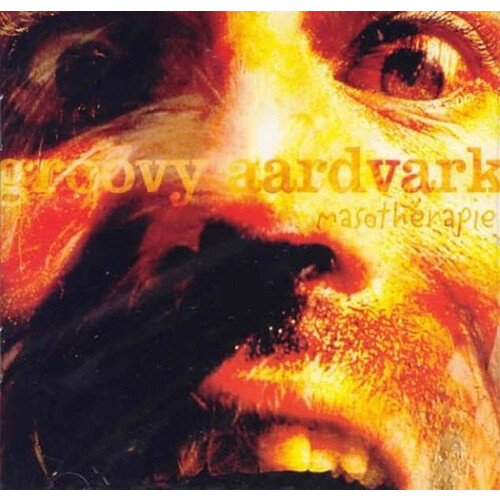
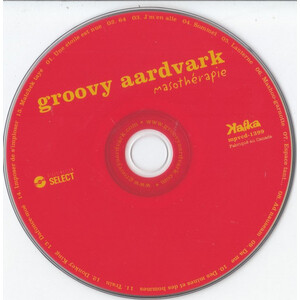
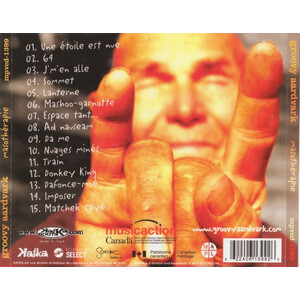
The studio album Masothérapie (2002) marked the final chapter of the band’s original run. Incorporating additional musicians and broader instrumentation—including brass, strings, and guest vocals—the album reflected a group unafraid to continue experimenting late into their career. While still rooted in alternative rock, Masothérapie embraced variety and collaboration, closing Groovy Aardvark’s discography on an exploratory note.
Across their career, Groovy Aardvark maintained a fiercely independent identity, blending punk ethos, progressive ambition, and sharp-edged commentary into a body of work that remains singular within Canadian rock history. Their influence persists through both their recordings and their role in shaping Quebec’s alternative rock landscape during the 1990s and early 2000s.
-Robert Williston
Musicians
Vincent Peake: vocals, bass
Marc Dupuis: guitar
Pierre Koch: drums
François Legendre: guitar
Additional Musicians
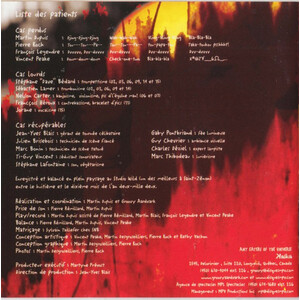
Nelson Cartier: banjo, violin (tracks ‘Mashoo. Garnotte’, ‘Espace Tant…’)
François Héroux: contrabass (‘Train’)
Sébastien Lamer: trombone (tracks ‘64’, ‘J’m’en Alle’, ‘Mashoo. Garnotte’, ‘Da Me’, ‘Imposer’)
Stéphane “Dave” Bédard: trumpet (tracks ‘64’, ‘J’m’en Alle’, ‘Mashoo. Garnotte’, ‘Da Me’, ‘Imposer’, ‘Matchek Tayé’)
Jorane: vocals (‘Matchek Tayé’)
Production
Performed by François Legendre, Marc Dupuis, Pierre Koch, and Vincent Peake
Distributed by Distribution Select
Artwork
Graphic design by Martin Desgroseilliers
Gallery
Images
5 images
Groovy Aardvark - Masotherapie (2)
Groovy Aardvark - Masotherapie (3)

Groovy Aardvark - Masotherapie (4)
Groovy Aardvark - Masotherapie (5)
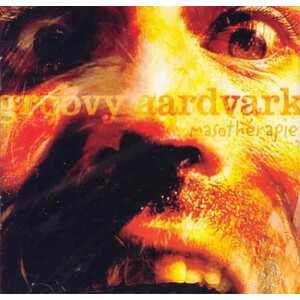
Masotherapie
Media
Videos
0 videos
No videos available for this title.
Credits
In Transit
No Comments