Insight
Cat Clyde is a Canadian singer-songwriter whose music draws from the deep wells of blues, country soul, folk, and roots rock while remaining unmistakably her own. Since emerging from southwestern Ontario in the mid-2010s, she has developed into one of the most distinctive voices of her generation: a writer and performer whose dusky, elastic singing style and instinctive feel for older forms initially invited comparisons to the great roots vocalists of the past, but whose catalogue has steadily revealed a far more personal and contemporary artistic vision. Across a run of increasingly confident releases—Ivory Castanets (2017), Hunters Trance (2019), Good Bones (2020), Blue Blue Blue (2021, with Jeremie Albino), Down Rounder (2023), and Mud Blood Bone (2026)—Clyde has moved from vintage-minded atmosphere toward a richer, more expansive body of work grounded in identity, nature, spiritual searching, and emotional truth.
Born in Ontario and raised in several parts of the province before her family settled in Perth County near Stratford, Clyde’s formative years were shaped as much by landscape as by music. Rural life left a deep imprint on her imagination, and the sense of solitude, observation, and closeness to the natural world that marked her childhood would later become one of the defining currents in her songwriting. She began playing piano as a child but found her true instrument as a teenager, teaching herself guitar and progressing quickly enough that she was soon teaching at her parents’ music shop. By high school she was already playing in her first band, the Big Wheels, and after graduation she continued refining her voice while studying music business in Stratford and busking during the warmer months. Those years were formative not only because they sharpened her musicianship, but because they exposed her to a much wider range of musical and creative communities. In later interviews, Clyde recalled that it was during college that she joined the surf-punk band Shitbats, a side project that introduced a louder, more chaotic, and more confrontational side of her musical personality. Through that band she also met drummer Strummer Jasson, who would become both a key creative collaborator and her longtime partner.
That early punk chapter is more important than it might first appear. Cat Clyde’s public image was initially built around roots, blues, and country-inflected songwriting, but Shitbats reveals that from early on she was never simply a revivalist or a soft-focus folk traditionalist. Even while developing her solo voice, she was also fronting a ragged Ontario punk outfit whose sound leaned toward surf-punk, garage rock, and stripped-down rock ’n’ roll. Several sources describe Shitbats as an Ontario side project that had been active since at least 2014, with a lineup of Cat Clyde on vocals, Dan Serre on guitar, Mitch Decaire on bass, and Strummer Jasson on drums. Their debut album, Guano, finally appeared in October 2020, but the group had clearly been part of Clyde’s parallel musical life for years before that release.
That duality helps explain much about the shape of her solo career. Clyde’s earliest inspirations came less from contemporary singer-songwriters than from older, more elemental artists—Lead Belly in particular made a lasting impact when she discovered his music as a teenager, while the emotional pull of Patsy Cline, Karen Dalton, Bobbie Gentry, and Etta James helped shape her sense of phrasing, atmosphere, and vocal presence. But there was always another current running beneath that foundation: an appetite for rawness, immediacy, and instinct. The punk energy that surfaced in Shitbats did not exist apart from her solo work; it existed underneath it, waiting for the right songs to pull it into the open. In that sense, the apparent contrast between Cat Clyde the roots singer and Cat Clyde the punk frontwoman is less a contradiction than a clue to the full range of her instincts.
That grounding in older music was immediately apparent when Clyde began issuing recordings under her own name. Her 2017 debut album, Ivory Castanets, introduced her as a young artist with an old-soul sensibility, steeped in blues, folk, and country textures but never content to simply imitate them. Recorded in a loose, organic setting, the album carried a rough-hewn intimacy that suited her style perfectly: smoky vocals, understated arrangements, and a natural swing that made the material feel lived-in rather than carefully curated. It established her as a compelling new voice in Canadian roots music and produced one of her earliest signature songs in “Mama Said,” a track that helped broaden her audience well beyond local and regional circles.
Her second album, Hunters Trance, released in 2019, built significantly on that foundation. If Ivory Castanets introduced the atmosphere of Cat Clyde’s world, Hunters Trance showed how much range she could bring to it. The album moved more confidently between gritty, riff-driven performances and slower, more meditative country-folk material, revealing a songwriter who was beginning to think in broader emotional and dynamic terms. It also marked a step forward in the maturity of her writing. Rather than relying on mood alone, Clyde increasingly used her music to explore tension, longing, restlessness, and interior change. By this point she had also begun touring extensively across Canada, the United States, and Europe, earning a reputation as a magnetic live performer whose voice often hit with even greater force onstage than on record.
In 2020 she released Good Bones, an acoustic reinterpretation of songs from her first two albums. More than a stopgap between major projects, it served as a revealing artistic statement. Stripped of much of the atmospheric dressing that had characterized her earlier work, these versions exposed the structural strength of the songs themselves and confirmed that Clyde’s artistry was not dependent on mood or production. Her writing held together beautifully in sparse settings, and her voice—warm, weathered, and emotionally direct—proved more than capable of carrying the weight on its own. The album arrived the same year as Guano, the debut album by Shitbats, making 2020 a particularly revealing moment in her catalogue: one release distilled her songwriting to its barest acoustic essence, while the other captured her in a snarling, irreverent garage-punk setting. Seen together, the two records form an unusually vivid portrait of her range as an artist.
A different side of her musical personality emerged the following year with Blue Blue Blue, a 2021 collaborative album with fellow Canadian roots artist Jeremie Albino. The pairing felt natural from the start. Both artists shared a deep affection for pre-rock and early roots traditions, but neither approached that material as museum preservation. Instead, the album sounded like two musicians meeting in a shared musical language and allowing it to breathe in real time. The collaboration highlighted Clyde’s strength not only as a songwriter but also as an interpreter and duet partner, showing how comfortably she could inhabit traditional textures while maintaining her own character within them.
The most significant turning point in her catalogue came with Down Rounder in 2023. Work on the album began in 2020 at a home studio in Quebec, where Clyde had planned to self-produce the record with Strummer Jasson in the cabin they were then living in. Those plans were abruptly derailed when a serious mould problem forced them out and effectively collapsed the sessions. Rather than abandoning the material, Clyde regrouped and brought the songs to producer Tony Berg. The collaboration proved transformative. Together they revisited the material, stripped it back, and rebuilt it with a new focus on detail, performance, and arrangement. When an opening unexpectedly appeared, Clyde traveled to Los Angeles and recorded the album at the legendary Sound City studios in just six days with Berg and a handpicked group of musicians. The sessions moved quickly, but that urgency became part of the record’s strength. Clyde wanted the songs to feel live, immediate, and emotionally present, and Down Rounder captured exactly that.
The album marked a notable expansion in both sound and substance. While still rooted in the blues-country-folk vocabulary that had defined her earlier work, Down Rounder carried a more deliberate emotional and philosophical weight. Clyde spoke of the natural environment as a central inspiration, and the songs reflect that sense of grounding—less as rustic backdrop than as a living source of clarity, discomfort, and spiritual perspective. Tracks such as “Mystic Light” and “I Feel It” explored uncertainty, overstimulation, and the search for meaning with a vulnerability that felt newly exposed, while “Papa Took My Totems” pushed outward into sharper reflections on colonial destruction, environmental loss, and the desecration of what is sacred. It was the first record in her catalogue that fully suggested Cat Clyde was no longer simply refining a style; she was beginning to use that style to say larger, more urgent things.
By the middle of the decade, those deeper threads had become increasingly visible in both her writing and the way she spoke about her work. In interviews surrounding new material, Clyde began discussing her Métis identity more directly, including the complexities of feeling distanced from parts of her own ancestry and the gradual process of reconnecting through land, spirituality, and lived experience. That evolving self-understanding became an important undercurrent in the songs that followed and helped shape the emotional terrain of her next album. Recent coverage around Mud Blood Bone has also made clearer what attentive listeners could already hear: the punk instinct that once surfaced most overtly in Shitbats has never disappeared. Clyde now openly describes punk as one of the energies that naturally enters her songwriting alongside country, blues, and jazz, making the supposedly surprising edges of her recent work feel, in hindsight, entirely consistent with where she began.
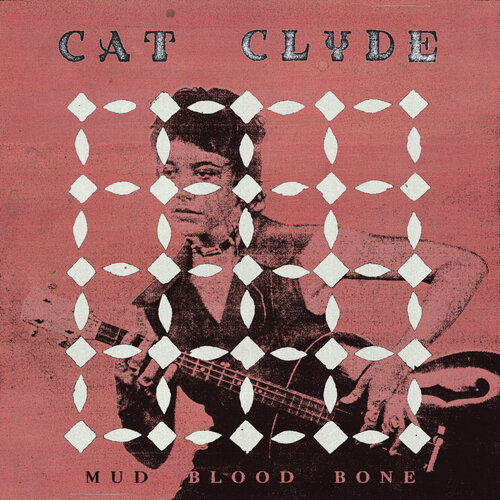
Released in March 2026, Mud Blood Bone marked another major step forward. Issued as her first album for Concord Records and produced by Drew Vandenberg, it found Clyde broadening her palette once again without losing the rawness and rootedness that had always defined her best work. If her earlier albums were often framed through the language of blues revival, folk intimacy, or country soul, Mud Blood Bone feels less interested in genre boundaries altogether. The record pulls from rockabilly drive, roots rock grit, folk-rock vulnerability, country tenderness, and the same punk-like impatience that had animated her parallel work for years. Across songs such as “Where Is My Love,” “Man’s World,” “Wild One,” and “I Am Now,” she writes with a sharper sense of self-possession, confronting questions of love, autonomy, overstimulation, gendered power, identity, and survival with greater directness than ever before. It is a record that carries the emotional openness of her earlier work, but also a harder edge—less dreamlike, more embodied.
What makes Cat Clyde’s evolution so compelling is the coherence of it. Many artists begin with a strong aesthetic and spend years trying to break free from it. Clyde has done something subtler and more impressive. She began with a sound rooted in older musical forms not because they were fashionable, but because they genuinely reflected the emotional and sonic language she understood best. At the same time, she was also singing in a rough Ontario punk side band, writing and performing material that ran on instinct, abrasion, and release. Those two impulses—tradition and rawness, atmosphere and attack—have always existed together in her work. Over time, she has simply allowed them to meet more openly. The blues, country, and folk traditions remain in the grain of her music, but they no longer define its limits. Instead, they serve as a foundation for songs that feel increasingly personal, spiritually restless, and alive to the tensions of the present.
-Robert Williston
Produced with Drew Vandenberg (Toro Y Moi, Faye Webster, S.G. Goodman) and including a co-write with Courtney Marie Andrews, Clyde’s fourth full-length and first release with Concord arrives in a sonic overlap: the rockabilly grit of contemporaries like Sierra Ferrell, The Deslondes, or Nick Shoulders, meets the vulnerable, folk rock volatility of Big Thief or Angel Olsen. It’s a trudge through the swamp and into vast, cleansing waters that finds Clyde at a critical point of personal evolution—equal parts despair, invocation, discovery, and celebration.
Ahead of and throughout her writing sessions for Mud Blood Bone, Clyde looked to her indigenous Métis roots and invoked a deep reverence for nature in efforts to redefine her relationship with love in her life. Learning from the natural world, she took solace in its cyclicality.
The new songs exude nomadic independence: penned in her 1973 Boler trailer on a farm in Ontario, on a narrow boat in England, or in transit from one festival to another, letting lyrics stream freely from a jetlagged dream state. The result is uninhibited, raw, pure; it’s the sound of personal truth discovered in real time.
Gallery
Images
1 image
Mud Blood Bone
Media
Videos
0 videos
No videos available for this title.
Credits
In Transit
No Comments