Insight
The Spoons emerged from Burlington, Ontario, at the dawn of the 1980s—an era of youthful experimentation and rapidly changing pop ideals. Founded by guitarist-vocalist Gordon Deppe and bassist-vocalist Sandy Horne, the band developed around a shared fascination with the new sounds arriving from Britain: sleek synthesizers, angular guitars and the idea that pop music could be both intelligent and emotionally direct. Joined by drummer Derrick Ross and the remarkably young keyboardist Rob Preuss, the group began crafting a sound that blended the mechanical pulse of new wave with the warmth of melodic songwriting—a combination that would soon make the Spoons one of Canada’s defining pop voices of the decade.
The band’s earliest history also included keyboardist Brett Wickens, who departed to form the influential electronic duo Ceramic Hello. By the time the classic lineup of Deppe, Horne, Preuss and Ross had solidified, the Spoons were ready to move beyond Burlington’s local music scene and into the rapidly evolving Canadian independent underground.
Their first album, Stick Figure Neighbourhood, was recorded in 1981 at Grant Avenue Studios in Hamilton with a then-emerging engineer named Daniel Lanois. Its off-kilter art-pop sensibility, inventive arrangements and independent spirit earned enthusiastic press and strong college-radio support, carrying the record to the top of the Canadian campus-radio charts. Songs such as “Conventional Beliefs,” “Red Light” and “Only for Athletes” revealed a group still exploring its identity but already capable of transforming unusual musical ideas into concise, memorable pop.
The breakthrough came the following year with “Nova Heart.” Produced by John Punter, whose credits included Roxy Music and Bryan Ferry, the single transformed the Spoons from a promising independent band into national figures. Propelled by Deppe’s yearning vocals, Preuss’s shimmering synthesizers, Horne’s fluid basslines and Ross’s precise drumming, “Nova Heart” became an enduring Canadian new wave anthem and the emotional centre of Arias & Symphonies. Recorded at George Martin’s AIR Studios in London, the album joined futuristic production with romantic songwriting on tracks such as “Smiling in Winter,” “Arias & Symphonies” and “No Electrons.” Its fusion of electronic atmosphere and human vulnerability established the Spoons as one of the most distinctive Canadian groups of their generation. The album was later named one of the 20 most influential Canadian albums of the 1980s by Chart magazine, while “Nova Heart” was included in Bob Mersereau’s The Top 100 Canadian Singles.
As the records grew in popularity, so did the stages. The Spoons opened for international acts including the Police, Culture Club and Simple Minds, reaching audiences far beyond the clubs and university campuses that had first supported them. Their sharp visual presentation—stylish, colourful and immediately recognizable—also made them ideally suited to the emerging music-video era.
When MuchMusic launched in 1984, the Spoons were among the first artists introduced to the new channel’s audience, alongside Duran Duran and Howard Jones. Their videos quickly became fixtures of its programming, helping define how Canadian pop music looked as well as how it sounded. The band’s combination of polished musicianship, youthful energy and sophisticated visual imagery made them emblematic of a generation discovering music through television.
For Talkback, the Spoons entered the orbit of Nile Rodgers, whose work with Chic and David Bowie had already altered the language of modern pop. Rodgers brought rhythmic precision and spacious production to songs including “Old Emotions,” “Talkback” and “The Rhythm.” His association with the band also extended to the subsequent singles “Tell No Lies” and “Romantic Traffic,” two of the Spoons’ most enduring recordings.
“Tell No Lies” paired exuberant pop with an elaborate adventure-themed video, while “Romantic Traffic” offered something more nocturnal and sophisticated. Its celebrated video, filmed throughout Toronto’s subway system, remains one of the defining visual documents of Canadian 1980s pop. The two songs were also featured in Ron Mann’s motion picture Listen to the City, in which Sandy Horne appeared in a supporting role. Gordon Deppe composed the film’s instrumental score, released separately under his own name.
By the middle of the decade, Rob Preuss and Derrick Ross had departed, and the band entered a new phase with keyboardist Scott MacDonald and drummer Steve Kendry. After leaving Ready Records, the Spoons signed with Anthem Records, home of Rush, and came under the management of Ray Danniels.
The resulting album, Bridges Over Borders, favoured a more forceful pop-rock sound while retaining the melodic directness and emotional tension that had always distinguished the band. Songs such as “Bridges Over Borders,” “Be Alone Tonight” and “Rodeo” kept the Spoons on Canadian radio and introduced a broader, more muscular dimension to their music.
Their next album, Vertigo Tango, reunited the group with producer John Punter. Recorded and mixed at Rockfield Studios in Wales, the album blended the harder edge of their mid-decade work with the atmospheric romanticism of their earlier recordings. “When Time Turns Around,” “Waterline,” “Sooner or Later” and the title track showed a band continuing to evolve rather than merely repeating an established formula.
Although the changing musical climate of the late 1980s made it increasingly difficult for artists identified with new wave, Vertigo Tango stands as one of the Spoons’ most mature and emotionally nuanced recordings. By the beginning of the 1990s, the group had stepped away from regular recording, leaving behind a catalogue that had already become part of Canada’s musical memory.
When interest in 1980s music began to revive during the following decade, the Spoons’ work returned with it. MCA/Universal issued Collectible Spoons in 1994, and the accompanying reunion tour became one of the band’s most successful. Longtime listeners welcomed the songs back, while younger audiences discovered “Nova Heart,” “Arias & Symphonies” and “Romantic Traffic” through all-1980s radio programming and renewed television exposure on MuchMoreMusic.
Keyboardist Steve Sweeney joined the group during this period as the growing retro movement brought the Spoons before a widening multigenerational audience. What had once sounded futuristic now revealed itself as unusually durable: carefully constructed pop whose emotional centre had survived the passing of fashion.
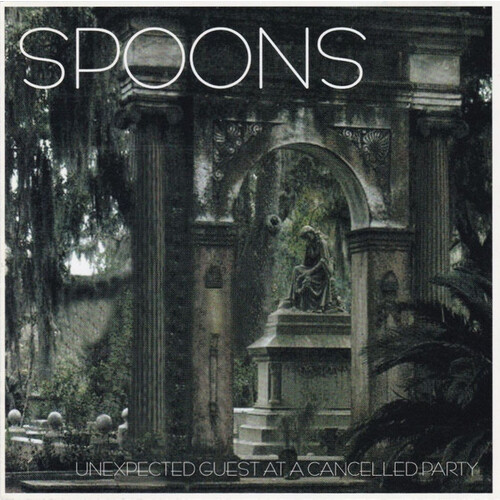
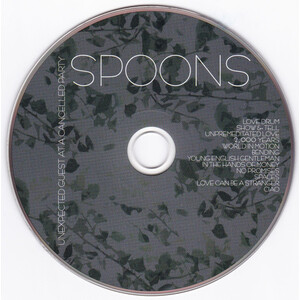
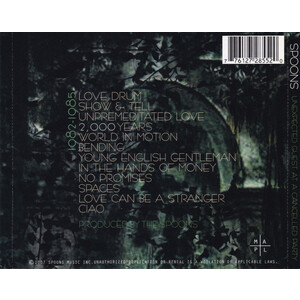
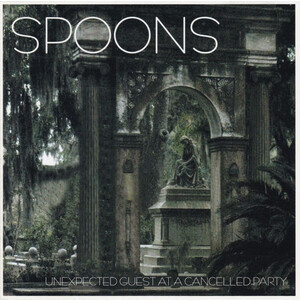
The Spoons continued performing through the 2000s, with Gordon Deppe and Sandy Horne remaining the creative and personal continuity at the centre of the group. In 2007 they opened their archives for Unexpected Guest at a Cancelled Party, a collection of previously unreleased recordings made between 1982 and 1985.
The album offered more than a conventional set of outtakes; it presented a hidden parallel history of the band during its most celebrated period. Early versions of “Unpremeditated Love” and “In the Hands of Money” revealed ideas that would later surface elsewhere, while “2,000 Years,” “Bending,” “Young English Gentleman,” “Spaces” and “Love Can Be a Stranger” captured the Spoons working freely between formal album projects.
In his liner notes, Deppe compared recovering the neglected recordings to uncovering lost memories in an ancient, overgrown garden. Songs that had nearly disappeared were carefully restored, bringing back not only the music but memories of a period when, as he recalled, the band was at its creative best and songs seemed to arrive through the sheer pleasure of making music.
That archival rediscovery was followed by a genuine creative renewal. Working with producer, keyboardist and multi-instrumentalist Jeff Carter, Deppe and Horne recorded Static in Transmission, released in 2011 as the first album of newly recorded Spoons material in more than two decades.
Rather than attempting to reproduce the sound of 1982, the album carried the band’s essential qualities into a contemporary electronic setting. “Breaking In,” “Imperfekt,” “Numb,” “Escape with You” and “You Light Up” combined programmed textures and modern production with the familiar interaction of Deppe’s voice and Horne’s bass and harmonies. The result sounded unmistakably like the Spoons without becoming an exercise in nostalgia. John Sakamoto of the Toronto Star included the album in his influential Anti-Hit List during the week of its release.
Keyboardist Casey MQ and drummer Chris McNeill subsequently joined Deppe and Horne, bringing a renewed energy to the band’s live performances and the touring that followed Static in Transmission.
In 2012, Sparks Music and Ready Records marked the thirtieth anniversary of “Nova Heart” with the Nova Heart 30th Anniversary E.P. Alongside the original album recording, the release included two remixes, among them Jeff Carter’s electronic “Singularity Mix,” as well as a rare 1981 demo and a live performance recorded at Barrymore’s in Ottawa in 1982 and mixed by John Punter.
A special thirtieth-anniversary edition of Arias & Symphonies followed, complete with extensive liner notes, archival photographs and live recordings. Its release was celebrated with a sold-out Toronto performance that reunited Deppe, Horne, Preuss and Ross after more than a quarter-century.
In 2013, the Spoons received the Music Express Back in the Spotlight Award. Remastered and expanded editions of Stick Figure Neighbourhood and Talkback further restored the band’s early catalogue to public attention, supplementing the original albums with demos, historical material, live performances and previously unreleased recordings such as “Candy Apple.”
Gordon Deppe also documented the group’s history in his book SpoonFed: My Life with the Spoons, providing an eyewitness account of the personalities, recordings, touring experiences and changing musical culture surrounding the band’s rise.
The Spoons’ renewed momentum culminated in New Day New World in 2019. Produced and mixed by Jeff Carter, the album reunited the band’s melodic instincts with the spacious electronic textures that had first distinguished them. Deppe and Horne were joined by Chris McNeill and Casey MQ, with songs such as “The First & Last Time,” “All the Wrong Things (In the Right Places),” “Beautiful Trap,” “Landing Lights,” “Snow Globes” and the title track demonstrating that the group remained creatively active rather than merely serving as custodians of its past.
Several accompanying videos, directed by Peter Sacco, carried interconnected visual ideas across the project and received recognition at international film festivals. The album’s combination of familiar Spoons characteristics and contemporary production confirmed that the band’s creative revival had developed into a sustained new chapter.
The group looked back across its history with Repeatable: 1980–2020, a two-disc retrospective spanning four decades of singles, album tracks and later recordings. Issued on CD and double-vinyl LP, it was the first Spoons collection to encompass their recordings for Ready Records and Anthem alongside their twenty-first-century work.
In 2021, Echoes approached the catalogue from a different direction, inviting artists from Canada and around the world to reinterpret favourite Spoons songs in their own styles. Proceeds from the release supported the Unison Fund, assisting Canadian musicians and live-music professionals affected financially by the COVID-19 pandemic. Together, Repeatable and Echoes demonstrated both the breadth of the Spoons’ own work and the influence it had exerted on musicians who followed.
Now, more than four decades after their earliest recordings, the Spoons are preparing another chapter. Their forthcoming album, Nightlife, has been announced and is currently available for preorder as a vinyl LP. Its arrival extends a recording history that has moved from independent art-pop and internationally polished new wave through archival rediscovery and twenty-first-century renewal.
-Robert Williston.
Gallery
Images
6 images
Spoons – Unexpected Guest At A Cancelled Party (1)
Spoons – Unexpected Guest At A Cancelled Party (2)
Spoons – Unexpected Guest At A Cancelled Party (3)
Spoons – Unexpected Guest At A Cancelled Party (4)
Spoons – Unexpected Guest At A Cancelled Party (5)
Unexpected Guest At A Cancelled Party
Media
Videos
0 videos
No videos available for this title.
Credits
Musicians
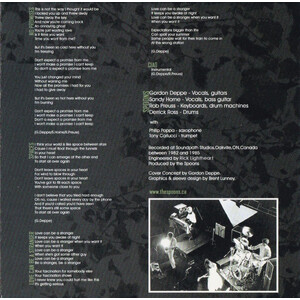
Gordon Deppe: vocals, guitars
Sandy Horne: vocals, bass guitar
Rob Preuss: keyboards, drum machines
Derrick Ross: drums
Philip Poppa: saxophone
Tony Carlucci: trumpet
Songwriting
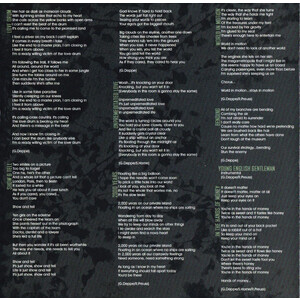
“Love Drum,” “Show & Tell,” “Bending,” “Spaces” and “Love Can Be a Stranger” written by Gordon Deppe
“Unpremeditated Love” written by Gordon Deppe and Sandy Horne
“2,000 Years,” “World in Motion,” “Young English Gentleman” and “Ciao” written by Gordon Deppe and Rob Preuss
“In the Hands of Money” and “No Promises” written by Gordon Deppe, Rob Preuss and Sandy Horne
Production
Produced by the Spoons
Recorded at Soundpath Studios, Oakville, Ontario, between 1982 and 1985
Engineered by Rick Lightheart
Artwork
Cover concept by Gordon Deppe
Graphics and sleeve design by Brent Lunney
Manufacturing and distribution
Manufactured by SLI Canada
Notes
A collection of previously unreleased recordings made between 1982 and 1985.
Liner notes
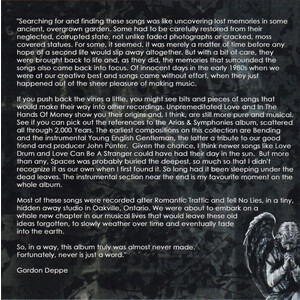
“Searching for and finding these songs was like uncovering lost memories in some ancient, overgrown garden. Some had to be carefully restored from their neglected, corrupted state, not unlike faded photographs or cracked, moss covered statues. For some, it seemed, it was merely a matter of time before any hope of a second life would slip away altogether. But with a bit of care, they were brought back to life and, as they did, the memories that surrounded the songs also came back into focus. Of innocent days in the early 1980s when we were at our creative best and songs came without effort, when they just happened out of the sheer pleasure of making music.
If you push back the vines a little, you might see bits and pieces of songs that would make their way into other recordings. Unpremeditated Love and In The Hands Of Money show you their origins and, I think, are still more pure and musical. See if you can pick out the references to the Arias & Symphonies album, scattered all through 2,000 Years. The earliest compositions on this collection are Bending and the instrumental Young English Gentleman, the latter a tribute to our good friend and producer John Punter. Given the chance, I think newer songs like Love Drum and Love Can Be A Stranger could have had their day in the sun. But more than any, Spaces was probably buried the deepest, so much so that I didn’t recognize it as our own when I first found it. So long had it been sleeping under the dead leaves. The instrumental section near the end is my favourite moment on the whole album.
Most of these songs were recorded after Romantic Traffic and Tell No Lies, in a tiny, hidden away studio in Oakville, Ontario. We were about to embark on a whole new chapter in our musical lives that would leave these old ideas forgotten, to slowly weather over time and eventually fade into the earth.
So, in a way, this album truly was almost never made.
Fortunately, never is just a word.”
Gordon Deppe
No Comments