Insight
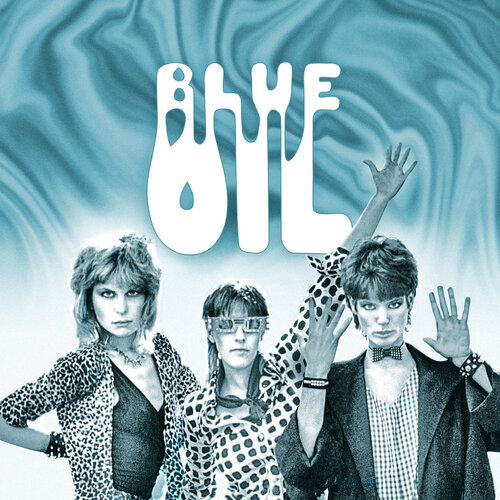
Blue Oil was a Montreal punk, new wave and post-punk group that emerged from the city’s rapidly expanding late-1970s underground. Formed by young women who wanted to participate directly in the music they admired, the group became one of Quebec’s earliest all-female punk bands and remained active through several lineups and musical phases into the early 1990s.
The musicians’ earliest performance took place in October 1977 under the name Dark Vision, with guitarists Marie Martine Bédard and Christiane Fatter joined by Christiane’s sister Manon Fatter on drums. Bédard subsequently played several shows in another project with future Wipers member Patrick Bourgeois.
In September 1978, Christiane and Manon Fatter formed the first version of Blue Oil with their friend Manon Asselin on bass. The musicians had grown up in Montreal, listening to rock radio and attending performances by local and international punk and new wave acts. Christiane had studied electric guitar, Bédard had received some classical guitar training, and Manon Fatter took up drums so that she could accompany her sister.
The group initially rehearsed in the Fatter family living room before moving into the basement of a rented house in Cartierville shared by Bédard, Asselin and other musicians. The rehearsal space became known as Le Local, Le 4195 or The Bunker and was used by several bands. It was there that Blue Oil developed much of its early repertoire.
Bédard regularly attended the group’s rehearsals and officially joined as lead guitarist in March 1981. She adopted the stage name Thin Coma, while Manon Asselin reversed the spelling of her surname and became Nilessa Noname. The group’s early music was built around guitars, bass and drums, combining direct punk energy with new wave, post-punk and occasional reggae influences.
Blue Oil performed extensively throughout Quebec and Ontario. A typical club engagement required three 45-minute sets, beginning late in the evening and continuing until closing time. The band also appeared at college events and other special engagements. While not performing, the musicians attended Montreal venues such as Club Montreal, later known as Le Spectrum, Café Campus and Station 10, where they saw performers including the Ramones, Talking Heads, Devo, the Stranglers, the Clash, the Police and U2.
Some of Blue Oil’s earliest surviving recordings were made at the Bunker directly to quarter-inch tape. Other performances were captured by Bédard using a Sony Walkman cassette recorder connected to venue soundboards. During an overnight Easter weekend session at Montreal Sound Studio, the band recorded approximately fifteen songs in single takes for demonstration tapes intended for radio contests and club bookings.
Following a two-week engagement at Bar 1123 in Quebec City at the beginning of 1982, Christiane Fatter left the group. Blue Oil continued as a trio consisting of Thin Coma, Nilessa Noname and Manon Fatter.
In February 1982, the trio independently released its first single, ‘Money’ backed with ‘Living for the Time.’ ‘Money’ captured the forceful side of the group’s sound, while ‘Living for the Time’ incorporated a more relaxed reggae feel. The single version of ‘Money’ was recorded at Montreal Sound Studio on a 24-track analogue tape machine. Dino Bartolini produced and engineered the recording, with additional engineering by Bill Hill.
One thousand copies of the single were pressed. Promotional copies were sent to commercial and college radio stations, while most of the pressing was sold directly at performances. The band later performed the single on the television program Pop Express.
Blue Oil also appeared in feminist documentary productions during 1983 and 1984 and continued touring widely. As women playing loud electric music in a still heavily male-dominated club circuit, the musicians regularly encountered dismissive attitudes and crude remarks. They nevertheless continued performing and developed a reputation for a powerful, energetic live show.
Their performances sometimes ended with a destructive version of the Who’s ‘My Generation,’ during which Manon Fatter’s drum kit was subjected to what she later called a “drums demolition derby.” Despite cracked cymbals, her blue Tama Imperial Star drums survived repeated attacks.
The group’s equipment reflected its direct, guitar-driven approach. Bédard played a Stratocaster and later a Gibson The Paul through a Marshall amplifier with chorus, distortion and delay effects. Asselin played a Guild bass through a Peavey cabinet and Traynor amplifier, while Fatter used her Tama drum kit.
Bédard left Blue Oil around 1985 and subsequently formed Sense of Doubt and Cloak and Dagger before beginning a solo career. Blue Oil continued through a major lineup and musical transition. Asselin moved from bass to keyboards while remaining the principal lead singer and also began playing electric guitar. Marie-Christine Thiboutot joined on bass, followed by keyboardist Cari B. Jones.
The new lineup signed with Alert Records, which released the five-song EP Blue Oil in 1988. The record included ‘I Blow You a Kiss,’ ‘No Disturbing Call,’ ‘Somewhere Over the Rainbow,’ ‘Twenty Years’ and ‘Superficiel (Ami d’esprit superficiel).’ ‘I Blow You a Kiss’ was also issued separately as a single and promoted with a music video.
At the end of 1990 and into 1991, Blue Oil recorded a full-length album with Neil O’Connor, formerly of the British punk group the Flys. Guitarist Mona Laviolette joined during this period, while Cari Jones had left the group. Before the recordings were released, the musicians changed the band’s name to Ginger Snaps. The album appeared under that name in 1992, after Manon Fatter had departed. The remaining musicians continued briefly with a male drummer before ending the group.
Interest in Blue Oil’s early work revived decades later. In 2014, radio hosts Pascal Pilote and Sébastien Desrosiers featured ‘Money’ during a program devoted to Quebec new wave. Further interviews and archival research followed, and the song was included on a 2020 compilation of Quebec punk and new wave recordings.
That renewed attention brought Blue Oil to the notice of Jason Flower of the Victoria archival label Supreme Echo. Flower contacted the musicians in 2020 and began assembling an album from recordings preserved by the band and sound engineer Dino Bartolini. Bartolini had stored the original tapes in a cedar closet for approximately forty years, while Bédard retained live cassette recordings made during the group’s early years.
Supreme Echo ultimately released a twelve-song collection drawn from recordings made between 1981 and 1983. The album included two versions each of ‘Money’ and ‘Far Too Much,’ along with ‘Sardine City,’ ‘Free Fleas on the Roof,’ ‘From the Heart,’ ‘Stop Complaining,’ ‘Celebration,’ ‘Unwind,’ ‘Producer’ and ‘Innocent Boys.’
The recordings came from several sources, including studio sessions, Bunker rehearsal tapes and live soundboard cassettes. The collection was remastered and issued in a limited edition of 600 copies on aqua-blue vinyl, accompanied by a large bilingual booklet containing the group’s history, photographs, artwork and concert posters.
-Robert Williston
Gallery
Images
1 image

Blue Oil (1981-83)
Media
Videos
0 videos
No videos available for this title.
Credits
Musicians
Manon Asselin: bass, lead vocals
Manon Fatter: drums
Marie Martine Bédard: guitar
Christiane Fatter: guitar on ‘Money,’ ‘Far Too Much,’ ‘Sardine City,’ ‘Free Fleas on the Roof,’ ‘From the Heart’ and the second version of ‘Money’
Songwriting
‘Money’ written by Christiane Fatter, Manon Asselin, Manon Fatter and Marie Martine Bédard
‘Far Too Much’ written by Christiane Fatter, Manon Asselin, Manon Fatter and Marie Martine Bédard
‘Sardine City’ written by Christiane Fatter, Manon Asselin, Manon Fatter and Marie Martine Bédard
‘Free Fleas on the Roof’ written by Christiane Fatter, Manon Asselin, Manon Fatter and Marie Martine Bédard
‘From the Heart’ written by Manon Asselin, Manon Fatter and Marie Martine Bédard
‘Stop Complaining’ written by Manon Asselin, Manon Fatter and Marie Martine Bédard
‘Celebration’ written by Manon Asselin, Manon Fatter and Marie Martine Bédard
‘Unwind’ written by Manon Asselin, Manon Fatter and Marie Martine Bédard
‘Producer’ written by Manon Asselin, Manon Fatter and Marie Martine Bédard
‘Innocent Boys’ written by Manon Asselin, Manon Fatter and Marie Martine Bédard
Production
Produced by Blue Oil and Dino Bartolini
Engineered by Dino Bartolini on all tracks except the second version of ‘Money’
Engineered by Gilles Brillon on ‘Money,’ ‘Far Too Much,’ ‘Sardine City,’ ‘Free Fleas on the Roof’ and ‘Stop Complaining’
Engineered by Bill Hill on the second version of ‘Money’
Recording
‘Money,’ ‘Far Too Much,’ ‘Sardine City’ and ‘Free Fleas on the Roof’ recorded at Le Local, Montreal, Quebec, April 23, 1981
‘From the Heart’ recorded at Montreal Sound Studio, Montreal, Quebec, April 11, 1982
The second version of ‘Money’ recorded at Montreal Sound Studio, Montreal, Quebec, 1982
‘Stop Complaining’ and the second version of ‘Far Too Much’ recorded at Le Local, Montreal, Quebec, 1983
‘Celebration’ and ‘Producer’ recorded at Manoir Plessis, Plessisville, Quebec, April 1983
‘Unwind’ and ‘Innocent Boys’ recorded at Villa des Cèdres, Trois-Rivières, Quebec, October 1983
Artwork
Album concept and art direction by Jason Flower
Design by Michael Tension
Front cover photograph by Michel Paul Bélisle
Back cover photograph by Jacques Carrier
Archival photographs and material supplied by Blue Oil
Liner Notes
Liner notes by Manon Asselin, Manon Fatter and Marie Martine Bédard
Translation
French revision by Manon Fatter and Marie Martine Bédard
Manufacturing
Pressed by Flashback Records
Copyright
℗ Blue Oil and Supreme Echo
© Blue Oil and Supreme Echo
Matrix Information
Side A: SE48 A -OUT OF THE BUNKER
Side B: SE48 B - ATTENTION AUX LOOOUPS!!
No Comments