Insight
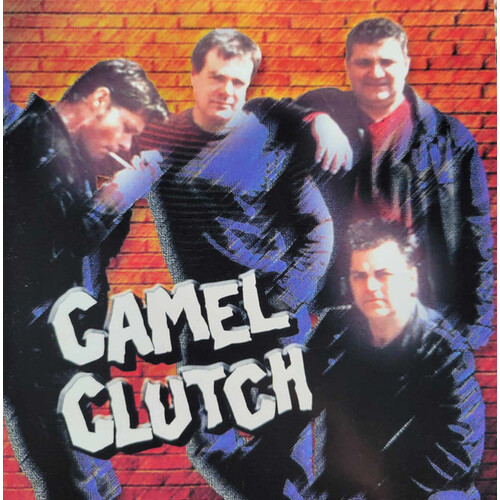
Camel Clutch emerged from Quebec City's unruly underground in 1986, carrying with it a lineage that reached directly back to some of the city's earliest alternative music. Singer Michel Shink had been one of the four multi-instrumentalists in Modernes Pickles at the beginning of the decade and subsequently moved through increasingly rock'n'roll-oriented projects including Dr. Itch and the Tarantulas, Trash Monsters and Soul Screechers. The latter concentrated largely on material by Iggy Pop, Johnny Thunders and kindred spirits before changing its name to Camel Clutch in 1986, where the emphasis shifted toward original French-language songs delivered with the same raw energy.
Around the same period, Quebec City's independent scene revolved around places such as Vinyl, Bruno Tanguay's record shop on rue Saint-Jean. Tanguay, better known in local music circles as Satan Bélanger, helped bring musicians together and eventually became Camel Clutch's manager. The group's beginnings were appropriately informal. One period account recalled that Camel Clutch essentially came together when another act had to be replaced at short notice for a show at Cégep Limoilou. The name came from professional wrestling: a couple of the musicians had amused themselves trying wrestling holds, and the Camel Clutch – famously associated with the Iron Sheik – stuck.
By the time the lineup stabilized, Shink was fronting Réjean Gravel and Robert Nadeau on guitars, Denis Paré on bass and Pierre Ménard on drums. Gravel brought experience in jazz-rock and had even opened a show for UZEB, while Nadeau was already a prolific songwriter with dozens of compositions. Yet Camel Clutch wanted little to do with musical sophistication for its own sake. Asked to describe what they played, Shink jokingly called it “anti-UZEB”; elsewhere the musicians reduced their philosophy to good old rock'n'roll. Their musical neighbourhood was closer to Iggy Pop, the Stooges, New York Dolls and Johnny Thunders, with a hard guitar edge and French lyrics drawn from everyday Quebec life.
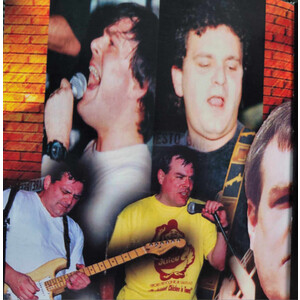
Camel Clutch built its reputation on stage. The band played the Foufounes électriques and other Montreal rooms while becoming an increasingly familiar presence around Quebec City, and by 1988 had been selected to represent the Quebec City region at the Festival international rock de Montréal. Writers struggled to fit the group neatly into the French-language rock emerging around it. Camel Clutch could be blunt, heavy and deliberately unsophisticated, but its songs were tightly constructed and its performances anything but static. Shink became the focal point, throwing himself around the stage, collapsing to the floor, contorting himself and provoking audiences with a physical abandon frequently compared to Iggy Pop.
The group's importance extended beyond its own performances. A later Bande à part retrospective credited Camel Clutch with helping establish a new rock sound in Quebec City during the second half of the 1980s. Groups such as Les Secrétaires Volantes, whose lineage would eventually lead to Le Nombre, emerged shortly afterward and carried elements of that raw, energetic Quebec City rock tradition into the next generation.
In 1988 Camel Clutch tried to enter Radio-Canada's Rock Envol competition and failed to reach the final. They returned the following year with no great expectation of winning. Beginning with the March 1989 quarter-finals at the Spectrum in Montreal, however, the band steadily advanced through the competition. Period coverage praised the directness of the songs and Shink's extraordinary stage presence while noting the rougher punk edge beneath the group's basic guitar rock. By May the finalists had been reduced to Camel Clutch, Villeray, Frankline and Pëll, the latter featuring future star Bruno Pelletier.
On May 20, 1989, Camel Clutch won the fourth and final edition of Rock Envol at Montreal's Spectrum. Winning did nothing to make the band respectable. Reports of the final spent almost as much time discussing Shink's raised middle finger, beer being spat toward the audience and the group's general vulgarity as they did the music. When Camel Clutch was subsequently accused of encouraging young people to use drugs, Shink rejected the charge outright: vulgarity he was prepared to concede, drug promotion he was not. The band's irreverence was not simply theatre grafted onto the songs; it reflected a broader refusal to polish itself for industry approval.
Bob Nadeau repeatedly argued that Quebec record companies underestimated both French-language rock and the young audience that wanted to hear it. The musicians insisted that what mattered was playing with sincerity rather than reshaping themselves into something easier to market. Rock Envol nevertheless gave Camel Clutch opportunities that an underground Quebec City band rarely received, including recording and promotional support and a series of performances across Quebec.
The prize helped finance Camel Clutch's first record, the 1989 Parti à Paris / Âge de rêver single, their only 45. The self-released record featured Shink, Gravel, Nadeau, Paré and Ménard. Parti à Paris was written by Réjean Gravel, while Âge de rêver was written by Michel Shink and Gravel. Jacques Montminy recorded the sessions at Tram, with Éric Filteau producing and mixing at Capture Digitale. The record was made with the participation of Musicaction and Radio-Canada. A longstanding account holds that the band split shortly before the single reached the market, helping explain why relatively few copies circulated.
The story did not quite end there. In 1990, Camel Clutch issued the eight-song cassette Rectangle et Lunatik Asylum Camel Clutch through Ondes De Choc, produced for Les Productions Lunatik Asylum and manufactured by Les Industries Analogue. The cassette collected 400 MPH, Belle Amazone, Toute la nuit, En transe, Fichu, C’est pas de ta faute, mais tu m’énarves, Devant les dieux and New York. The release placed Camel Clutch within a broader DIY network of Quebec musicians using inexpensive recording and cassette distribution to work outside the conventional record business.
That same year, En transe appeared on Tir Groupé's Lâchés Lousses – Compilation de rock québécois indépendant, alongside bands including B.A.R.F., Les Taches, Idées Noires, Les Biberons Bâtis and Genetic Error. The compilation became an important document of the francophone independent underground at the point where the punk and alternative networks of the 1980s were beginning to feed into the much larger Quebec rock movement of the following decade.
Camel Clutch were also beginning to travel. In July 1990 they went to France and appeared at the Francofolies de La Rochelle, part of a substantial Quebec contingent appearing at the festival. For a group that had repeatedly complained about the difficulty of getting French-language rock heard even at home, performing before a French audience represented a remarkable turnaround. The musicians nevertheless remained defiantly basic about what they wanted: guitars, energy, humour and songs without unnecessary studio decoration.
After the France period, Michel Shink left the band and eventually relocated to Canada's West Coast. Camel Clutch continued for a time under the shortened name Les Clutch, bringing in Claude, formerly of Les Mal-Aimés, as vocalist. A 1991 report confirmed the new name and lineup while observing that the music retained its heavy Dolls/Stooges character. A record was reportedly being prepared and a video circulated locally, but the chemistry that had made the Shink-fronted Camel Clutch such a spectacle proved difficult to reproduce. The original run effectively wound down.
By the mid-1990s Camel Clutch had evolved into something closer to a recurring reunion than an active career band. Shink's move west made regular activity impractical, but he periodically returned to Quebec and the group would reassemble for performances in Quebec City and Montreal. By the beginning of the 2000s, the band could joke that playing roughly one concert per year allowed Camel Clutch to pretend it was on a world tour. At these reunions Shink was joined by Réjean Gravel, Michel Gagné and Pierre Ménard, and the chemistry remained strong enough for a new generation of Quebec City rock fans to discover what earlier audiences had been talking about.
In 2002, Camel Clutch finally assembled a substantial retrospective of its music on a self-titled eighteen-song CDr. The collection brought together material spanning the band's history, including En transe, Les paroles on s'en crisse, Tu m'énarves, Point limite zéro, Maudite face lette, J'lé z'aime toute, Toute la nuit toute la journée, Fichu, Le cheval rouge feu, Lili, 400 miles à l'heure, Belle Amazone, On va s'énarver un peu, Jelly Roll, Guéritoute, Woo, hoo, hoo, Charlotte and Âge de rêver. The disc received a public launch in early 2003 and functioned, in many respects, as the full-length Camel Clutch album that had never appeared during the band's original run.
-Robert Williston
Gallery
Images
5 images
Camel Clutch (2) – Camel Clutch
Camel Clutch (3) – Camel Clutch
Camel Clutch (4) – Camel Clutch
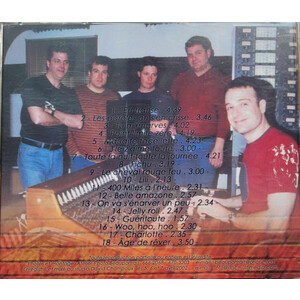
Camel Clutch (5) – Camel Clutch
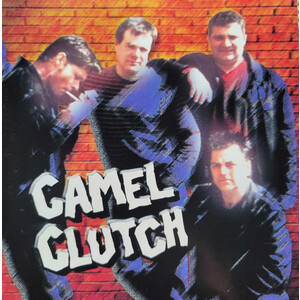
Camel Clutch
Media
Videos
2 videos
Credits
Songwriting
'Âge De Rêver' written by Michel Shink and Réjean Gravel
Recording
Recorded at Studio David Champoux on April 5, 6 and 7, 2002
Mixing
Mixed at Studio David Champoux
Artwork
Photography by Atelier-Photo Beauportrait
Photo montage by Atelier-Photo Beauportrait
Liner Notes
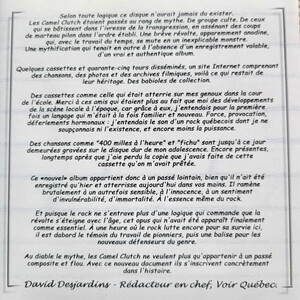
Liner notes by David Desjardins, editor-in-chief of Voir Québec
Physical Releases
CDr
Additional Information
The album features newly recorded versions of material from Camel Clutch's earlier repertoire. '400 Miles À L'heure', 'Belle Amazone', 'Toute La Nuit Toute La Journée', 'En Transe', 'Fichu' and 'Tu M'énarves' correspond to material previously documented on the band's Ondes de Choc #1 cassette, while 'Âge De Rêver' had previously appeared on the band's 7-inch single.
No Comments