Artist / Band
Maureen Forrester
Biography
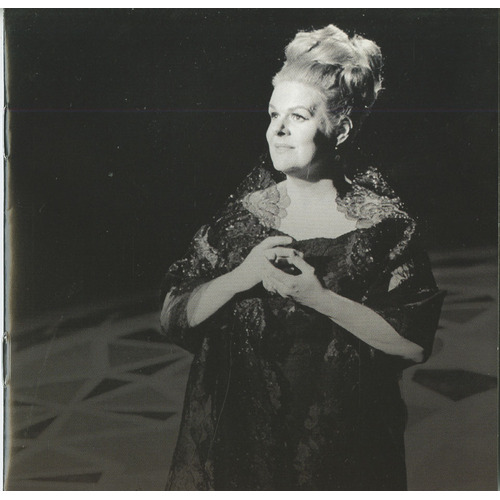
In 1956 the eighty-year-old and legendary conductor Bruno Walter invited the twenty-six-year-old and relatively little-known contralto Maureen Forrester to be soloist in his performances with the New York Philharmonic Society of Mahler's Resurrection Symphony. The event made Forrester famous, and through Walter she had a direct contact with Gustav Mahler (whose associate Walter had been), the composer whose vocal music has not had a more persuasive interpreter.
Forrester was born in Montreal where, in 1950, she became one of the first of many outstanding students of the Dutch baritone, Bernard Diamant, who had recently settled in the city. When she gave her first professional recital in 1953 her accompanist was John Newmark, with whom an artistic bond was formed that remained through many years and hundreds of recitals. That 1953 recital marked the beginning of a long and prosperous voyage that would encompass the concert halls and opera houses of the world.
Soon after the Montreal recital of 1953 there was a Beethoven Ninth Symphony conducted by Otto Klemperer in Montreal, a recital tour of Ontario and Quebec, an appearance in Toronto with the young Glenn Gould, and a European recital tour under the auspices of Les jeunesses musicales. Then came Bruno Walter who set the seal on what was already a rapidly developing career.
Maureen Forrester was sometimes singled out as the successor to the great English contralto Kathleen Ferrier after her early death at the height of her career in 1953. True contraltos are rare and great ones even rarer, and in the 1950s the only other singers with whom Forrester might have been compared were Ferrier and Marion Anderson. In fact, Forrester needed comparison with no one. In timbre and artistry she was distinctive in herself. Forrester's opulent voice had the glowing lustre of her esteemed contemporaries, as well as a highly variegated spectrum of colours through a wide range; and most important of all her voice carried the personal trait of only the greatest singers - it was immediately and unmistakably recognizable.
Forrester's sensibilities were especially well-suited to recitals and concerts. She combined an aristocratic bearing and a heroic voice with an engaging presence so that her audiences responded warmly to performances that were at once authoritative and intimate. Besides being an undisputed interpreter of the songs of Mahler she was equally successful with other masters of German art song, especially Brahms. By both temperament and quality of voice, she could realize equally the sombre gravity of the Four Serious Songs and the spirited and multi-faceted character of the Gypsy Songs. In Wagner's Wesendonck Lieder she never lost the intensity of utterance while sustaining the reflective interior mood of the songs.
At the same time that she was establishing her fame as a lieder recitalist, Forrester showed herself to be equally at home in the baroque music of Handel and Bach. There were many performances of Messiah and The St. Matthew Passion, and for nine seasons she was a member of the Bach Aria Group. But perhaps most remarkable for the time was her participation in a series of recordings of complete operas by Handel in the 1960s. These works were just beginning to return to the modern stage and Forrester revealed not only a sympathy with the dramatic requirements but also the ability to negotiate the vocal demands of Handel's operatic music. Just as the songs of Brahms and Wagner display the luminous quality of her true contralto, the opera arias of Handel often show off her higher range and the lightness and openness of which she was capable. The demanding "Se bramate d'amar" is a virtual paradigm of the other Forrester - agile, deftly brilliant, but always sensitive to the text.
Forrester had a few early encounters with opera in Montreal but her first important stage role was Orfeo in Gluck's Orfeo ed Euridice in Toronto in 1962. She sang Brangäne in Tristan und Isolde at Buenos Aires in 1963 and Cordelia in the New York City Opera's celebrated production of Handel's Giulio Cesare in 1966. Although the concert stage continued to be her principal home, the opera house took on increasing significance with appearances in San Francisco, Santa Fe, New York, Buenos Aires, Edmonton, Toronto, Ottawa, Montreal and Quebec City. The boisterous side of Forrester, which often could be glimpsed on the concert stage, was given full play in the role of the Witch in the Canadian Broadcasting Corporation's television production of Humperdinck's Hansel and Gretel in 1970. After that it was not surprising that she included in her repertoire such disparate roles as Fricka in Die Walküre (with the Canadian Opera Company in Toronto) and Erda in Das Rheingold (at the Metropolitan Opera in New York) as well as Bloody Mary in South Pacific (at the Edmonton Opera) and the Queen of the Fairies in Iolanthe (Stratford Festival). One of her greatest stage triumphs was in Strauss's Elektra with the Canadian Opera Company in Toronto when the nuance and subtlety of the song recital were brought to a prodigious vocal and dramatic portrayal of the mad and terrified Klytemnestra. She gave chilling impersonations of the aged and mysterious Countess in Tchaikovsky's Queen of Spades in Ottawa and Toronto, and in 1990 for her debut at La Scala in Milan. In the course of her long career, she sang more than twenty stage roles.
Maureen Forrester was always very much a Canadian contralto. She regularly performed songs by Canadian composers, who often composed works especially for her, and her international engagements were shared with those in towns and cities throughout her country. In 1984 she accepted a five-year term as Chairman of the Canada Council and gave that post a prominence and an unprecedented authority both with the public and with the arts communities that she so vigorously represented.
As her career on the concert and opera stages came to an end, she embarked finally with composer-pianist David Warrack on a one-woman show titled Interpretation of a Life. And what a life it was - circling the globe from Canada to Australia to the Soviet Union, Companion of the Order of Canada, Chancellor of Wilfred Laurier University, member of the Juno Hall of Fame, recipient of countless honours, mother of five children. In the spring of 2009 Maureen Forrester was living quietly in Toronto, behind her career that spanned well over forty years before the public, during which she lost nothing of her artistic poise and her directness of communication. Hers was a musical spirit that thrilled the connoisseur as well as the listener who enjoys a good song well sung.
-Carl Morey, 2009
Tracks
53 tracks
The Art of Maureen Forrester (1991)
Showing 10 of 17 tracks
-
Art Thou Troubled?
-
Liebst Du Um Schonheit
-
Songs My Mother Taught Me
-
Maria Wiegenlied
-
Psyché
-
Schelechtes Wetter
-
Der Musensohn
-
Mondnacht
-
Sister Mary
-
L'il Boy
A Legendary Voice - La Voix du Siecle (2009)
Showing 10 of 36 tracks
-
George Friderich Handel (1685-1759) - SERSE - Récitatif et aria ''Frondi tenere ...'' (Serse)
-
George Friderich Handel (1685-1759) - Aria ''Se bramate d'amar....'' (Serse)
-
George Friderich Handel (1685-1759) - Aria ''Per rendermi beato parto...'' (Serse)
-
George Friderich Handel (1685-1759) - RODELINA - Récitatif et aria ''Pompe vane ....'' (Bertarido)
-
George Friderich Handel (1685-1759) - Aria ''Con rauco mormorio...'' (Bertarido)
-
George Friderich Handel (1685-1759) - OTTONE - Aria ''La speranza è giunta in porto...'' (Gismonda)
-
George Friderich Handel (1685-1759) - GIOLIO CESARE - Aria ''Piangerò la sorte mia ...'' (Cleopatra)
-
George Friderich Handel (1685-1759) - JEPHTA - Récitatif et aria ''Happy this embassy ...'' (Hamor)
-
George Friderich Handel (1685-1759) - Aria ''Scenes of horror ...'' (Storge)
-
George Friderich Handel (1685-1759) - Récitatif et aria ''Happy this embassy ...'' (Hamor)
Discography
Featured Titles

Albums

Gallery
Images
1 image
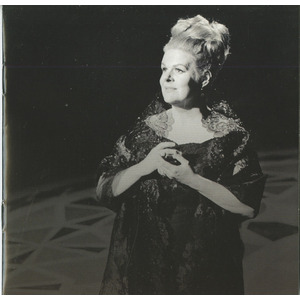
Forrester, Maureen
Media
Videos
0 videos
No videos available for this artist.