Artist / Band
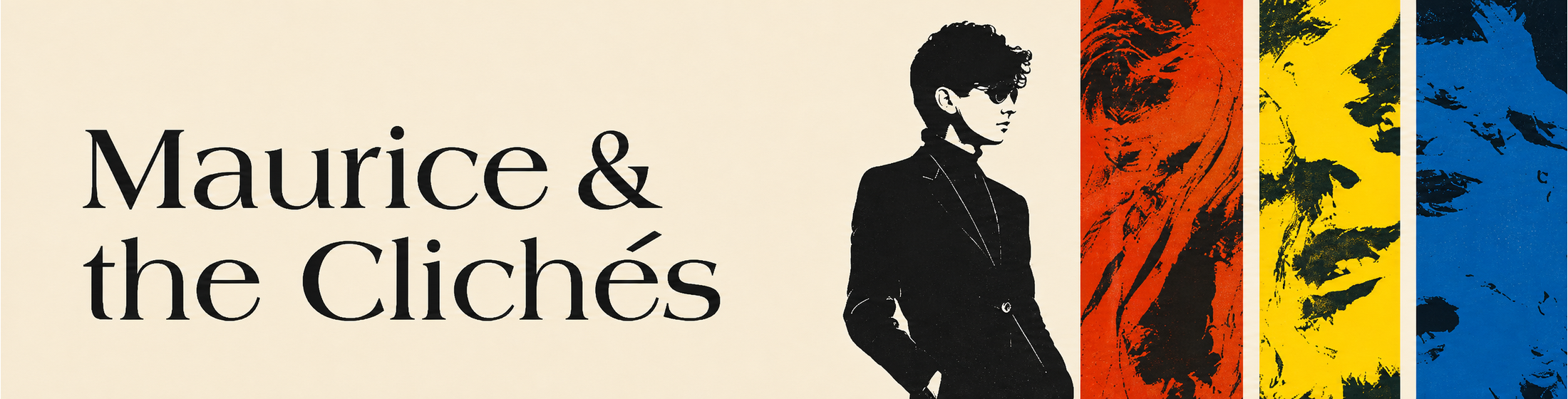
Maurice & The Clichés
Biography
Maurice & The Clichés formed in Vancouver in 1978, while the city's punk and new wave scene was still assembling itself out of clubs, independent records and a growing network of musicians working outside the established Canadian music industry. Singer and guitarist Maurice DePas, guitarist and keyboard player Paul Wilson-Brown and guitarist and bassist Gary Westlake became the band's central writing partnership. DePas later recalled that it started with the musicians sitting down over coffee and deciding to put a band together.
The early lineup grew to take in Richard Eli Harrington, Bob Hake, Nels Guloien and Elmar Spanier. The music drew on punk, power pop, ska and new wave. Everything around it ran on advertising language, visual jokes, staged photographs and deliberately exaggerated cliché. DePas, Wilson-Brown and Westlake wrote most of the material together, with DePas out front as the band's principal singer.
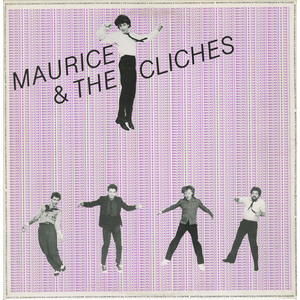
In April 1980 the band released its first album on its own Nöh Records label. The record is generally catalogued under the group's name, though the band's own later promotional material identified it as How Cliche Can You Get?, Nöh 007. It included ‘Top Forty’, ‘Mystery Member / Mr. Remember’, ‘Mixed Emotions’, ‘Good Bye Mr. Bond’, ‘Affection At High Speed’, ‘Knowhere Man’ and ‘Please Yourself’.
The songs treated popular culture as raw material. ‘Top Forty’ mocked formulaic radio programming and the consumer habits it fed, while others took on romance, social roles and city life in the same dry, clipped language. DePas remembered the early music leaning heavily on ska rhythms. Vancouver's punk and new wave community by then included bands such as the Dishrags, and Maurice & The Clichés were building their own audience in the same fast-changing clubs.
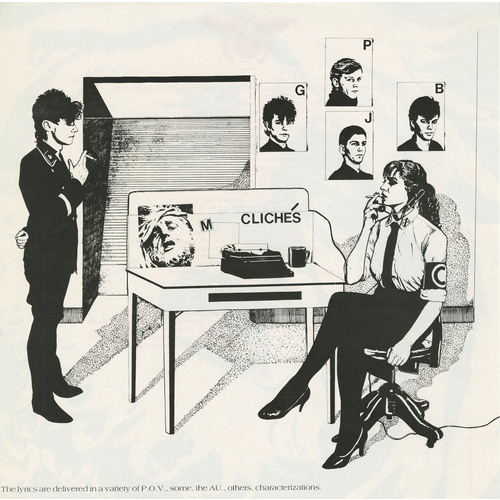
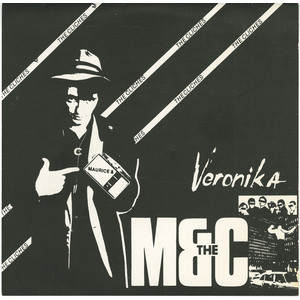
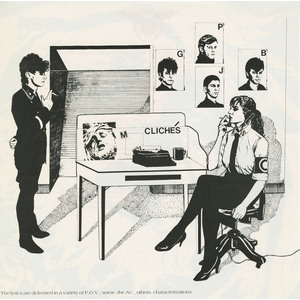
A three-song release, Veronika, followed in February 1981, carrying ‘Veronika’, ‘Show Me A Love’ and ‘Every Corner Of My Heart’. It introduced producer Will MacCalder and engineer Brian Campbell, and it pushed the band's visual ideas much further. The insert set photographs and lyrics alongside definitions, quotations, references to theatre and the group's name repeated as a graphic motif. The Nöh Records name itself was explained through a definition of Japanese Noh drama, with its stylized action, gesture and creation of mood.
The Veronika insert also quoted writing on clichés and popular culture, and surrounded the band with mock advertising and art-school imagery. The same instincts were at work onstage, where music, character, satire and staging all pulled in one direction.
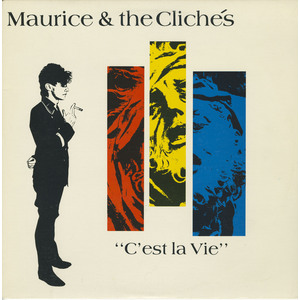
The Veronika sessions brought in Jamie Bowers, who became an important part of the next recordings. By 1982 the lineup had shifted to DePas, Wilson-Brown, Westlake, bassist Barry Muir and drummer Jay Johnson. With Bowers they went into Mushroom Studios in Vancouver and finished the second album, C'est La Vie, on July 4, 1982. Lindsay Kidd engineered the sessions and Ian MacLennan served as executive producer.
The album held ‘Soft Core’, ‘It's All Talk’, ‘Reach For The Top’, ‘Working Girls’, ‘Unschuld’, ‘Social Casualties’, ‘Beautiful Girls’, ‘Dean Reckoning’, ‘Skyline’ and the title song, ‘C'est La Vie’. DePas had driven a taxi in Vancouver through stretches when music was not paying enough, and the people he drove and the situations he ran into became part of his writing. The songs came out of the city's nightlife, its sex trade, its pornography and street life, and the uneasy encounters in between.
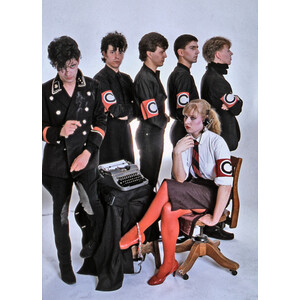
The artwork continued the band's use of theatrical imagery. DePas appeared in stylized authoritarian costume, an image he later explained as satire aimed at the militaristic look then fashionable in popular music. The presentation was meant to provoke, and in a 1983 interview DePas acknowledged that the joke did not always land the way he intended.
C'est La Vie began reaching wider distribution through RMS Records, and by early 1983 the album was being promoted in the United States. Billboard listed the LP among February's new releases. The song that carried the group furthest beyond Vancouver was ‘Soft Core’.
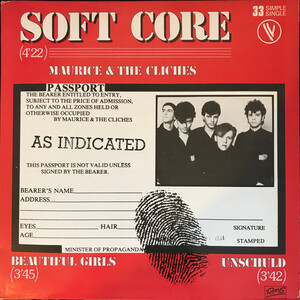
‘Soft Core’, written by Maurice DePas, Paul Wilson-Brown and Gary Westlake, was issued in several configurations in Canada, the United States and France. A French Vogue edition appeared with ‘Beautiful Girls’ and ‘Unschuld’, while RMS issued American 12-inch and promotional versions pairing ‘Soft Core’ with ‘Beautiful Girls’. The full version ran 4:22, and a U.S. promotional 7-inch carried a 2:57 edit. ‘Beautiful Girls’ also circulated in different edits.
By 1983 the song had reached American alternative radio. KROQ in Los Angeles added it to its playlist, and Billboard documented radio activity for the single that June. College and alternative stations picked it up as well, and the band found listeners far beyond Vancouver without ever entering the Billboard Hot 100.
At home the live following was growing too. Paul Wilson-Brown remembered nights at Vancouver's Railway Club with the line running down the stairs and bar sales to match. The band played around the city regularly, including an October 1983 bill with the Visible Targets at the Legion Hall at 6th and Commercial.
The shows had become increasingly theatrical. DePas worked with movement, costume and props, and the band built visual and dramatic ideas around the songs. The records did the same by other means, through mock advertisements, invented institutional language, elaborate sleeve concepts and recurring characters.
By the fall of 1983 Maurice & The Clichés believed their future was settled. DePas told interviewer Steve Newton that the group had entered a nine-album agreement with RMS in Los Angeles. Work had already started at Little Mountain Sound in Vancouver on another album under the working title Almost California, with Lindsay Kidd again involved in the recording.
Video work was planned as well, one piece tied to the new material and another for ‘Soft Core’. The next album never received a commercial release, leaving a body of recordings that stayed largely unheard for more than two decades.
The band's path then moved south through the Pacific Northwest. Former Heats bassist Wayne Clack joined after the Seattle group broke up, and by 1985 Maurice & The Clichés were playing the Seattle area. An April 1985 appearance at Highline College places them there shortly before another move.
By August, Billboard reported that the group had relocated to Hollywood from Seattle. Nancy Wilson of Heart had produced a three-song demo for the band at Goodnight L.A., another attempt to secure a stronger American recording arrangement.
The Hollywood period produced the clearest surviving descriptions of Maurice & The Clichés onstage. On October 25, 1985, they appeared at The Palace in Hollywood on a bill with Nick Cave and the Bad Seeds. By early 1986 the lineup was DePas, Westlake, Wilson-Brown, Wayne Clack and drummer Michael Aleksich, with Rose Harte and Scott Abercrombie on backing vocals.
A January 1986 review in Music Connection caught the group at Wong's West in Santa Monica. The magazine singled out the dramatic character of the performance and described DePas working his microphone stand as part of an intensely physical set. ‘All in the Game’ and ‘Sunset on Sunset’ came from this later period. The audience stayed on the dance floor through the show, and the reviewer considered the band ready for another recording deal.
They were drawing crowds in West Hollywood too. In the following issue of Music Connection, Maurice & The Clichés ranked second among the Central's top-drawing acts for the reporting period.
Their American years ran alongside another music community that was beginning to take shape farther north. Kelly Curtis and Ken Deans managed Maurice & The Clichés during this period, and Deans later recalled how heavily the two of them spent trying to land a deal for the group. Both went on into Seattle's developing alternative scene, and Curtis would later manage Pearl Jam.
The group remained active into 1987. Two of its songs, ‘Beautiful Girls’ and ‘Skyline’, appeared in the feature film The Princess Academy, released that April. By then the recorded catalogue ran from the independent Vancouver Nöh releases through the RMS period and on into a substantial body of later material that had never received a regular album release.
‘Soft Core’ kept circulating after the band's active years. San Francisco alternative station Live 105 ranked it at No. 122 in its 1988 Top 500 Songs of All Time, and in the station's 1994 Revolutionary 500 it climbed to No. 102. That continued airplay kept the band's name alive among listeners who had first met the record on West Coast alternative stations including KROQ.
In 2005 the long version of ‘Soft Core’ appeared on the Canadian compilation Retro:Active 3, placing Maurice & The Clichés alongside a broader selection of international new wave recordings from the period.
A larger part of the archive finally surfaced in 2007 with Flogging a Dead Horse. The fifteen-track collection set familiar recordings next to material that had remained unreleased, among them ‘In Dreams’, ‘Almost California’, ‘On the Waterfront’, ‘Young and Restless’, ‘The Hunger’ and ‘Sunset on Sunset’. ‘Almost California’ tied the collection directly to the album the band had left unfinished more than twenty years earlier.
The best-known recording continued to turn up on alternative radio well into the next century. In March 2025, ‘Soft Core’ appeared again on San Diego station 91X during its Resurrection Sunday program, more than forty years after its original release.
Maurice & The Clichés left two principal albums, a run of singles and promotional pressings, and a large group of recordings from their later years. From the first independent Vancouver records through the Seattle and Hollywood periods, Maurice DePas, Paul Wilson-Brown and Gary Westlake held the centre of a band that built its songs, its artwork and its stage shows as one piece of work.
-Robert Williston
Tracks
22 tracks

-
Top Forty
-
Mystery Member - Mr. Remember
-
Mixed Emotions
-
Good Bye Mr. Bond
-
Affection at High Speed
-
Knowhere Man
-
Please Yourself

Veronika (1981)
3 tracks
-
Veronika
-
Show Me a Love
-
Every Corner
C'est la vie (1982)
10 tracks
-
Soft Core
-
It's All Talk
-
Reach for the Top
-
Working Girls
-
Unschuld
-
Social Casualties
-
Beautiful Girls
-
Dean Reckoning
-
Skyline
-
C'est la vie
Soft Core (1982)
2 tracks
-
Soft Core
-
Beautiful Girls
Discography
Featured Titles
Albums
Singles
12"
Gallery
Images
2 images
Maurice & the Cliches
Maurice & the Cliches
Media
Videos
1 video