Artist / Band
Chuck Joyce
Biography
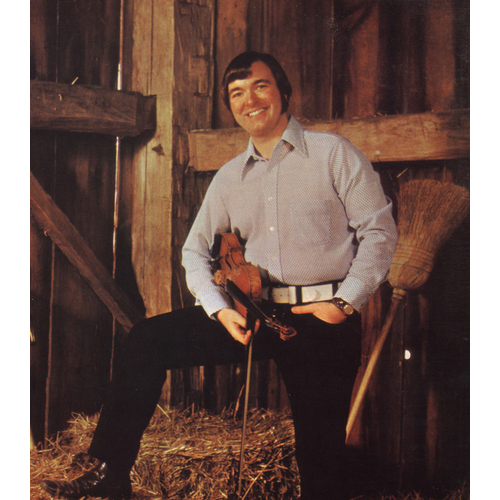
Chuck Joyce was a Canadian old-time fiddler from Sarnia, Ontario, who emerged in the late 1960s and early 1970s as one of the leading young contest fiddlers in the country. Still only in his early twenties when his first albums appeared, Joyce had already built a reputation as a championship player, composer, and energetic interpreter of traditional Canadian fiddle music.
Joyce began “fiddlin’ around” at the age of nine, encouraged by his father, Ernie Joyce. That early family support became central to his musical development, and his later liner notes repeatedly acknowledged the role of his parents, Ernie and Clara Joyce, his sister Denise, and the wider Sarnia community in helping him build his career. Although Sarnia was better known nationally as an industrial city in southwestern Ontario, Joyce treated it as a musical home base, drawing attention to local fiddlers, friends, and family members who inspired or contributed to his repertoire.
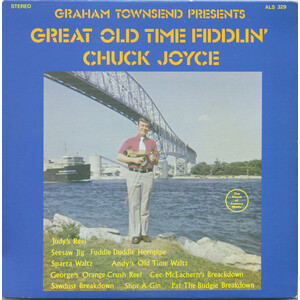
By the time Great Old Time Fiddlin' Volume 1 was released on Paragon, Joyce had already earned major contest recognition. Liner notes by Steve Glenn of CHOK Radio in Sarnia identified him as Canadian Junior Fiddle Champion at Shelburne in 1966 and 1967, Ontario Champion at Orillia in 1968, Ontario Novelty Champion at Orillia in 1968 and 1969, and Southwestern Ontario Champion at Petrolia in 1970 and 1971. These honours placed him firmly within the competitive old-time fiddle circuit that connected communities across Ontario.
Joyce’s early recordings were closely tied to Graham Townsend, one of Canada’s best-known old-time fiddlers. Great Old Time Fiddlin' Volume 1 was presented by Townsend and featured Joyce on fiddle with Townsend on piano, Gord MacDonald on bass, and George McKay on drums. The album mixed Joyce originals such as “Seesaw Jig,” “Sparta Waltz,” “Shot-A-Gin,” “Fuddle Duddle Hornpipe,” and “Judy’s Reel” with material by Townsend and Andy De Jarlis, establishing Joyce not only as a performer but as a young composer working within the Canadian fiddle tradition.
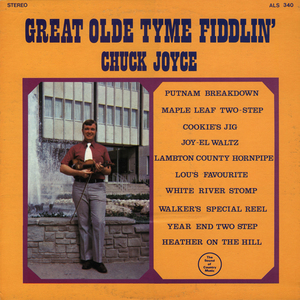
His follow-up album, Great Olde Tyme Fiddlin', continued that direction. Backed by Graham Townsend, Gord MacDonald, and George McKay, with production by Ron van Dykhof, Joyce presented another program of fiddle tunes including “Putnam Breakdown,” “Cookie’s Jig,” “Joy-El Waltz,” “White River Stomp,” “Walker’s Special Reel,” and “Year End Two Step.” The liner notes emphasized that Joyce was not merely a contest-winning player but “a fine composer as well,” noting that the album contained eight original compositions.
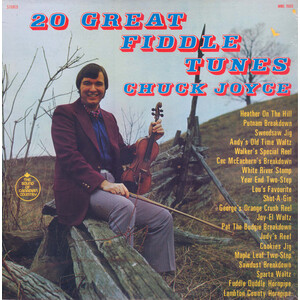
Joyce’s reputation grew through a series of Marathon albums that placed him at the centre of Canadian old-time fiddle recording in the 1970s. The 1973 album 20 Great Fiddle Tunes presented him as “Sarnia’s favourite son” and described him as a young player who had accumulated trophies from Shelburne, Orillia, Petrolia, and beyond. The album combined selections associated with Don Messer, Graham Townsend, Cec McEachern, Andy De Jarlis, Ward Allen, and Joyce himself, positioning him within a lineage of Canadian fiddle composers while also highlighting his own growing catalogue.
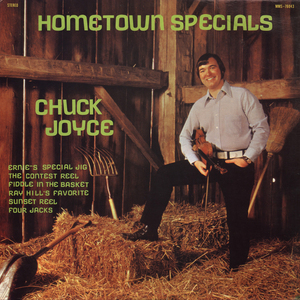
On Hometown Specials, Joyce turned directly to the people and musical culture of Sarnia. Nearly every selection was described as having originated in Sarnia or being familiar to local fiddlers. The album included tunes connected to friends and family members, among them “Four Jacks,” “Ernie’s Special Jig,” “Harvey Lovie’s Waltz,” “Ted Laidlaw’s Jig,” “Clara’s Reel,” “The Contest Reel,” and “Ray Hill’s Favorite.” In the liner notes, Joyce expressed pride in his hometown and thanked his family, relatives, and friends, presenting the album as both a personal tribute and a document of local fiddle culture.
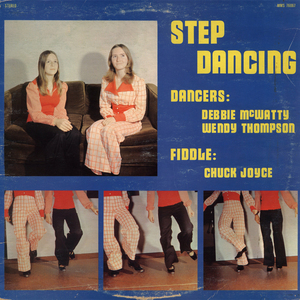
Joyce also recorded Step Dancing, an album built around the dancing of Debbie McWatty and Wendy Thompson, two young Ottawa Valley step dancers from the Kinburn, Ontario area. Joyce supplied the fiddle accompaniment, joined by Glen Paul of Lanark on piano and Stan Hammond of Dunnville on acoustic bass. His liner notes described step dancing as “an art of stamina, physical fitness and concentration” and praised the two dancers for their accomplishments in Central Canadian and Glengarry competitions. The album showed Joyce’s role not only as a featured instrumentalist but as an accompanist deeply connected to the dance traditions surrounding old-time fiddle music.
Across these recordings, Chuck Joyce captured a specific moment in Canadian old-time music: a young Sarnia fiddler shaped by family encouragement, contest culture, radio and country-show exposure, and the mentorship of established players such as Graham Townsend. His albums preserved both traditional repertoire and a large body of original tunes, many written for friends, relatives, hometown figures, and fellow musicians.
-Robert Williston
Tracks
32 tracks
Great Olde Tyme Fiddlin' (1971)
10 tracks
-
Putnam Breakdown
-
Maple Leaf Two-Step
-
Cookie's Jig
-
Joy-El Waltz
-
Lambton County Hornpipe
-
Lou's Favourite
-
White River Stomp
-
Walker's Special Reel
-
Year End Two-Step
-
Heather On The Hill
Hometown Specials (1974)
Showing 10 of 12 tracks
-
Four Jacks
-
Ernie's Special Jig
-
Satellite Reel
-
Harvie Lovie's Waltz
-
Ted Laidlaw's Jig
-
Hand Organ Hornpipe
-
Fiddle In The Basket
-
Clara's Reel
-
Sunset Reel
-
Little Ditty In ''G''
Step Dancing (1974)
10 tracks
-
The Galway; Rakes Of Kildare; The Donegal
-
The Happy Acres Two-Step
-
Donegal Jig; Elliott's Favourite Reel
-
Frisco Waltz
-
The Belfast Jig; The Veteran's Reel
-
Lester Pearson; Bonnie Tweedside; The Concert
-
The Amazon; Sir Wilfred Laurier
-
Fairy Lake Waltz
-
Minnie Foster's; Cadeau's; Archie Menzie's
-
Fiddler's Delight; The Squaw Rapid Reel
Discography
Featured Titles
Albums
Gallery
Images
1 image
Chuck Joyce
Media
Videos
0 videos
No videos available for this artist.